
Multifocal Contacts for Presbyopia: How They Work

At EyesTT, we can discuss multifocal contact lenses for presbyopia as part of contact-lens care. These lenses place more than one focusing power in each lens, so your eyes can see at near, middle, and far ranges. We’ll explain how the designs work, what an eye exam checks, and what to expect during fitting.
Table of Contents
What Presbyopia Changes and How Multifocal Contacts Address It
Presbyopia is a gradual loss of near focusing ability. It happens as the eye’s natural lens becomes less flexible with age. You may notice small print looks blurry at your usual reading distance, or that you need more light to read comfortably.
It’s a normal change, but it can affect everyday tasks. Reading a menu, checking a message, or moving your gaze from a dashboard to the road may take more effort. People who already wear contacts for distance vision may find that one distance correction no longer meets all their needs.
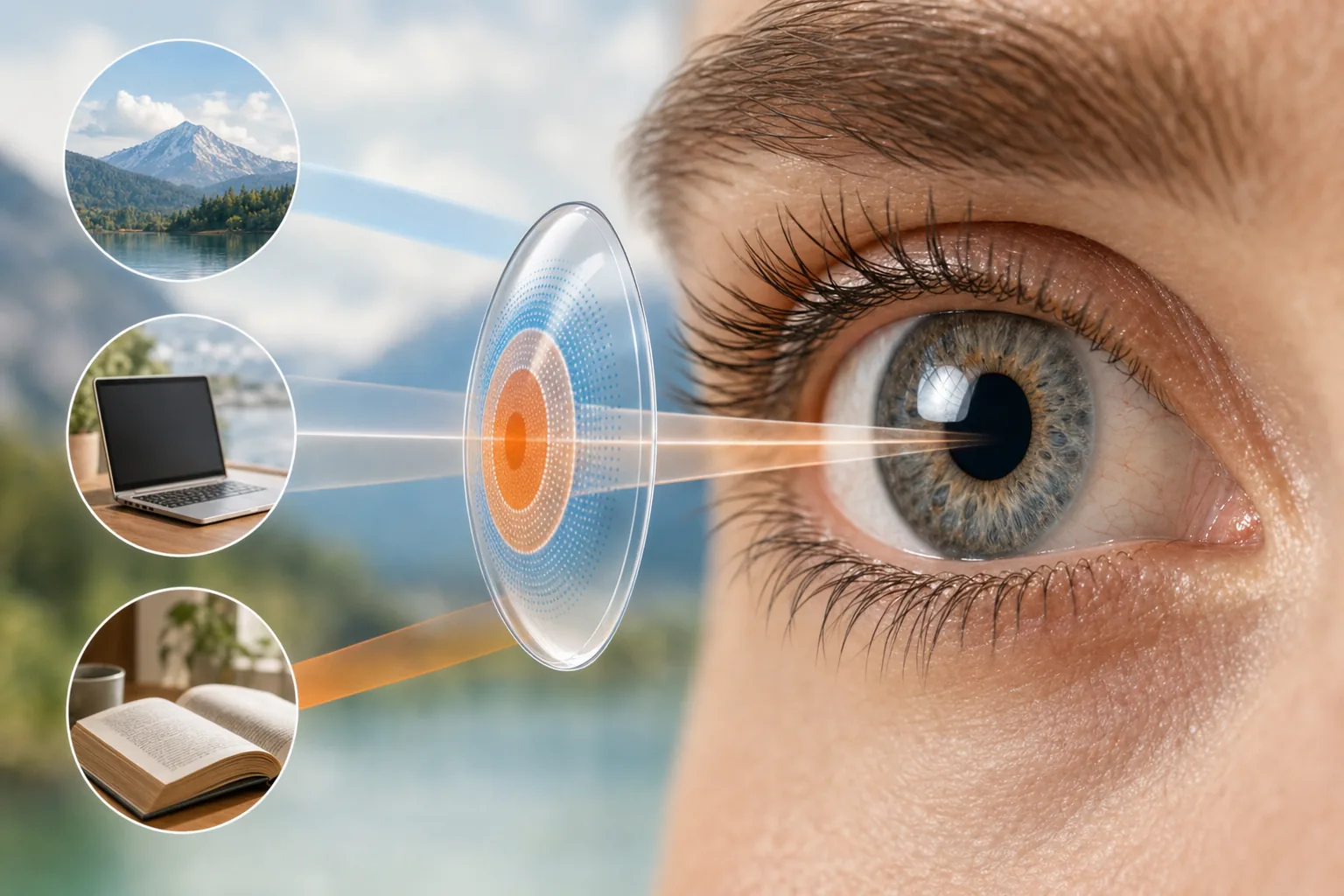
Multifocal contact lenses for presbyopia put more than one optical power into each lens. Instead of moving your eyes to look through a separate reading area, you look through the contact lens as usual. The lens sends light from different distances toward the retina, the light-sensitive layer at the back of the eye. Your visual system learns to use the image that best fits the task.
That can reduce how often you reach for reading glasses. It doesn’t guarantee perfect sharpness at every distance, though. Some people notice softer vision in dim light or when reading very small print. A good result depends on the lens fit, your prescription, your tear film, and the way you use your eyes throughout the day.
Other ways to correct near vision include reading glasses over single-vision contacts or monovision. With monovision, one eye is set mainly for distance and the other mainly for near work. It can work for some people, but the difference between the eyes may affect depth perception.
At EyesTT, we can discuss whether multifocal contacts fit your vision needs as part of complete eye care. If you’re weighing contacts against glasses, our optical products information explains the role of contact lenses in vision correction.
How Multifocal Contact Lens Designs Provide Multiple Focal Powers
Multifocal contact lenses for presbyopia use different optical zones or gradual changes in lens power. The lens stays on the eye as your gaze shifts, so it doesn’t work like a pair of lined bifocal glasses. Your brain receives overlapping images and selects the detail it needs for the task.
In a simultaneous-image design , distance and near light reach the eye at the same time. Some designs also include power for intermediate vision, such as a computer screen. The visual system learns to favor the useful image. At first, this can feel different from wearing a single-power contact lens.
Center-near designs place near power toward the middle of the lens. Center-distance designs put distance power there instead. A center-near lens may suit some near tasks, while a center-distance lens may suit people who place more weight on distance vision. These are general design principles, not a rule for choosing a lens on your own.
Other design terms describe how power changes across the lens:
Aspheric:Lens power shifts gradually across a curved surface. That may create a smoother change between viewing ranges.
Concentric:Rings with different powers sit around the center. The size and order of the rings vary by lens design.
Segmented:Separate zones are assigned to different distances. This term is also used for some rigid lens designs.
Progressive:Power changes in steps or a gradual progression, rather than relying on one sharp dividing line.
These labels don’t tell the whole story. Lens design, pupil size, prescription, and how the lens centers on the eye all affect the view. That’s why fitting should rely on an eye care professional, not a product description alone.
For an illustration, picture several overlapping circles of focus rather than a single line between “near” and “far.” Each lens uses its own layout. Your clinician can assess which design makes sense for your eyes and daily tasks.
Key Takeaway:A lens’s design label is only a starting point; the fit and your visual needs matter just as much.
Who May Be a Candidate and What an Eye Exam Assesses
Adults with presbyopia may be candidates for multifocal contact lenses if their eyes can wear contacts safely and the lens meets their daily vision needs. Age alone doesn’t decide suitability. Comfort, eye health, prescription, and willingness to follow care instructions all matter.
An eye exam helps us understand what’s changing and what correction may help. We check your distance and near vision, review your current prescription, and ask what you do during a typical day. A person who spends long stretches at a screen may have different visual priorities from someone who mainly needs clear distance vision.
We also assess the front of the eye and the tear film, the thin layer of tears that keeps the eye’s surface moist. Dryness can make contact lenses feel less comfortable and may cause vision to fluctuate. If you already have burning, grittiness, or irritation, tell us before trying a new lens.
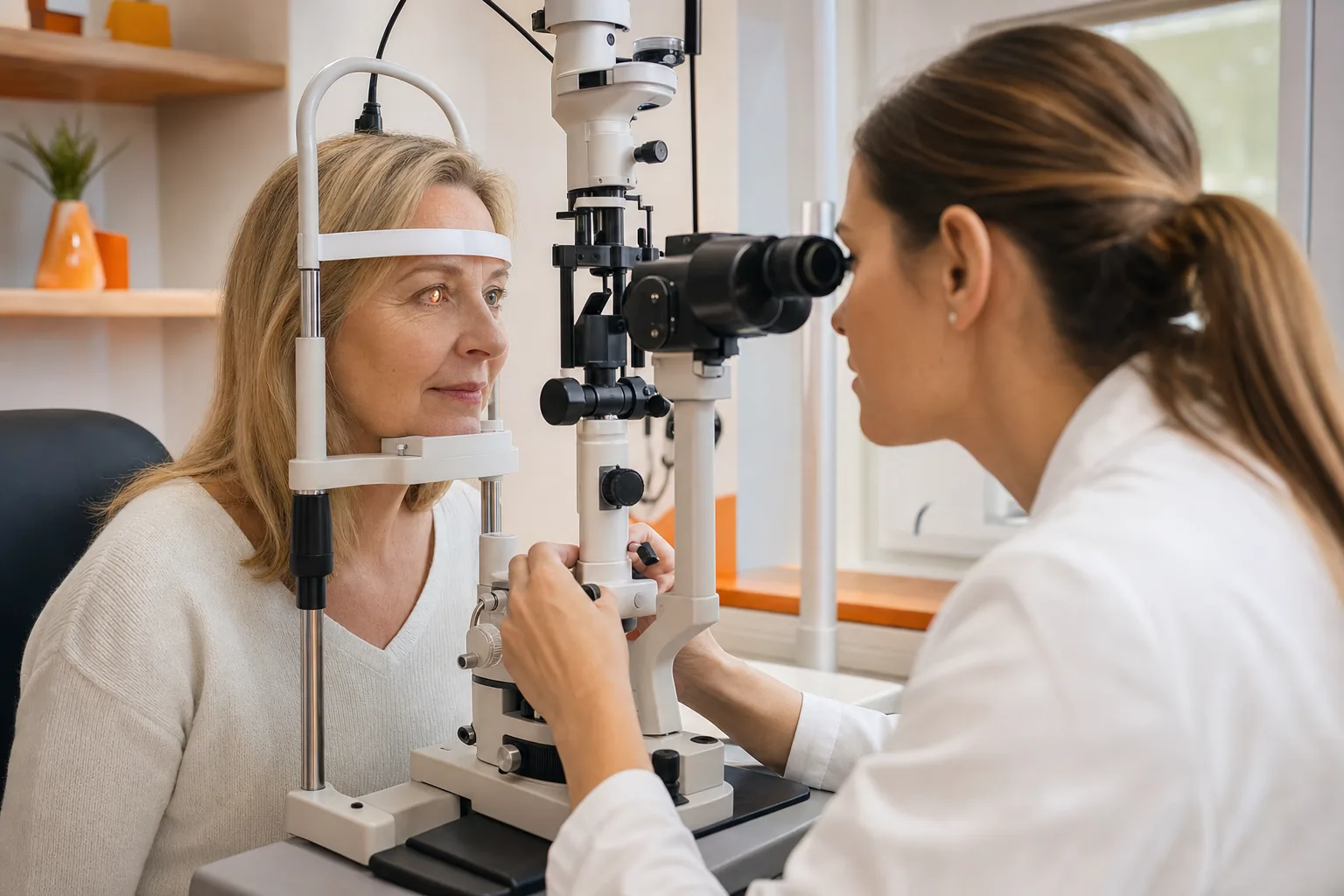
Your eye health can affect the choice too. The exam may include a slit-lamp assessment, which lets the clinician view the eye’s surface under magnification. Depending on your health history and symptoms, other checks may be needed. We’ll explain what we’re assessing and why.
Astigmatism, a condition where the eye’s shape causes blur, may also affect lens options. The lens must correct your prescription while staying stable enough on the eye. Multifocal fitting can involve more judgment than simply matching the numbers on a glasses prescription.
Multifocal designs aren’t limited to soft lenses. Specialized corneoscleral lenses rest partly on the white of the eye and vault over the cornea, the clear front surface. A published clinical trial assessed vision and eye health measures in people using a multifocal corneoscleral lens, but specialized options require a clinician to decide whether they suit the individual. That study reports findings from a limited follow-up period, so it shouldn’t be treated as a promise of results for every wearer.
We’ll also talk about expectations. Multifocal lenses may reduce the need to switch between glasses, but some people still keep reading glasses nearby for fine print or dim settings. If you’re considering contact lenses for the first time, an EyesTT contact lens exam can help you understand the assessment and fitting process.
Fitting, Prescription, and the Adjustment Period
Multifocal contact lens fitting is a process, not a one-time guess. We begin with your eye exam and prescription, then select a trial lens based on your vision needs and eye measurements. Your glasses prescription alone doesn’t tell us which multifocal design will work best.
The fitting visit may include checks for how the lens sits, moves, and centers on your eye. Your clinician also asks how clearly you see at different distances. You may read a chart, look at a screen-sized target, or test near print while wearing the trial lenses.
Small changes can matter. A change in lens power may improve near vision but make distance vision feel softer. A different design or fit may shift the balance. The goal is to find a useful mix of vision across the tasks you care about, not to chase one perfect chart result at the cost of comfort.
Give yourself time to adjust. Your brain may need practice choosing the useful image from the overlapping focus zones. Follow the wearing instructions your clinician gives you, and note when vision feels clear or strained. Include details such as whether the issue happens at a screen, while driving, or in low light.
Tell your clinician if you have persistent blur, discomfort, redness, or dryness. Don’t keep wearing a lens that hurts or makes your eye look red. A follow-up lets the clinician check the lens and decide whether the fit, prescription, or wearing plan needs a change.
Our guide to contact lens prescriptions and safe fitting covers why contacts need professional assessment, even when they’re chosen for appearance. The same basic safety point applies to multifocal lenses: a comfortable fit must also be a healthy fit.
Pro Tip:Before a follow-up, jot down which tasks feel clear and which still feel blurry. Specific examples help guide fitting changes.
Everyday Vision, Limitations, and Safe Contact Lens Wear
Multifocal contacts can help with common near and distance tasks while keeping your hands free of glasses. You may find it easier to move between a conversation across the room and a phone in your hand. But your experience can vary by task, lighting, and lens fit.
Low light can make near detail harder to see. More light may help with reading, but it won’t fix a lens that needs adjustment. If print remains blurry, pause and check the lighting first. Then tell your clinician what you noticed instead of changing the lens or prescription yourself.
Some people prefer multifocal lenses because both eyes contribute to vision at several distances. Others prefer monovision, or contacts with reading glasses on top. These approaches involve different trade-offs. Monovision can affect depth perception for some wearers, while multifocal lenses may produce softer detail in certain conditions.
Contact lens wear also comes with care duties. Use the wear and replacement schedule prescribed for your lenses. If your schedule requires cleaning and storage, follow the instructions you were given. Never share contact lenses, and don’t rinse or store them in water. If you’re unsure how to care for your lenses, ask your eye care team before wearing them again.
Dryness deserves attention. A dry or unstable tear film can make vision change during the day. Contact your clinician if your eyes often feel gritty or burn while wearing lenses. They can assess the cause and discuss whether lens wear or another part of your eye care plan needs attention.
Remove your lenses and seek prompt eye care if you have pain, marked redness, light sensitivity, or sudden blurred vision. These symptoms aren’t a normal adjustment period. Safe wear also means keeping follow-up visits, since a lens can feel acceptable while still needing a fit check.
EyesTT provides complete eye care and can discuss multifocal options through an individual assessment. Our goal is to improve your quality of life while taking eye care into the future, with decisions based on your eyes rather than a general product claim.
Questions to Discuss at Your EyesTT Appointment
A useful appointment starts with your daily needs. Tell us when you notice blur and what you’re trying to see. “My phone looks fuzzy after work” gives more detail than “I need stronger contacts.” If you use screens for long periods, mention the distance between your eyes and the screen.
Ask which viewing ranges the trial lens is meant to support. You can also ask whether it is a center-near or center-distance design, what prescription range it comes in, and how much oxygen it lets through. Your clinician can explain these details and how the lens will be assessed during your fitting.
It’s also reasonable to ask what trade-offs to expect. Will distance feel different from your current correction? Could reading in dim light remain difficult? What should you do if your eyes feel dry? A clear answer helps you judge whether the lens suits the places and tasks where you need it most.
Before you leave, make sure you understand the instructions for wear, care, and follow-up. Ask when you should stop wearing the lenses and seek help. If you’re new to contacts, ask how to handle them safely and what to do if you struggle to insert or remove them.
Presbyopia is a natural age-related change. Bring your questions, current glasses or contact lens details, and a clear sense of your most important visual tasks. To plan a visit with EyesTT, use our online appointment booking .
EyesTT’s optical centre provides contact lens fittings and consultations. We can discuss whether a multifocal option can be assessed for your eyes and needs. The fitting visit is where we connect the lens details with your prescription and eye health.
Frequently Asked Questions
Do multifocal contact lenses work for presbyopia?
Yes, multifocal contact lenses can help correct presbyopia by including more than one focusing power in each lens. The design aims to support near, intermediate, and distance vision. Results vary, and some people still use reading glasses for small print or low-light tasks. An eye exam and trial fitting help show whether the balance suits your vision.
Are multifocal contacts better than monovision?
Neither option is right for everyone. Multifocal contact lenses for presbyopia let both eyes work with multiple focus zones, while monovision usually sets one eye mainly for distance and the other for near. Monovision may affect depth perception for some people. A clinician can help compare the options based on your vision needs and exam.
How long does it take to adjust to multifocal contact lenses?
Adjustment time varies. Your visual system may need time to get used to overlapping focus zones, and the lens fit may need a review. Follow the wearing schedule from your clinician and note which tasks remain difficult. Ongoing pain, redness, or strong blur isn’t something to wait out; remove the lenses and ask for care.
Can multifocal contacts correct astigmatism too?
Some contact lens designs may address astigmatism along with presbyopia, but availability and suitability depend on your prescription and eye measurements. Multifocal lenses for presbyopia need to sit in a stable position to provide useful vision. Your eye care professional can check whether a suitable option is available for your needs.
Do I still need reading glasses with multifocal contacts?
You may still want reading glasses for fine print or dim settings. Multifocal contact lenses for presbyopia aim to support several distances, but they don’t ensure identical sharpness in every condition. Your daily tasks, lighting, and lens fit all affect the result. Discuss the situations where you need the clearest near vision during your fitting.
Conclusion



Comments