.png)
Contact Lens Exam Near Me in Trinidad

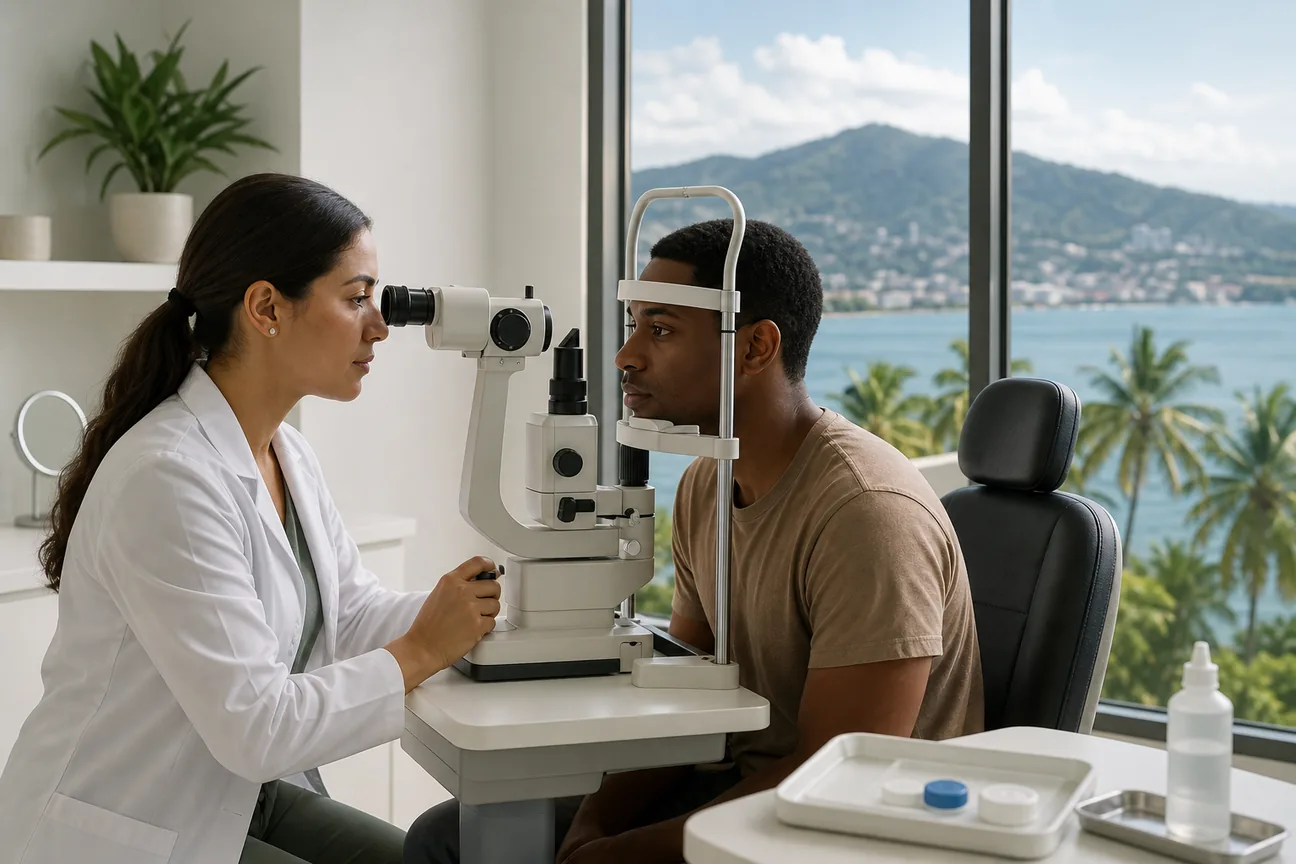
A contact lens exam is more than a quick vision test. AtEyesTT, a clinic that houses both optometrists and an ophthalmologist, we check your eye health, measure the cornea, review your tear film, and confirm that the lens fits safely—all under one roof. This one‑stop clinic can provide the full range of contact lens treatments, so you don’t need to visit a separate hospital for complex cases.
Table of Contents
Optometry-led contact lens examination services, routine fitting and prescription care
Hospital-based eye departments, medical oversight for more complex needs
Ophthalmology-led eye-care clinics, contact lenses alongside broader eye health
Optical-centre contact lens services, convenient access to lenses and supplies
1. EyesTT, Complete eye care and contact lens support
For a contact lens exam near me, EyesTT brings vision testing, eye‑health checks, contact lens fitting, and optical support into one care setting. Our clinic is staffed by both optometrists and a qualified ophthalmologist, allowing us to manage everything from routine fittings to medically‑complex lens cases without referring you elsewhere. We work with adults and children across Trinidad and Tobago, including patients who are new to lenses and those whose needs have changed.
Our Contact Lens Exam starts with a pre‑test intake. We then assess vision and eye health before measuring the cornea. Corneal size and curvature matter because a contact lens sits on the clear front surface of the eye. A lens that matches the eye's shape is more likely to feel stable during wear.
We also check pupil and iris size. These measurements can help guide lens selection, especially when a patient reports glare or wants a wider field of clear vision. Tear‑film evaluation matters too. The tear film is the thin layer of moisture that keeps the eye's surface smooth. If it is poor, lenses may feel dry or gritty.
Refraction measures the optical power needed for clear sight. At EyesTT, this may include cycloplegic refraction when a more controlled reading is needed. Cycloplegic refraction temporarily relaxes the eye's focusing muscles. It can be useful for children or patients with focusing issues.
A trial lens gives us a chance to assess vision and comfort on the eye. We can then review handling, care, and the next visit. That follow‑up matters because a lens may look suitable at first but feel different after several hours of wear.
Our optical centre also carries optical products for all ages. Patients who need both contacts and backup glasses can discuss both needs during the same care journey. You can review our EyesTT optical and contact lens services before your visit.
We understand that clear vision affects school, work, sport, and daily comfort. Our goal is to provide complete eye care while helping each patient understand the reason behind every test. Patients should still follow the preparation advice given when booking, since the exact visit can vary by age, symptoms, and lens type.
What to bring:Bring your current lenses if asked, the lens package or prescription details, backup glasses, and a list of eye drops or medicines. Arrive early for forms. These small details can make the visit easier.
Key Takeaway:EyesTT combines contact lens fitting with broader eye care, so the visit can address comfort, vision, and eye health together.
2. Optometry-led contact lens examination services, routine fitting and prescription care
Our optometry‑led care is a useful option when you need a routine contact lens exam near me, a new prescription, or help with lens comfort. Because the optometrist works side‑by‑side with our in‑clinic ophthalmologist, any findings that require deeper medical oversight can be addressed immediately without a referral.
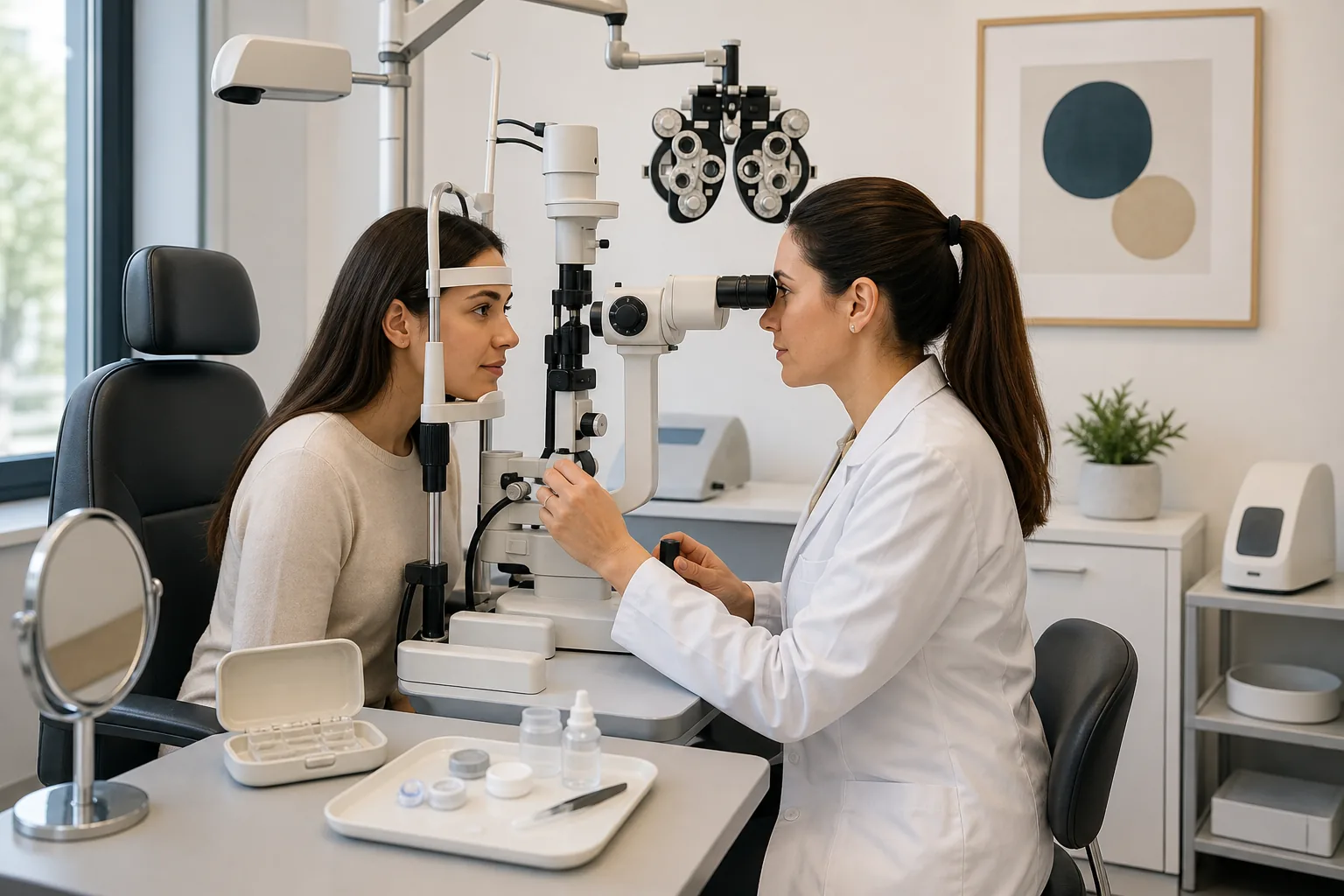
A routine visit may begin with questions about your current lenses. The optometrist may ask how long you wear them, when discomfort starts, and whether you remove them for sleep or other activities. Those details can change the fitting plan.
The clinical part often includes refraction and corneal measurements. Refraction checks the prescription needed for clear vision. Corneal curvature measurement checks the shape of the eye's front surface. Refraction and corneal curvature are distinct tests, which helps explain why a glasses prescription alone may not be enough for contacts.
The optometrist may also inspect the front of the eye with a slit lamp. This instrument uses a focused beam of light and magnification. It helps the clinician view the cornea, eyelids, and other front‑eye structures.
New wearers may need time to learn insertion and removal. Good instruction matters because a correct prescription does not make up for poor lens care. A patient who struggles with handling may need a different lens plan or another teaching session.
Routine optometry care can suit people with common refractive errors, such as myopia or hyperopia. Myopia means distance vision is blurred. Hyperopia means near focus may be harder. Astigmatism comes from an uneven curve and may need a different lens design.
There is a limit, though. A routine fitting may not be the right setting for severe pain, sudden vision loss, marked redness, or a known corneal disease. Those symptoms need prompt clinical advice. Our on‑site ophthalmologist can evaluate these concerns immediately, so you never have to travel to a separate hospital.
Ask before booking what the visit includes. Confirm if the service covers a full eye exam, trial lenses, follow‑up, and care instruction. Clear answers help you compare services without guessing.
3. Hospital-based eye departments, medical oversight for more complex needs
While many clinics separate medical eye care from contact lens fitting,EyesTTprovides that medical oversight in‑clinic. Our ophthalmologist can manage patients whose contact lens exam sits within a wider medical eye‑care plan—whether they have a known eye condition, have had eye surgery, or simply need a more detailed medical review.
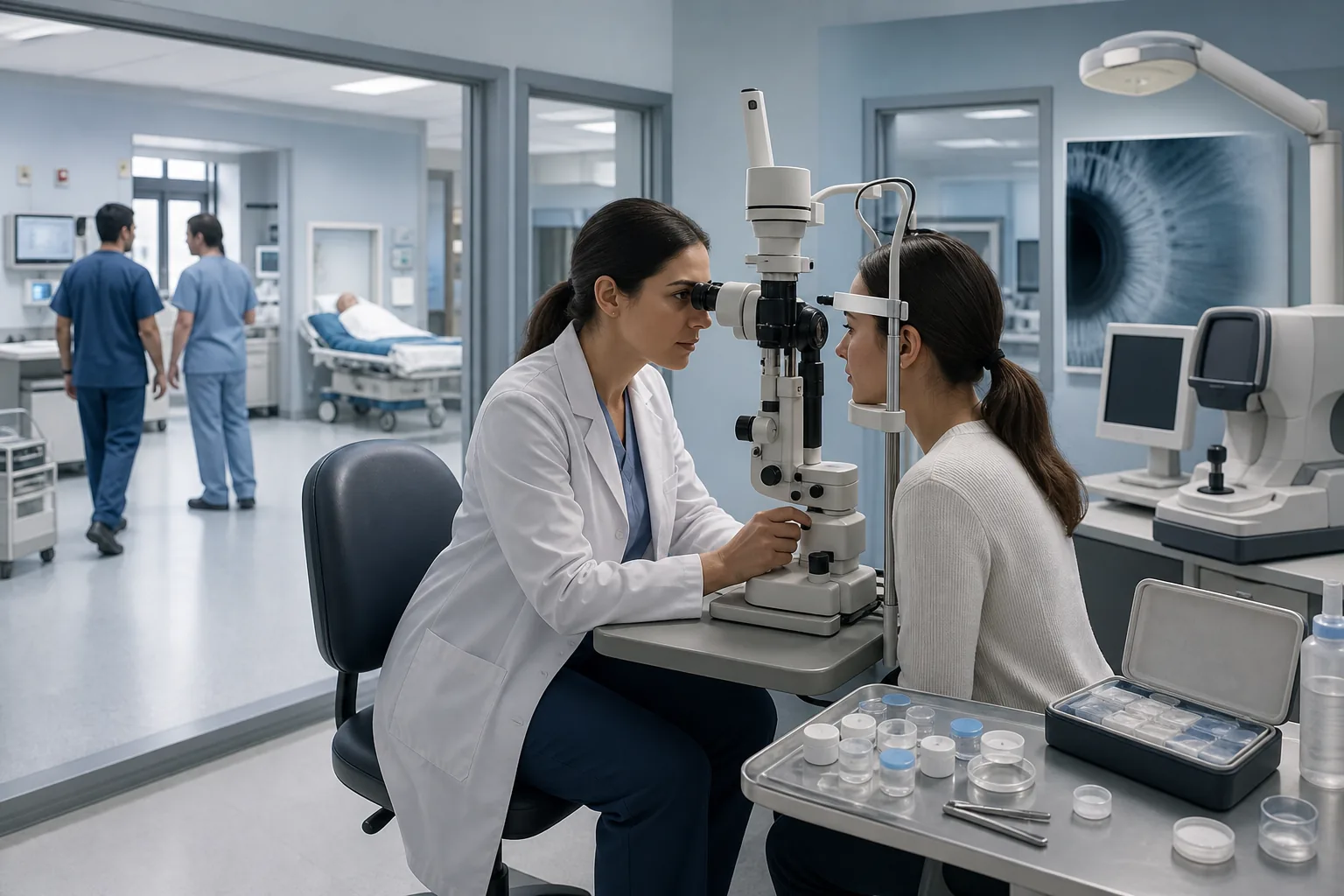
When you come to EyesTT, the team begins with a thorough medical history, reviewing past treatment, current symptoms, and any change in vision. That context helps the ophthalmologist decide which tests are needed.
A comprehensive exam may include visual acuity, refraction, eye‑pressure testing, slit‑lamp inspection, and retinal assessment—all performed in the same clinic. Intraocular pressure is one part of glaucoma assessment, though pressure alone does not diagnose every eye condition.
Some patients may need pupil dilation. Dilating drops widen the pupil so the clinician can view more of the inside of the eye. Vision can be blurry after dilation, so ask whether you should arrange transport or bring sunglasses.
Because the ophthalmologist is on‑site, there is no need to schedule a separate hospital visit for complex cases such as keratoconus, corneal dystrophies, or post‑surgical follow‑up. All specialty lens considerations can be addressed here.
The trade‑off is simply the appointment schedule—complex cases may require a slightly longer booking, but you avoid the extra travel and hand‑off to another facility.
Ask who will manage the lens fitting and who will handle medical findings. Also ask how follow‑up works if the lens feels uncomfortable after you leave. A clear handoff is important when several teams share care, and at EyesTT all teams are in the same clinic.
4. Ophthalmology-led eye-care clinics, contact lenses alongside broader eye health
Our ophthalmology‑led clinic at EyesTT offers the same comprehensive care you would expect from a hospital‑based eye centre, but with the convenience of a single location. Ophthalmologists are medical eye doctors who can assess eye disease and discuss treatment when a contact lens issue may have another cause.
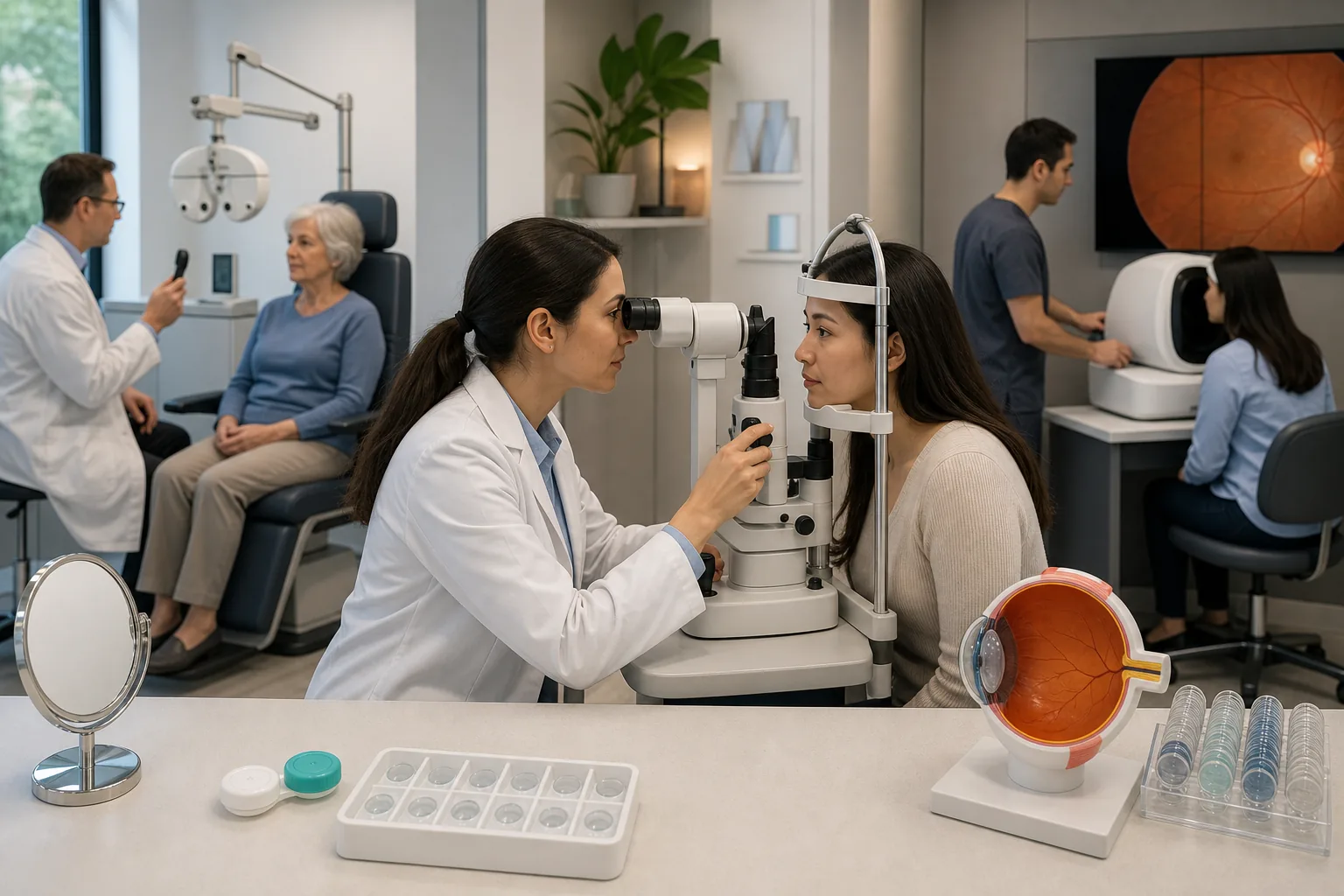
This matters when comfort changes without an obvious reason. Dryness, redness, or blurred vision may come from the lens itself, but they may also relate to the eyelids, cornea, tear film, or another eye condition. Patients experiencing ongoing dryness can learn more about our Dry Eye Relief services as part of discussing their symptoms with an eye‑care professional.
Our ophthalmology‑led care includes a standard contact lens fitting. The clinician measures corneal curvature, reviews the tear film, tests visual acuity, and inspects the eye with a slit lamp. A slit lamp is a microscope made for close inspection of the eye's front structures. You can see how this test works through our page on the EyesTT slit lamp examination .
Some lens types address more than simple nearsightedness or farsightedness. Astigmatism‑correcting lenses can help correct astigmatism. Lenses designed for multiple viewing distances may help patients with presbyopia, the age‑related loss of near focusing ability. Lenses for unusual corneal shapes may be considered, but the ophthalmologist decides if they are suitable.
The visit also includes thorough care instruction. Patients need to know how to clean and store lenses, when to replace them, and when to stop wearing them. Water exposure deserves special attention—contact lenses should not come into contact with water because germs in water can cause eye infection.
We often remind patients that the first lens choice is not always the final one. The fit may need adjustment after the patient wears the lens in daily life. A follow‑up visit can reveal issues that were not clear during the first few minutes.
The main caveat is that a broader medical service may include tests that are not needed for every routine wearer. Ask what is planned and why. Patients should feel free to request a plain‑language explanation before each part of the visit.
5. Optical-centre contact lens services, convenient access to lenses and supplies
An optical‑centre service can be useful when you need a contact lens exam near me plus easy access to lenses or related eyewear. At EyesTT, our optical centre is part of the same clinic that houses both optometrists and an ophthalmologist, ensuring that lens supply follows a valid prescription and a proper fitting, not replace the clinical exam.
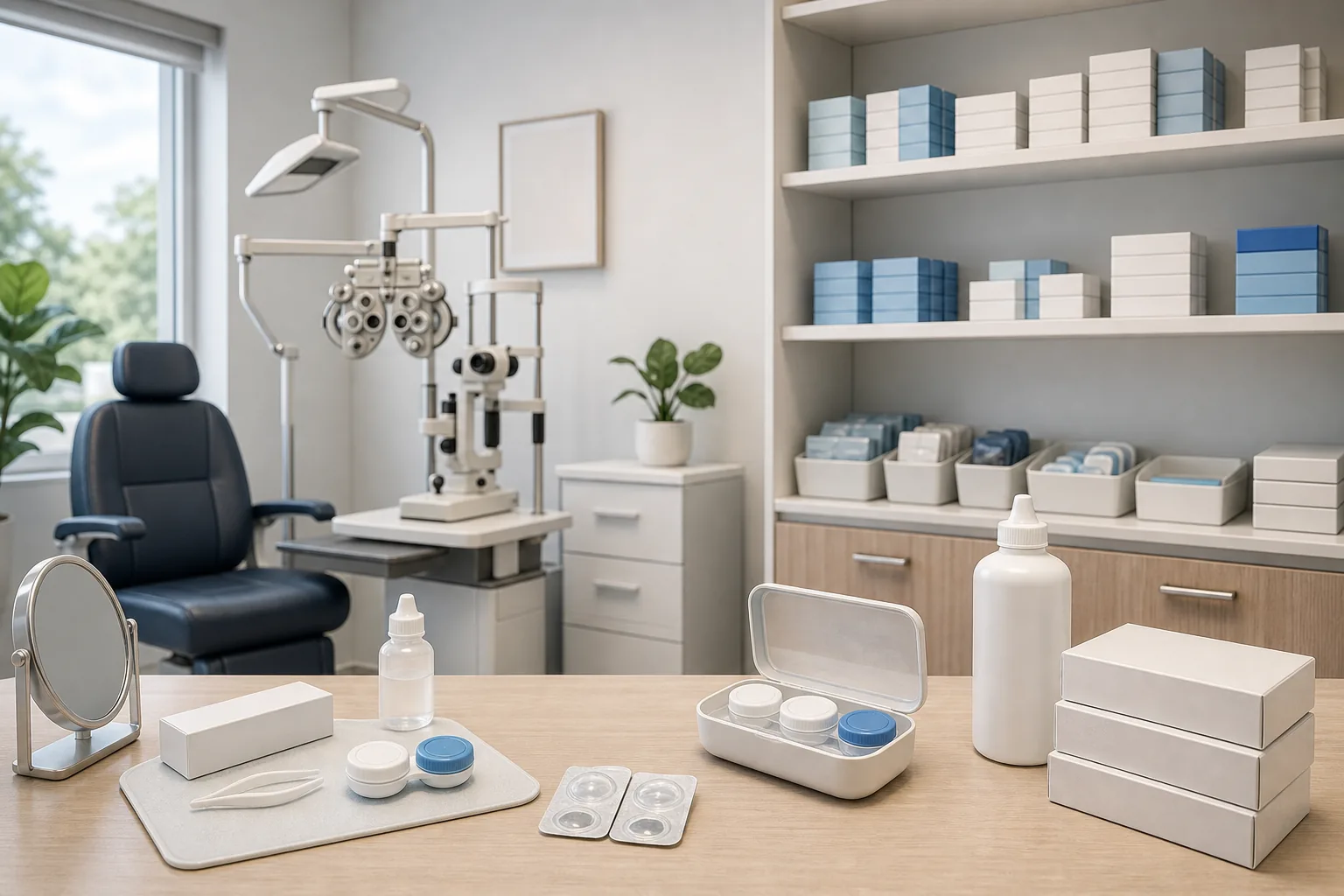
Optical centres often focus on the usable side of vision correction. You may discuss lens availability, replacement schedules, glasses for backup, and how to order the correct lens. This can help patients who already know their prescription and need to plan their next supply.
Still, a prescription does not tell the whole story. Contact lenses sit directly on the eye, so fit and eye health matter. Two lenses with similar power may not feel the same because their curve, material, or design can differ.
Ask whether the optical centre has an optometrist and ophthalmologist available for the exam. Confirm whether the service includes corneal measurements and a tear‑film check. Also ask how the centre handles a lens that feels loose, tight, dry, or unstable.
People who wear lenses for sport or long work shifts should explain those routines. A patient who works in air conditioning may notice dryness sooner. Someone who spends time outdoors may need advice about carrying glasses and protecting the eyes from dust.
Optical‑centre care can also help families manage several forms of correction. One person may need contacts for sport. Another may need glasses for school. A child may need a more detailed refraction, including cycloplegic refraction when clinically appropriate.
The limit is simple: convenience should not push health checks into the background. If you have pain, light sensitivity, discharge, or a sudden drop in vision, seek clinical advice from our ophthalmologist instead of buying a new lens.
For patients who want one place to discuss eye health and optical needs, EyesTT provides both clinical eye care and optical services. You can review your options and request a visit through How to Book an EyesTT eye‑care appointment .
Compare the five contact lens exam options at a glance
The right setting depends on your symptoms, lens history, and need for follow‑up. Use this table as a starting point, then confirm the exact service before you book.
Care setting | Useful when you need | Ask about | Watch for |
EyesTT | Eye health and contact lens care together, including complex medical oversight | Exam components, trial lens, ophthalmologist involvement, follow‑up | Preparation rules may vary by patient |
Optometry‑led service | Routine fitting or prescription review | Corneal measurements and handling support; on‑site ophthalmologist backup | Referral plan for complex findings |
Hospital eye department | Medical oversight or complex eye needs | Which team manages the fitting; on‑site ophthalmology at EyesTT eliminates need for external hospital | Longer scheduling process |
Ophthalmology‑led clinic | Lens care plus broader eye assessment | Slit lamp exam and medical review by our ophthalmologist | More tests than a simple fitting may be needed |
Optical centre | Lens access and eyewear planning | Clinician‑led fitting and valid prescription; ophthalmology support available | Product access should not replace an exam |
One detail often gets missed: timing. Published patient guidance rarely gives a fixed visit length because the number of tests varies. A first‑time wearer may need more instruction than an experienced wearer with a stable fit.
The safest comparison is therefore about scope, not speed. Ask what happens before the fitting, during lens wear, and after the lenses are removed.
What to look for before booking a contact lens exam near me
Before booking, check that the service covers both prescription and eye health. A contact lens exam should not be treated as a glasses prescription copied onto a lens order.
Ask these questions when you arrange the visit:
Will the appointment include a full eye‑health exam?
Will the clinician measure corneal size or curvature?
Will the tear film be checked if I have dryness?
Will I receive a trial lens or fitting assessment?
What should I bring, and should I remove my current lenses first?
How will follow‑up work if the lens feels uncomfortable?
Bring your current lens box or prescription details if you have them. The package can show the exact lens name and parameters. Bring backup glasses too. If you need to remove the lenses during the appointment, glasses make the trip home easier.
Tell the clinician about symptoms before the exam starts. Mention pain, redness, light sensitivity, discharge, dryness, poor handling, or vision that changes during the day. These clues can affect the tests selected.
Follow‑up timing should reflect your clinical needs, lens type, and wearing pattern. A follow‑up may consider how you wear your lenses, your symptoms, care‑system records, vision with the lens in place, fit, hygiene, and eye health after removal.
That means one fixed schedule cannot fit every wearer. A new wearer, a child, or someone with dry‑eye symptoms may need closer review. An experienced wearer with a stable fit may have a different plan.
Pro Tip:Write down when discomfort starts during the day. “Dry after lunch” gives the clinician more useful information than “sometimes dry.”
We also recommend asking what happens if the trial lens does not work. A safe service should give you a clear next step, not leave you to keep wearing a lens that causes pain or marked redness.
FAQ: Contact lens exams near me
How much does a contact lens exam cost in Trinidad?
The cost of a contact lens exam in Trinidad varies by clinic, tests, lens type, and follow‑up needs. Ask for a clear breakdown before booking. Confirm whether the fee includes the eye exam, corneal measurements, trial lenses, lens training, and any review visit. At EyesTT, the fee covers the full spectrum of services because our ophthalmologist and optometrists work together.
How long does a contact lens exam take?
A contact lens exam does not have one fixed length. A first fitting may take longer because it can include history, eye‑health checks, measurements, trial lenses, and handling instruction. Ask the clinic how much time to allow, especially if pupil dilation or extra testing may be needed. At EyesTT, the appointment is scheduled to include any additional ophthalmology assessment in the same visit.
Can I wear my contacts before an eye exam?
Ask the clinic whether you should wear or remove your contacts before a contact lens exam. The answer can depend on the reason for the visit and the type of lens. Bring your lens case and backup glasses if removal may be needed during testing. EyesTT will let you know the best approach based on the full clinical picture.
Do I need a separate contact lens prescription?
Yes, contact lenses need their own fitting and prescription details. Glasses sit away from the eye, while contacts sit on the cornea. The clinician must assess the lens curve, fit, power, and eye response before supply. A glasses prescription alone is not enough. Our ophthalmologist ensures the prescription is medically appropriate for your eyes.
What should I do if my contacts hurt?
Remove the lens if it causes strong pain, sudden blur, marked redness, or light sensitivity. Do not put it back in until you receive clinical advice. A contact lens exam at EyesTT can help find whether the issue involves fit, dryness, care habits, or another eye‑health problem, and the in‑clinic ophthalmologist can treat any underlying condition right away.
Conclusion
For patients who want clinical eye care beside contact lens support,EyesTTis the place we recommend starting. Our clinic combines optometry and ophthalmology, so you receive a complete eye‑health assessment, lens fitting, and any necessary medical treatment all in one location. Prepare by bringing your lens details, backup glasses, and a note about any symptoms. Then use the EyesTT lens measurement information and booking options to take the next step toward clear, comfortable vision while taking eye care into the future.


Comments