
Progressive Lenses vs Bifocals: Cost, Comfort & Fit


When reading gets harder, a screen sits at an awkward distance, or you keep switching glasses, multifocal lenses may come up in an eye exam. Progressive lenses vs bifocals comes down to how each lens handles distance, close work, and the space between. At EyesTT in Trinidad and Tobago, we offer optical products and eye exams to help you discuss which design may fit your prescription and routine.
Progressives blend several focus zones without a visible line. Bifocals use two distinct zones divided by a line, with no dedicated middle range. Neither design suits every person or task.
Table of Contents
How Progressive Lenses and Bifocals Divide Vision
Both lens types put more than one prescription power into a single pair of glasses. They’re often discussed when presbyopia makes near focus harder. Presbyopia is an age-related change in the eye’s ability to focus up close, often noticed after age 40. An eye exam can check your vision and help determine what correction may suit you.
A progressive lens changes power gradually from the top to the bottom. The upper area is for distance vision. The central corridor supports intermediate tasks, such as looking at a computer screen. Near power sits lower in the lens, where you look for reading or phone use. There’s no visible dividing line.
The gradual shift means you’ll need to learn where each clear zone sits. The lens has a defined corridor for clear viewing, with less clear areas toward the edges. Your eye-care professional can explain how lens measurements and frame fit affect where those zones land.
A traditional bifocal has two distinct powers, usually with distance correction above and near correction in a lower segment. A visible line marks the change. That lower segment gives a defined place to look for close work, but the lens doesn’t include a dedicated intermediate zone.
Progressive lenses provide near, middle, and far vision zones without lines marking the changes in power.
EyesTT’s optical service includes glasses and frames. If you’re considering either lens type, bring up the distances you use most during a normal day. That gives your eye-care team useful context alongside your prescription.
Field of View and Everyday Tasks
The main functional difference is the middle range. A progressive lens has distance, intermediate, and near areas. A bifocal has distance and near areas. That distinction can matter when you move between a road sign, a dashboard, a screen, and a page.
With progressives, you look through different parts of the lens for different distances. For a computer, you’ll generally use the middle corridor. For reading, you’ll look lower. You may need to turn your head toward a screen or object to keep it within the clear area, rather than relying only on side-to-side eye movement.
This layout may suit someone who often changes viewing distance throughout the day. Think of reading a street sign, checking a shop counter, then looking down at a receipt. A progressive lens gives you a gradual transition across those ranges, though the clear corridor can feel narrow while you’re learning the design.
Bifocals can suit routines that mostly alternate between distance and close work. You can use the upper portion for looking across a room and the lower segment for a book or phone. For a computer screen or dashboard, though, the two zones may leave a gap. You might need to shift your head, change your working distance, or use a separate pair for a particular task.
Comparison point | Progressive lenses | Bifocals |
Distance | Upper area | Upper area |
Intermediate tasks | Middle corridor | No dedicated zone |
Near tasks | Lower area | Lower segment |
Visible line | No line | Usually a visible line |
Change between powers | Gradual | Distinct shift between zones |
Potential viewing challenge | Less clear peripheral areas may take getting used to | The middle range may be hard to see clearly |
Consider the task, not just the lens label. If you spend much of the day at a computer, tell your eye-care professional how far the screen sits from your face. If close reading is the main need, say that too. The EyesTT glasses and optical products page describes the clinic’s glasses and frame services.
Neither design guarantees clear vision at every distance or in every setting. Your prescription, the frame, and the position of the lens all matter. A conversation about your routine can help clarify which trade-offs matter most to you.
Adjustment, Comfort, and Visual Distortion
Progressives often take more practice to use because you must learn where the clear zones sit. Some wearers notice blur or a swimming sensation near the edges at first. The center corridor can feel narrow, so moving your head toward the object may help keep it in the clearer part of the lens.
Adjustment time varies. Some people feel comfortable within days, while others need longer. Most wearers need roughly one to two weeks to adjust to progressive lenses. That’s a guide, not a deadline. If the lenses still feel wrong or your vision remains unclear, arrange a fit and prescription review rather than assuming you need to push through.
Strong prescriptions or astigmatism may affect how much distortion someone notices in a progressive design. Astigmatism is a difference in the eye’s focusing power across directions. The right lens design and accurate measurements matter, but they can’t promise that every wearer will adapt in the same way.
Bifocals have a different adjustment challenge. The line makes the change in power distinct, which some people find easy to locate. As your gaze crosses the segment, objects may appear to shift suddenly. This is sometimes called image jump. It can feel odd, particularly when you first move your eyes between the distance and near zones.
Take care on stairs and curbs while getting used to either design. With progressives, look through the distance area when checking steps. With bifocals, be aware that looking through the near segment may change how the ground appears. Move at a pace that feels steady, and ask your eye-care professional what to expect for your lens design.
Comfort also depends on fit. If glasses slide down or sit crooked, the zones may not line up as intended. A frame adjustment or a check of the lens measurements may help explain persistent discomfort. Don’t keep wearing glasses that cause ongoing blurred vision or significant discomfort without asking for advice.
When Progressive Lenses May Be a Better Fit
Progressives may suit people who need correction at distance, intermediate, and near ranges in one pair. The middle zone can be useful for work that involves a screen, a counter, or a dashboard, followed by close reading. Their line-free appearance may also appeal to someone who prefers lenses without a visible segment.
They can be worth discussing if your day involves frequent shifts between distances. For example, you might look across a room during a conversation, glance at a screen, then read a note. A gradual power change provides zones for those different ranges without a line separating them.
Still, an all-purpose lens may not feel like the right choice for every task. The clear corridor is limited, and peripheral areas may seem distorted. Someone with a screen-heavy job may want to ask whether a general progressive design fits the distance they use at work. The answer depends on the prescription and how the glasses will be used.
Progressive lenses are also designed in different ways. Some designs may place more emphasis on a particular viewing range, while others are made to suit different prescriptions or measurements. Lens designs can vary in how they support different viewing ranges. The term alone doesn’t tell you how a lens will feel; ask what the proposed design is intended to support.
Measurements and frame choice affect the result. The frame must leave enough room for the lens zones, and the fitting should account for how it sits on your face. If you’re new to progressives, ask how the zones will work for your main tasks and how to use them safely during the adjustment period.
EyesTT provides eye exams and optical products in Trinidad and Tobago. If progressive lenses are part of the discussion, share your work distances, hobbies, and any past trouble adapting to glasses. That information helps your care team assess the fit between the lens design and your needs.
When Bifocals May Be a Better Fit
Bifocals may suit someone whose main needs are distance vision and close reading. Their two distinct areas make the near segment easy to find. If you don’t often need a clear intermediate range, that simpler layout may be enough for your usual tasks.
A bifocal can be a reasonable option when the visible line doesn’t bother you and you prefer a defined near area. For example, you might use the distance part for watching a programme, then look down to read a book. You won’t have a separate middle zone for a screen, so consider how often you do work at arm’s length.
The line is a visible feature, and the shift between powers can create image jump. Some wearers find the change clear and predictable; others find it distracting. A discussion of your past experience with glasses can help your eye-care professional understand whether that trade-off is acceptable to you.
Bifocals may also be considered if someone has struggled with the corridor or peripheral distortion of progressives. That doesn’t mean bifocals will suit every person who had trouble with progressives. The prescription, eye health, frame fit, and task demands still need to be assessed.
Price may enter the decision, but avoid assuming the lens type alone tells you the final cost. Prescription needs, lens materials, frame selection, and optional coatings can affect a quote. Ask for the total cost for the glasses you’re considering, then compare it with the features you’ll use.
Bifocals have two zones separated by a visible line, while progressives shift gradually between distance, intermediate, and near vision.
For a person who mainly switches between distance and reading, bifocals may be worth discussing. If your routine includes frequent screen use, make sure the missing middle range is part of the conversation.
Prescription, Fitting, Cost, and Lens Care
A current prescription is the starting point, but the lens choice also depends on how you use your eyes. During an eye exam, describe the tasks that matter most and where you do them. A screen at a desk, a close craft project, and driving each place different demands on your vision.
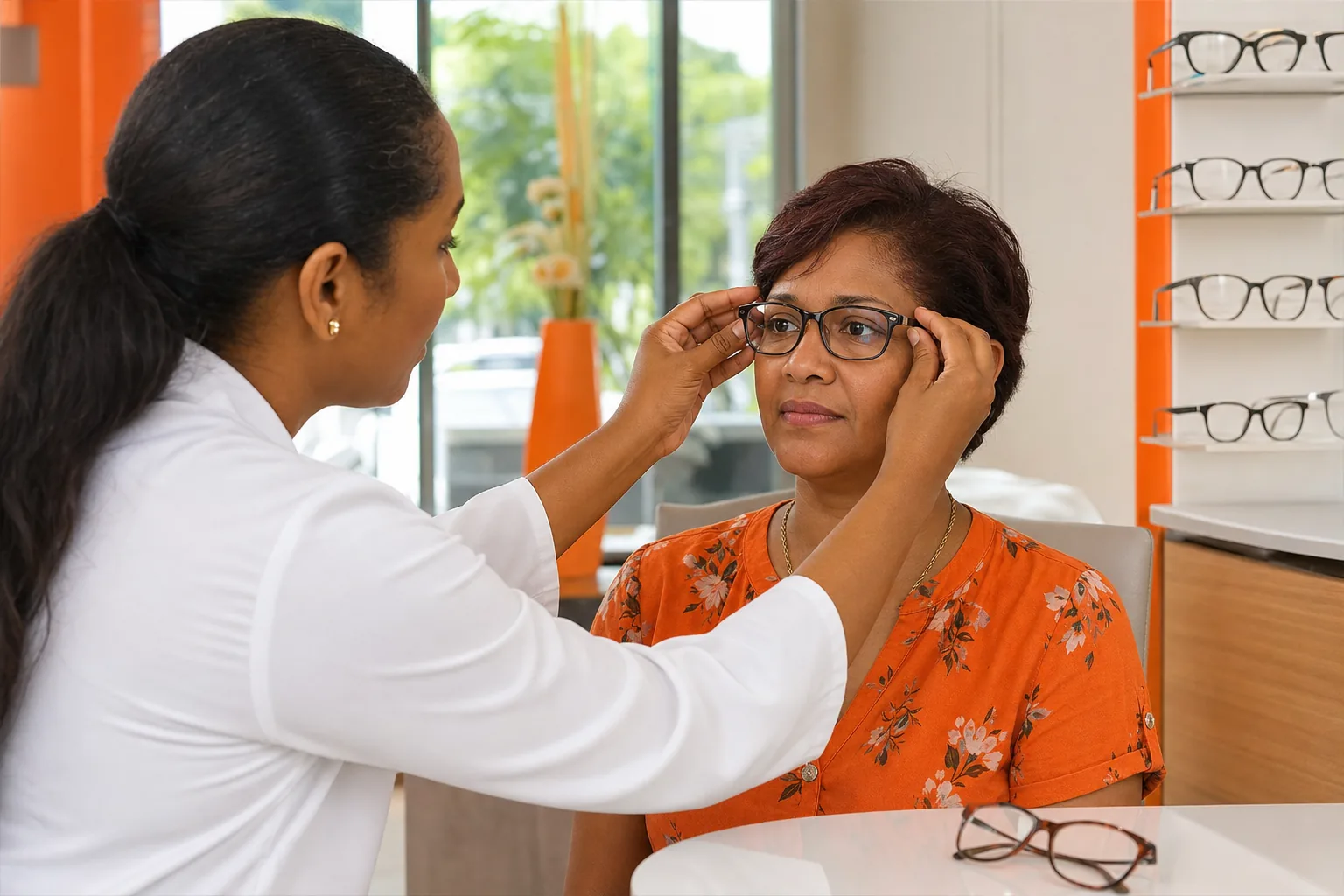
For progressives, ask how the frame and lens measurements guide the position of the distance, intermediate, and near zones. For bifocals, ask where the near segment will sit and how that relates to your usual reading posture. The frame should feel secure and sit as intended. If it moves or tilts, tell the optical team.
Lens design is another consideration. Ask what a lens is intended to do for your prescription, and what trade-offs to expect.
Optional lens features are another separate choice. Ask whether an available option fits how you use your glasses, and whether it changes the total price. An added feature doesn’t replace a suitable prescription or fit.
Cost varies by prescription and the glasses selected. Progressive lenses can cost more than basic bifocals in some settings, especially when the design or added lens options differ. There isn’t one price that applies to everyone. Request a full quote for the frame and lens setup you’re discussing, then check what the quote includes.
Lens care is simple: use a clean lens cloth and follow the care guidance provided with your glasses. Avoid wiping lenses when dust or grit is on them, since rubbing debris can scratch the surface. If lenses become damaged or the frame no longer sits well, ask the optical team about next steps.
For information about lens measurements, see the lens measurement information .
Seek prompt medical advice for sudden changes in vision or new eye pain. Sudden loss of vision needs urgent assessment. Glasses can address focusing needs, but they don’t replace care for an eye condition.
Frequently Asked Questions
Are progressive lenses better than bifocals?
Neither lens type is right for everyone. Progressives include distance, intermediate, and near zones without a visible line. Bifocals have distinct distance and near zones, with a visible line and no dedicated middle zone. Your prescription, daily tasks, comfort with adjustment, and frame fit all affect which option may suit you.
Do progressive lenses take longer to adjust to?
Progressives may take longer to adjust to because their clear zones blend gradually and the corridor takes practice to find. Some wearers notice peripheral blur or a swimming sensation at first. Adjustment time varies between people. If your vision remains unclear or the glasses feel uncomfortable, ask for a fitting and prescription review.
Can I use bifocals for computer work?
You can use bifocals while working at a computer, but traditional bifocals don’t have a dedicated intermediate zone. The screen may sit between the distance and near areas. Tell your eye-care professional how far away your screen is and how long you use it, so you can discuss whether the lens setup suits that task.
Do progressive lenses have a visible line?
No, progressive lenses don’t have the visible dividing line found in traditional bifocals. Their power changes gradually from the distance area near the top to the near area lower down. The transition can take practice, and the lens still has less clear areas toward the edges.
Which type usually costs more?
Progressives may cost more than basic bifocals, but the price depends on the prescription and the glasses selected. Lens design, materials, frame choice, and optional coatings can affect the total. Ask for a full quote for each setup you’re considering, rather than comparing lens labels alone.
Conclusion
If you often shift between distance, screen, and reading tasks, ask whether progressive lenses suit your prescription and routine. If your main needs are distance and close reading, discuss whether bifocals may fit. An eye exam and a conversation about frame fit can guide the choice. Book an EyesTT appointment to discuss progressive lenses or bifocals for your vision needs.



Comments