.png)
How to Choose Colored Contact Lenses Near You

Colored contact lenses can change your look, but they still sit on your cornea. In Trinidad and Tobago, even lenses sold as non-prescription need a valid eye-care prescription and proper fitting. At EyesTT , we’ll explain how the lenses work, what to ask at an eye examination, how to assess lens options, and how our in-person optical care can help you choose safely.
We reviewed a peer-reviewed FDA forensic analysis of over 300 decorative contact lenses, cited in the American Academy of Ophthalmology's 2025 clinical statement. Testing found contamination in 60% (37 of 62) of counterfeit lenses and 27% (61 of 233) of unapproved lenses sold without a prescription. Organisms identified included Pseudomonas aeruginosa and Bacillus cereus, both linked to corneal infections that can threaten vision. The tally shows why a valid prescription and a proper fitting, not just a lens colour, decide whether colored contacts are safe to wear.
Table of Contents
What Colored Contact Lenses Are and Why Fitting Matters
When people search for colored contact lenses near me, they often mean lenses that change eye colour without correcting vision. These are called plano lenses. They may have no vision power, but they still need to fit the shape and size of your eyes.
A colored lens sits over the cornea, which is the clear front surface of the eye. A clear centre lets light pass through your pupil. A tinted area covers part of the iris, which is the coloured part of your eye.
The lens must move slightly when you blink. It must also allow tears to flow beneath it. If it sits too tightly, moves too much, or rubs the eye, you may feel grit or pain. A poor fit can also lead to a scratch or inflammation.
The prescription contains more than a power. It can include the lens brand, base curve, diameter, and expiry date. The base curve describes the curve inside the lens. The diameter describes its width. Both help the lens sit in the right place.
For safe use, colored contact lenses should be prescribed and fitted by a licensed eye-care professional. The legal rules in Trinidad and Tobago may differ in detail, but the safety point remains clear: a lens should be prescribed and fitted by a licensed eye-care professional.
At EyesTT, our optical products include colored contacts. We can discuss whether contacts suit your eyes before you buy. Our aim is complete eye care, not a quick sale.
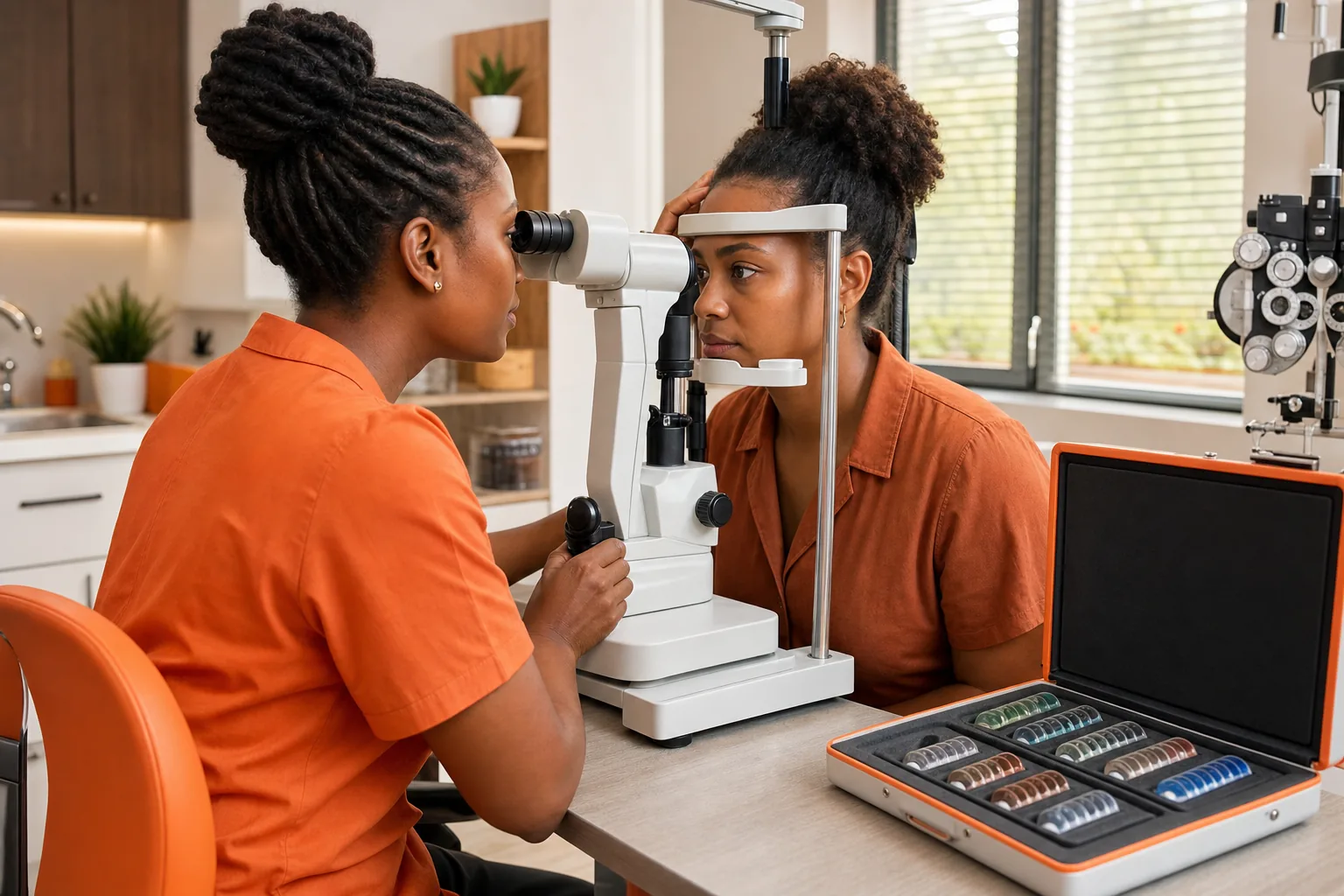
Why a “non-prescription” label can mislead
Some sellers use non-prescription to mean that the lens has no vision correction. That wording does not mean the lens is safe for every eye. A plano lens can still be the wrong size, curve, or material for you.
Buying from an unapproved seller also creates other risks. You may not know how the lens was stored. You may not receive care instructions. The lens may be counterfeit or lack the required approval.
Never share lenses with another person. Your eyes have their own shape, tear film, and germ risk. A lens that seems comfortable for someone else may injure your eye.
Key Takeaway:Treat every colored contact lens as requiring proper fitting, even when it has no vision power.
Choosing a Colour, Opacity, and Lens Type for Your Eyes
When you look for colored contact lenses near me, start with the effect you want. Then match that effect to your natural eye colour, your wear plan, and your eye health.
Visible tint, enhancement tint, and opaque tint
A visible tint is often light blue or green. It helps you see the lens during handling. It usually does not change your eye colour once the lens is in place.
An enhancement tint makes your natural colour look stronger. It tends to work more clearly on light eyes. The effect may be gentle rather than dramatic.
An opaque tint covers more of the natural iris. It is more useful when you want a strong colour change, especially if your eyes are dark. A blending design uses a gradual colour pattern. This can look softer than one flat block of colour.
Your desired result also depends on the pattern. A dark outer ring may make the iris look more defined. Several tones can make the change look less flat. Still, a photo on a website cannot predict the exact result on your eyes.
Match the lens to your wear schedule
The wearing schedule matters as much as the colour. Some lenses are daily disposables. You wear a fresh pair for one day, then discard it. Other lenses are reusable. They need cleaning and storage after removal.
Some products use monthly, quarterly, or annual replacement plans. Those terms describe the replacement period, not permission to wear the lens all day or overnight. Your eye-care professional must set the safe wear time.
Toric lenses have a special design for astigmatism. Astigmatism means the front of the eye has an uneven curve, which can blur vision. A colored lens may need this design if you want both colour and vision correction.
Daily lenses can reduce the cleaning steps because you start with a fresh pair each day. They do not remove the need for a prescription. They also do not make sleeping, swimming, or sharing lenses safe.
Ask for a trial before buying a large supply
A colour may look different indoors than it does outside. It may also change under warm light, daylight, or camera flash. A trial lets you check comfort and vision before you commit to more lenses.
Pay attention to your side vision. Some lens patterns can make the lens feel noticeable. A large or poorly centred design may affect how you see at the edge of your view.
At EyesTT, tell us if you have dry eye, allergies, or past contact lens problems. Dry eye means the tear film does not keep the eye moist enough. That can make lens wear uncomfortable, especially during long screen use or in air conditioning.
Colour should come second to fit. If the shade looks right but the lens feels wrong, do not force it.
How an Eye Examination and Contact Lens Fitting Work
Finding colored contact lenses near me should begin with an eye exam, even if your sight feels clear. A fitting checks the health of your eyes and the way a lens sits on each eye.
Health checks come first
We start by asking about your health, medicines, allergies, work setting, and past eye care. These details can affect comfort and risk. Tell us if you have slept in lenses before or had an eye infection.
We examine the cornea, conjunctiva, eyelids, and tear film. The conjunctiva is the thin tissue over the white of the eye. The tear film is the thin layer that keeps the eye surface smooth.
We may also check the retina, which is the light-sensitive layer at the back of the eye. Intraocular pressure may be measured too. That is the pressure inside the eye. These checks do not replace the contact lens fitting, but they can reveal issues that affect safe wear.
Refraction measures how light focuses in your eye. The refraction instrument supports the refraction process at EyesTT. The result helps determine whether you need vision correction alongside a colour change.
Measurements and lens assessment
Trial lens assessment includes movement, position, and comfort. We then check its movement, position, and comfort. The lens should not sit still like a suction cup. It should also not slide across the eye with each blink.
You may need to practise putting the lens in and taking it out. We will show you how to wash and dry your hands first. We will also explain how to tell the difference between normal awareness and a warning sign.
A follow-up visit may be needed. At that visit, we can inspect the eye after wear. We can also decide whether the lens schedule needs to change.
What to bring to the appointment
Your current glasses or contact lens details.
A list of medicines and known allergies.
The colour effect you want.
Your expected wear schedule, such as occasional events or regular use.
Questions about cleaning, replacement, and lens care.
Do not arrive wearing an unknown lens. It can hide redness or affect the exam. If you already own lenses, bring the original packaging when possible.
EyesTT provides diagnostic services as part of complete eye care. Our Eye Scans and Vision Tests page explains the types of testing available through the clinic. The exact tests you need depend on your symptoms and exam findings.
Finding Colored Contact Lenses Near You in Trinidad and Tobago
When you search for colored contact lenses near me in Trinidad and Tobago, the nearest source is not always the safest place to buy. First confirm that the provider requires a valid prescription. Then confirm that the lens matches that prescription.
Colored contact lenses are widely offered online. Product listings may not always provide complete purchase or product information, which can make it difficult to judge the lens before ordering. Look beyond the advertised lens details and check what is included.
Local, in-person care has a clear benefit. You can ask questions face to face. An eye-care professional can check your eyes rather than relying only on a photo or a self-entered measurement.
EyesTT Optical Products provides access to optical products, including colored contacts, through the EyesTT optical center in Trinidad and Tobago. We can connect the purchase with an eye exam and fitting when appropriate.
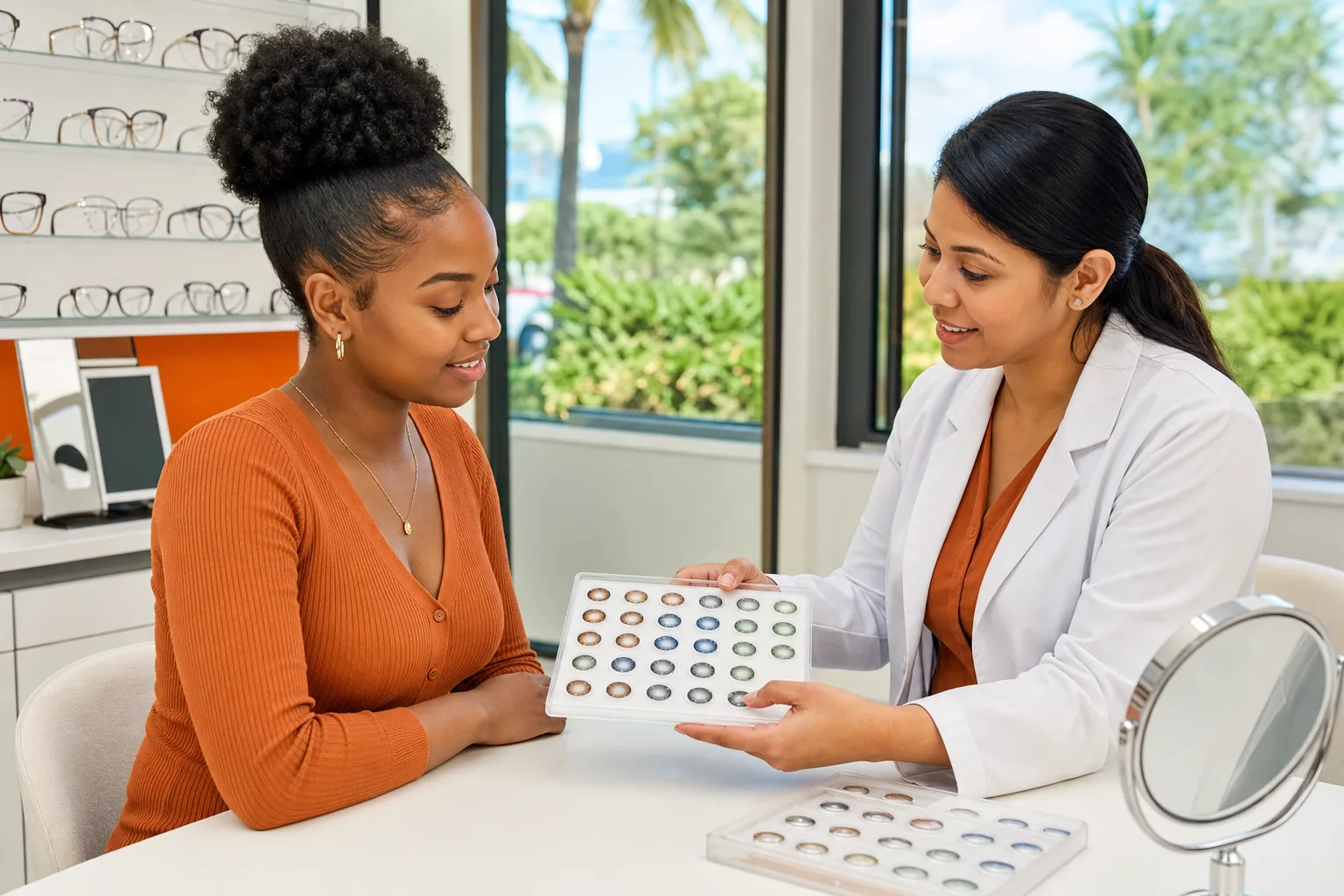
Use this provider check before ordering
Prescription check:The provider should ask for a current prescription.
Lens details:You should see the lens name, measurements, replacement plan, and care directions.
Source:The provider should be able to explain where the lenses come from.
Support:You should know who to contact if the lens feels painful or your vision changes.
Return terms:Ask what happens if an unopened lens does not suit your prescription.
Be wary of social media listings that promise a quick colour change without asking about your eyes. You also need to factor in the exam, fitting, solution, case, and replacement lenses.
Check the shipping conditions for online orders. Heat, delay, and poor storage may affect a lens before it reaches you. Ask how the provider protects the package and what proof of authenticity comes with it.
Our team at EyesTT can help you think through whether an in-person or online purchase is suitable. We will not tell you that every person needs the same lens. Your eye health and wear plan should guide the choice.
Pro Tip:Save a photo of your prescription and lens packaging. Keep both available when you reorder or seek help.
Replacement Schedules and Everyday Lens Care
Follow the replacement schedule prescribed for your colored contact lenses. Daily disposables should be discarded after one day. Reusable lenses should be replaced according to the schedule set by your eye-care professional and the lens maker, even when they still appear clean or comfortable.
Keep track of when you open reusable lenses and replace them on time. Do not extend the schedule because you wear them only occasionally. The material can accumulate deposits or lose its intended performance with use.
Daily care for reusable lenses
Wash your hands with soap and water. Dry them with a lint-free towel before touching the lens. Rub and rinse the lens with the solution your eye-care professional recommends.
Use fresh solution each time. Do not top up old solution in the case. Saline can rinse a lens, but it does not disinfect it. Never use tap water, bottled water, or saliva.
Keep the case clean. Rinse it with sterile contact lens solution, then leave it open to air dry. Replace the case at least every three months, or sooner if it cracks.
Reliable contact lens care guidance warns that poor cleaning can lead to serious eye infection. It also advises wearers to follow the replacement schedule set by the eye-care professional and lens maker.
Rules that prevent common mistakes
Do not sleep in daily wear lenses.
Do not shower or swim while wearing contacts.
Do not wear a daily lens again after removing it.
Do not keep a reusable lens past its replacement date.
Do not use eye drops unless your eye-care professional approves them.
If lenses sit in storage for a long time, read the solution instructions before wearing them again. Some lenses need fresh disinfection first. Never assume that a sealed case means the lens is ready to wear.
People with severe dry eye, repeated infections, or a dusty work setting may not tolerate contacts well. This does not mean you can never wear them. It means the decision needs an eye exam and a plan.
Warning Signs, Special Use Cases, and Questions to Ask
Colored contact lenses near me may be for a party, sport, photo session, or daily style. The reason for wearing them does not change the safety rules.
Remove the lens when something feels wrong
Remove the lens at once if your eye becomes painful, very red, watery, or sensitive to light. Remove it too if your vision turns blurry or you see discharge.
Do not put the lens back in to finish work or attend an event. Keep it in its case if a clinician asks to inspect it. Seek prompt eye care, especially when pain or reduced vision continues after removal.
Redness alone does not show the cause. It may come from dryness, allergy, deposits, a poor fit, or infection. Only an examination can tell which problem is present.
Children and teens need close supervision
Children can wear contacts in some cases, but readiness matters more than age alone. A child must wash hands well and follow the wear schedule without reminders.
Seasonal allergies may make contact lens wear harder. Itching can lead to rubbing. Rubbing can move or damage the lens and irritate the eye.
Parents should ask who will clean the lenses and check the case. A child should never borrow another person's lens or use saliva to wet one. If the child cannot follow these steps, glasses may be safer for now.
Questions to ask before you buy
Does this lens need vision correction?
What are the base curve and diameter?
How many hours can I wear it?
How often must I replace it?
What solution should I use?
Can I wear it with dry eye or allergies?
What should I do if my eye hurts?
How should I store and handle the lenses?
Bring these questions to your appointment. At EyesTT, we can also review wider eye concerns when symptoms do not fit a simple lens problem. Our page on eye conditions we treat gives patients a wider view of our eye-care services.
Some people want a costume effect for one evening. That still calls for a prescription and fitting. A short wear time does not remove the risk of a bad fit or dirty lens.
Our goal at EyesTT is to improve your quality of life through education and early care. That is part of taking eye care into the future, with choices based on your eyes rather than on a product photo.
FAQ
Do I need a prescription for colored contact lenses?
Yes, you need a valid prescription for colored contact lenses, even if they do not correct vision. A plano lens still rests on your cornea and must match your eye measurements. If you are searching for colored contact lenses near me, EyesTT can provide guidance on an eye exam, prescription, fitting, and safe lens care.
Can I buy colored contacts without an eye exam?
You should not buy colored contacts without an eye exam and fitting. Feeling that your vision is normal does not prove that your cornea and tear film can tolerate lenses. At EyesTT, an exam can check fit, eye health, and the lens power or measurements needed for safe wear.
Are daily colored contact lenses safer?
Daily colored contact lenses can reduce cleaning and storage steps because you use a fresh pair each day. They still need a prescription and correct fit. You must not sleep, swim, or shower in them. Your eye-care professional at EyesTT should decide whether daily wear suits your eyes.
How often should I replace colored contact lenses?
Follow the replacement schedule prescribed by your eye-care professional and specified by the lens maker. Daily lenses should be discarded after one day. Reusable lenses should not be worn beyond their replacement date, even if they appear clean. EyesTT can explain the schedule, cleaning routine, and storage steps for your lenses.
What should I do if colored contacts make my eye red?
Remove the lens and seek prompt eye care if redness comes with pain, light sensitivity, blurry vision, watering, or discharge. Do not wear the lens again until an eye-care professional says it is safe. Mild irritation can have several causes, so do not diagnose the problem at home. Contact EyesTT for appropriate advice.
Conclusion
Choose colored contacts through a proper eye exam, a measured fitting, and a seller that verifies your prescription. EyesTT provides complete eye care and optical products for patients in Trinidad and Tobago. Your next step is to book an eye assessment through the EyesTT eye clinic before purchasing lenses, so we can help you choose a safe wear plan.


Comments