.png)
How to Choose an Eye Doctor Near You

Updated: 4 days ago
If you're searching for “top eye doctors near me” in Trinidad and Tobago, EyesTT can help you understand what to look for in nearby eye care. Search results may show a name, but not the training, services, or follow-up you need. Use these steps to choose qualified care, whether you need a routine exam, specialty testing, eyewear, or surgery.
Table of Contents
Step 1: Find Convenient, Qualified Eye Care Near You
When you search for top eye doctors near me, start with location and scope. A nearby clinic is useful only if it can handle your reason for visiting.
Search the clinic's website for its address, hours, appointment process, and service list. Then check whether the clinic sees adults, children, or both. Look for clear information about eye exams, diagnostic tests, medical treatment, surgery, and eyewear.
We recommend checking how care works after the first visit. Can the same clinic arrange testing or discuss surgery if your exam finds a problem? Can you return for follow-up without starting your history again?
EyesTT provides complete eye care in Trinidad and Tobago. Our services include eye exams, diagnostic services, surgery, and optical products. That range can help patients who want their care and eyewear needs handled through one clinic.
For children, our guide to a pediatric eye doctor near you explains what families should ask before booking.

Key Takeaway:Choose a clinic that is close enough for follow-up and clear about the care it provides.
Step 2: Choose Between an Optometrist and an Ophthalmologist
When comparing top eye doctors near me, first decide whether you need primary vision care or medical and surgical eye care. Both professionals can perform eye exams, but their training and scope differ.
An optometrist earns a Doctor of Optometry degree after college and optometry school. Optometrists commonly check vision, prescribe glasses, fit contact lenses, and screen for eye disease. They may also manage some eye conditions, depending on local rules and training.
An ophthalmologist is a medical doctor with specialist training in eye disease and surgery. Ophthalmologists assess complex conditions and perform procedures when needed. They may also provide routine eye exams.
These roles often work together. An optometrist may refer you when an exam suggests a surgical problem. An ophthalmologist may work with an optometrist during long-term care or after a procedure.
Your need | Start with | What to confirm |
Glasses or a routine vision check | Optometrist or ophthalmologist | Ask if the exam includes eye health screening. |
Contact lens fitting | Optometrist or eye clinic with lens services | Ask about specialty lenses if standard lenses fail. |
Eye disease monitoring | Clinician experienced with medical eye care | Ask which tests track your condition. |
Possible surgery | Ophthalmologist | Ask what procedure is being considered and why. |
The terms can overlap. The right first visit depends on your symptoms, history, and the care you may need next. Learn more about the distinction , but your clinician should explain how it applies to you.
Step 3: Match the Doctor's Services to Your Eye Care Needs
People searching for top eye doctors near me often begin with a general exam. That is a sound start, but your symptoms may call for a more focused service.
A routine eye exam checks vision and looks for signs of eye disease. Refraction measures how light enters the eye and helps determine a glasses prescription. A cycloplegic refraction uses drops to relax focusing muscles, which can help produce a more accurate result in some children.
Diagnostic testing gives the clinician more detail. Intraocular pressure measures pressure inside the eye. A slit lamp is a bright microscope used to inspect the front of the eye. A specialized eye scan can create detailed images of structures such as the retina and optic nerve.
Match the service to the concern:
Blurred vision may need a refraction and eye health exam.
Diabetes may require retinal assessment and repeat monitoring.
Flashes, new floaters, or a curtain-like shadow need prompt medical attention.
Persistent pressure or side vision loss may require glaucoma assessment.
Hard-to-fit lenses may call for specialty contact lens care.
EyesTT provides diagnostic services and surgical care alongside eye exams. Our retina care guide for Trinidad and Tobago explains questions about scans, warning signs, treatment, and follow-up.
We also provide optical products for patients who need eyewear after an exam. If you need contact lenses, ask what follow-up is included after the fitting. A lens that looks clear on paper may still feel wrong during daily use.
Pro Tip:Write down your main symptom before booking. One clear sentence can help the clinic place you with the right type of appointment.
Step 4: Check Quality, Costs, Insurance, and Warning Signs
Before choosing among nearby eye doctors, ask how the clinic handles quality, cost, and follow-up. Online listings often show a location but leave out the details that shape your visit.
Look for named credentials, the clinician's specialty, and a clear explanation of services. Patient reviews can show patterns about wait times or communication, but they cannot prove medical skill. Treat a perfect rating with the same care as a poor rating. Ask what the review does and does not tell you.
Ask for the expected fee before a test or procedure. Confirm whether the price includes drops, scans, follow-up, or eyewear. If you use insurance, ask whether the clinic accepts your plan and which parts of care it covers. Vision benefits and medical benefits may follow different rules.
EyesTT provides information about payment options for eye care . We encourage patients to ask questions before treatment so they understand the planned service and payment terms.
Be cautious when a clinic makes a promise no eye exam can support. Warning signs include pressure to buy a procedure immediately, unclear fees, refusal to explain test results, or claims that one treatment suits everyone.
Good care should leave room for questions. If you feel rushed, ask for a written plan or seek another clinical opinion before elective treatment.
Step 5: Prepare for the Appointment and Understand the Results
Preparing well helps your eye doctor near you see the full picture. Bring your current glasses, contact lens details, medication list, and records from earlier eye care when available.
Write down when your symptoms began. Note what makes them better or worse. Include family history of glaucoma, retinal disease, or other eye conditions. Tell the clinician if you have diabetes, high blood pressure, or a recent injury.
Ask whether you should wear contact lenses before the visit. Some tests may need your eyes in their usual state, while others may require a break from lenses. Follow the clinic's instructions instead of guessing.
During the exam, ask what each test measures. If the clinician mentions intraocular pressure, ask whether the result needs repeat checks. If you hear “retina,” ask whether the back of the eye looks healthy. Plain questions are welcome.
Ask for four clear answers before you leave:
What did the exam find?
What does the result mean for my vision?
Do I need treatment, monitoring, or another test?
When should I return?
Some drops can blur near vision or make bright light uncomfortable for a short time. Ask whether you should bring sunglasses or arrange help with travel. If your pupils are dilated, follow the clinic's advice about driving.
The contact lens exam guide for Trinidad can help you prepare if lenses are part of your visit.
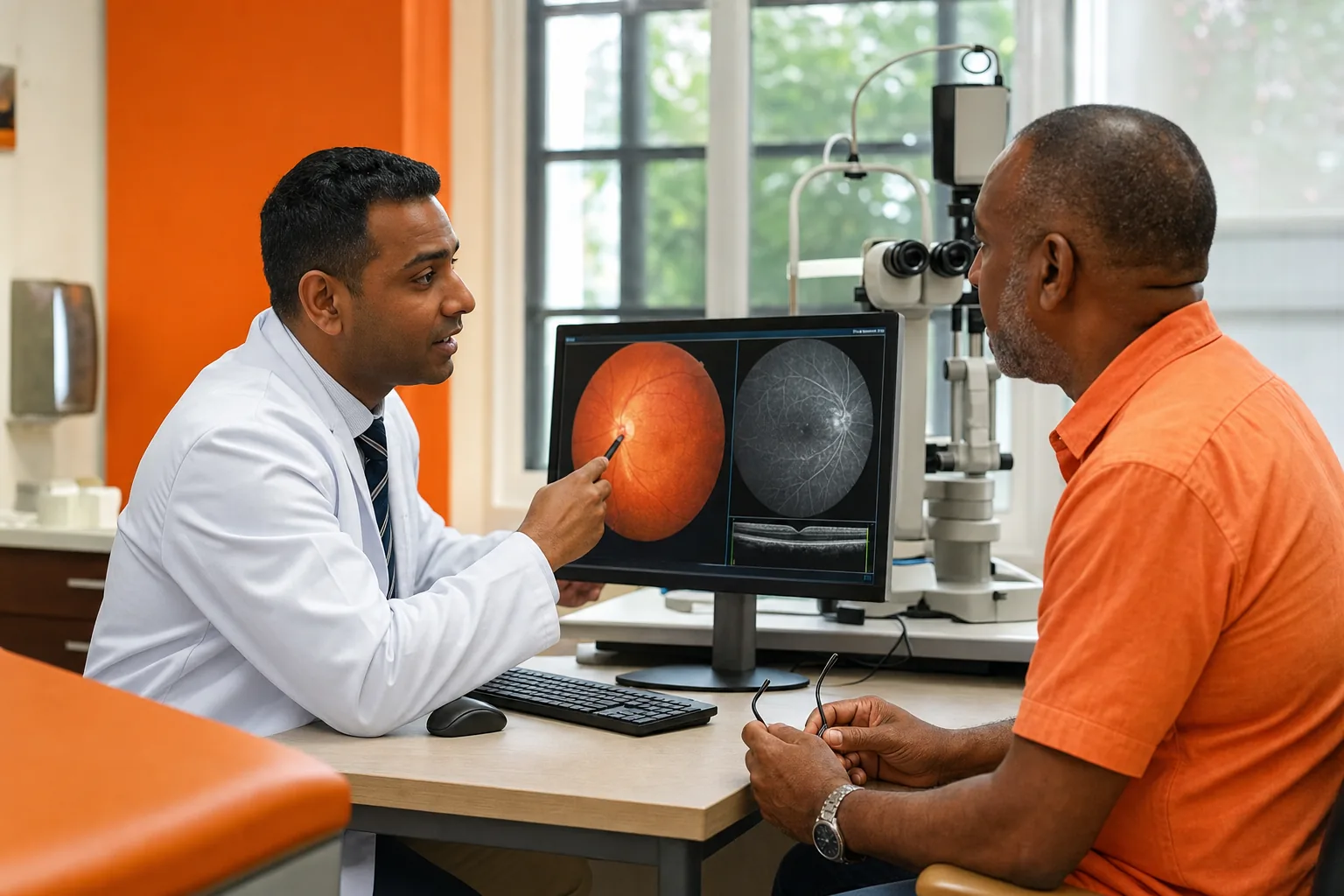
Seek urgent eye care for sudden vision loss, severe eye pain, a new curtain-like shadow, or a sudden burst of floaters and flashes. Do not wait for a routine appointment when symptoms appear suddenly.
At EyesTT, our goal is to improve quality of life through education and early detection. We provide complete eye care while taking eye care into the future, one clear explanation at a time.
Frequently Asked Questions
How do I find an eye doctor near me in Trinidad and Tobago?
Start by checking the clinic's location, hours, credentials, and service list. When searching for top eye doctors near me, confirm that the clinic treats your age group and reason for visiting. Ask about exam fees, follow-up, insurance, and testing before you book. A nearby clinic with clear information is easier to use over time.
Should I see an optometrist or an ophthalmologist?
See an optometrist for many routine vision and contact lens needs, or see an ophthalmologist when you may need medical treatment or surgery. Both can perform eye exams and screen for disease. If you are unsure, start with a clinic that can assess your eyes and refer you when a specialist opinion is needed.
What happens during a first eye exam?
A first eye exam usually includes questions about your health and vision, a vision check, and an examination of the eye. The clinician may measure intraocular pressure or recommend imaging based on your history. Bring your glasses and medication list. Ask what each test means and when you should return.
How often should I get an eye exam?
The right schedule depends on your age, symptoms, health, family history, and previous results. People with diabetes or a known eye condition may need closer follow-up. Your eye doctor should set the interval after reviewing your exam. Book sooner if vision changes, pain, flashes, or new floaters appear.
How much does an eye exam cost in Trinidad and Tobago?
The cost varies by the exam type, diagnostic tests, treatment, and clinic. Ask for an estimate before adding scans or procedures. Also ask whether follow-up visits and eyewear are separate charges. EyesTT can explain the planned service and available payment information before your appointment.
Choose care that fits your needs, explains its findings, and remains accessible for follow-up. If EyesTT's complete eye care matches what you need, review the available appointment options and prepare your questions before booking.


Comments