.png)
Pediatric Eye Doctor Near Me | EyesTT

Updated: Sep 4
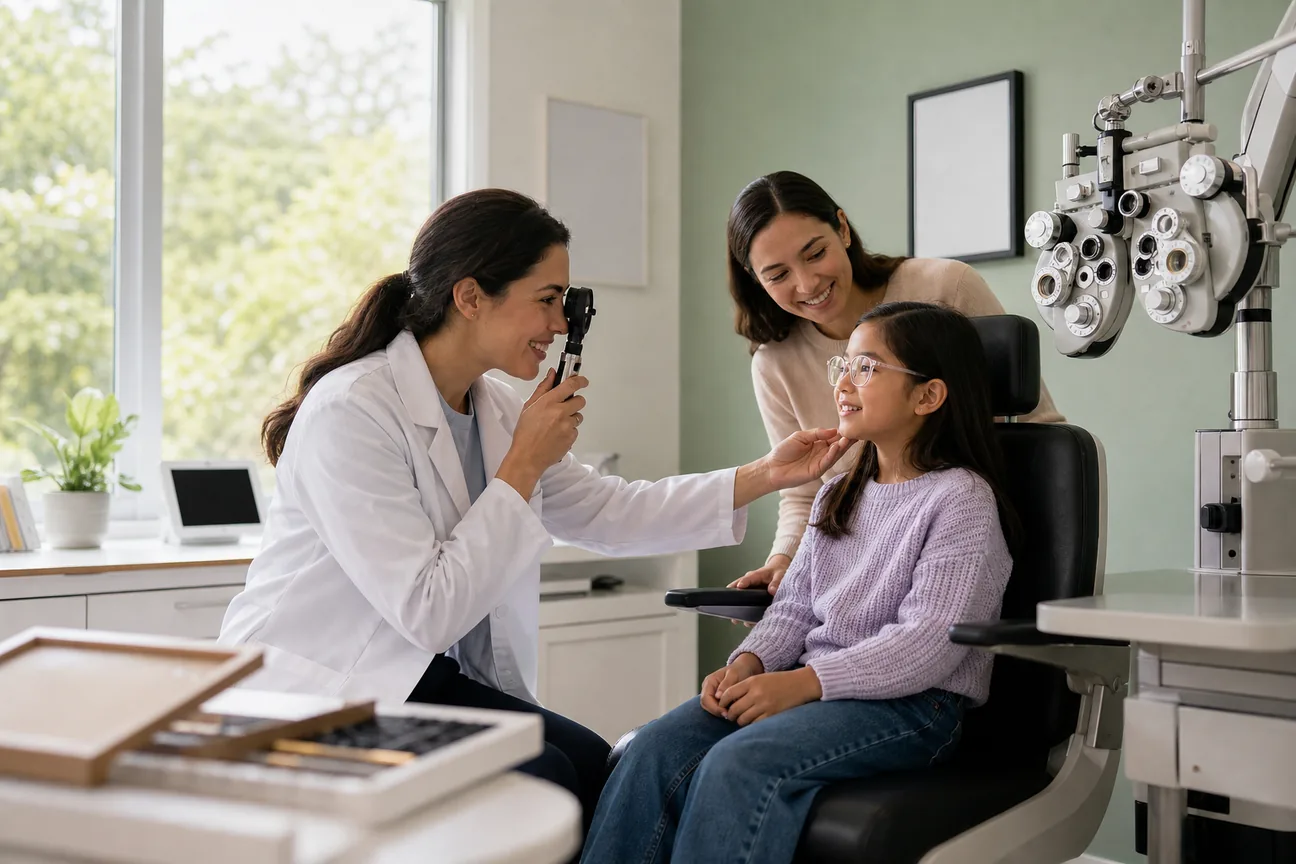
Finding a pediatric eye doctor near you can feel urgent, especially when your child squints, bumps into things, or has a white pupil in a photo. The right service depends on your child’s age, symptoms, and need for routine care or specialist treatment. Here are the main pediatric eye-care options to discuss with EyesTT in Trinidad and Tobago.
Table of Contents
1. EyesTT, Local, complete eye care for children and families
EyesTT is an ophthalmology and eye-care clinic for children and adults in Trinidad and Tobago. We provide eye exams, diagnostic services, surgery, and optical products, so families can start with an assessment and discuss the next step in one care setting.
That broad scope helps when a child’s concern is not clear yet. A visit may begin with a vision check. The clinician may then assess eye alignment, eye health, or the need for more testing. We explain each part in plain language because children often respond better when they know what will happen.
Our children’s eye exams in Trinidad and Tobago are a useful starting point when you’re searching for local pediatric care. Parents can ask about the child’s symptoms, past eye history, school concerns, and family history before the exam begins.
We also look at the difference between a sight problem and an eye-health problem. A refractive error means the eye does not focus light clearly. Amblyopia, often called lazy eye, happens when the visual system does not develop equal strength between both eyes. Strabismus means the eyes do not point in the same direction.
Those conditions may show up as a child holding books close, closing one eye in bright light, or avoiding tasks that need focus. Some children show no clear sign at home. That’s why a proper assessment matters when a screening result is unclear.
Research material reviewed for this topic found that pediatric eye exams often refer to about ten types of equipment. The list includes visual acuity charts, slit lamps, retinoscopes, autorefractors, tonometers, phoropters, and retinal imaging devices. The exact tests used will depend on the child’s age and symptoms.
Cost questions are fair. Available listings disclose cost information for only a small share of reviewed services. The entries that did disclose a cost described the service as free or at no cost, but that does not confirm the fee for every clinic or test.
Ask what the first visit includes before you book. If your child needs dilation, imaging, a specialist review, or surgery, ask whether those services are part of the visit or billed separately. Clear answers help you plan without guesswork.
Key Takeaway:EyesTT gives families one place to begin with child eye exams, diagnostic testing, treatment discussions, and optical care.
2. Vision Screening
Regular, systematic vision screening may assist in making early diagnoses of common causes of visual disturbances.
The first part is usually a history. The clinician may ask when the concern began and whether the child struggles at school. Questions about crossed eyes, unusual eye appearance, eyelid drooping, headaches, or past injury can guide the exam.
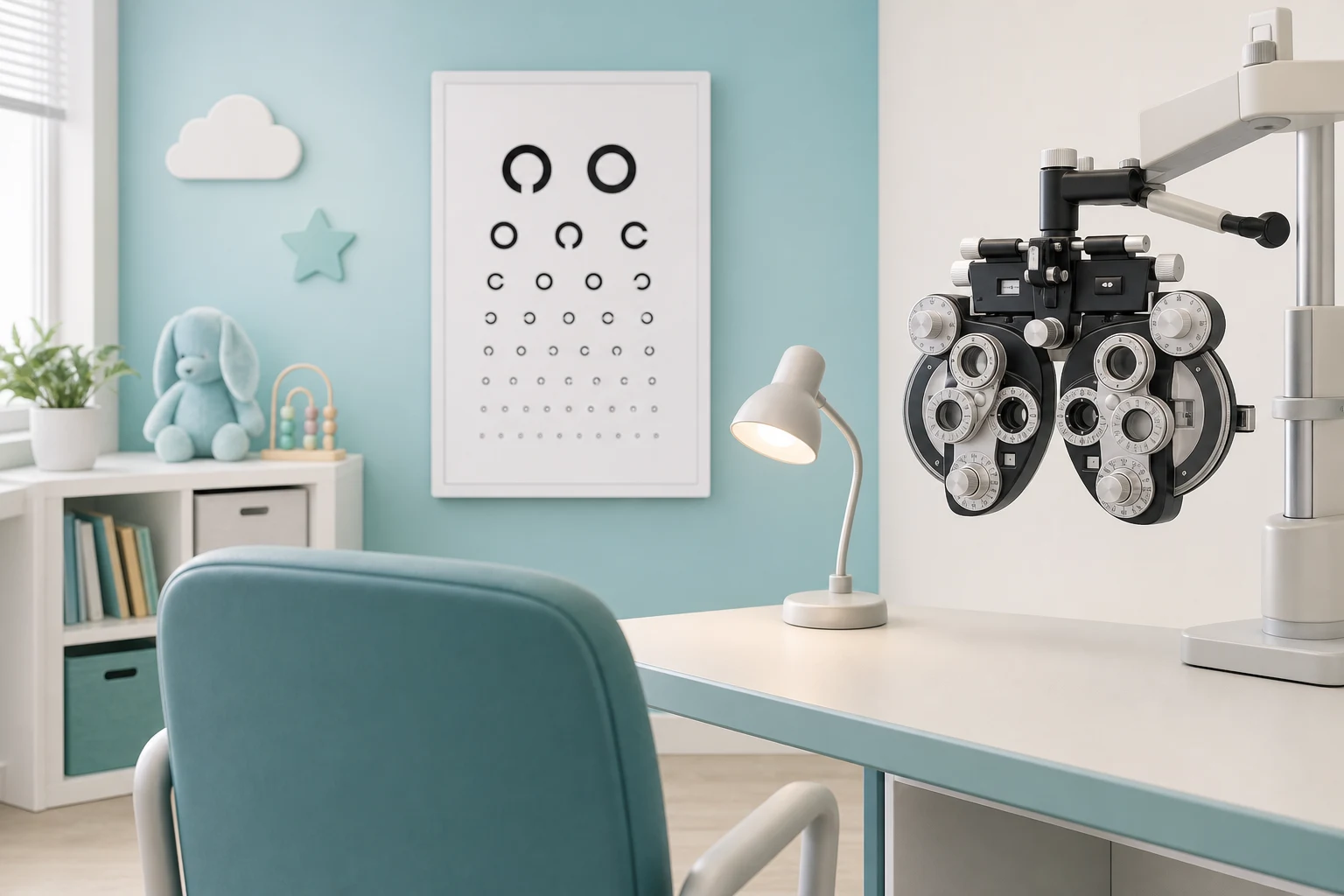
Visual acuity testing checks how clearly each eye sees. Young children may use pictures or simple symbols instead of letters. The goal is to learn what the child can see, not to test reading skill.
A cover test checks eye alignment. The clinician covers one eye, then the other, and watches how the eyes move. This can help detect strabismus or a hidden alignment problem.
Refraction checks whether glasses may improve focus. In children, a focusing measurement may be used to assess the prescription.
Retinoscopy is another way to measure focus. The clinician shines a light into the eye and studies its reflection. An autorefractor can provide an additional estimate, although young children may not hold still long enough for every device to work well.
A phoropter is the instrument that places different lenses before the eyes. Some children can answer which lens looks clearer. Others need a measurement based on age, behavior, and clinical findings.
Tonometry measures intraocular pressure, which is the pressure inside the eye. It may be included when the clinician sees a reason to check it. The test can be quick, but the approach may change for a nervous child.
The exam may also include dilation. Dilating drops widen the pupil so the clinician can inspect deeper parts of the eye. Temporary blur or light sensitivity can occur, so bring sunglasses if your child has them.
A child-friendly visit does not mean a less serious visit. It means the clinician adjusts the pace and method so the child can take part. A toddler may need play-based tasks. An older child may receive a clear explanation before each test.
One local listing describes specialist pediatric care from infancy onward. Still, parents should confirm who will examine their child and what qualifications apply to the planned service. Qualification details are missing from many online listings, so it’s sensible to ask directly.
3. Neonatal Red Reflex Screening, early checks for newborn eye abnormalities
Neonatal red reflex screening is a quick check of a newborn’s eye response to light. It belongs on a family’s list when a baby has an unusual eye appearance or needs a newborn eye check.
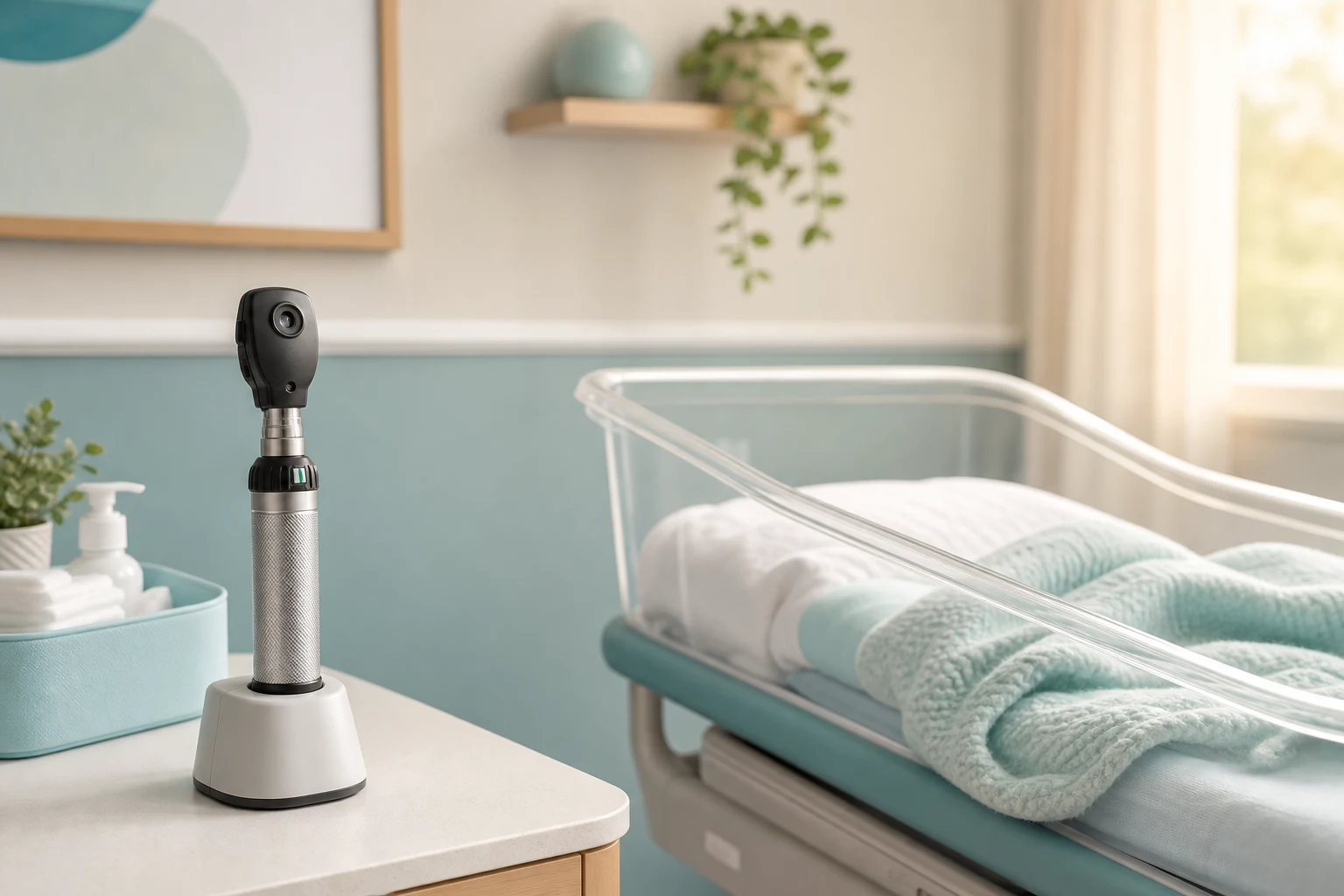
During the test, a clinician uses an ophthalmoscope to shine light toward the eyes. A normal reflection often looks reddish or orange. A missing, white, uneven, or unusual reflex needs prompt medical review.
The test can help identify cataract, retinoblastoma, or other problems that affect the clear path through the eye. It does not diagnose every eye condition. A concerning result calls for a full assessment by an appropriate eye specialist.
The clinical review of pediatric eye care describes red-reflex screening as a way to detect cataract, retinoblastoma, and other ocular abnormalities. It also notes that screening may be performed by a primary health worker or a pediatric eye doctor, depending on the setting.
Parents sometimes notice an unusual pupil appearance in a phone photo before anyone sees it in person. That sign can have more than one cause, including the angle of the light. It still deserves prompt attention. Do not wait for the next routine visit if the finding repeats.
Other reasons to seek an assessment include a baby who does not seem to fix on faces, an eye that turns in or out, a cloudy-looking eye, or a swollen eyelid. A newborn who was born early may also need care based on risk factors and the advice of the child’s medical team.
Red-reflex screening is brief. It is also limited. A normal result does not replace later checks when symptoms appear or when a child has a known risk.
If you’re seeking a pediatric eye doctor near you for a newborn, tell the clinic the baby’s age and the reason for the visit. Share any photo that shows an unusual pupil. That detail may help the team decide how quickly the child should be seen.
4. Pediatric Cataract Detection and Surgery, protecting developing vision early
Pediatric cataract detection and surgery focus on a cloudy lens present at birth or developing early in childhood. This evaluation may be relevant when a child has a cloudy-looking pupil, poor visual response, or a known cataract.
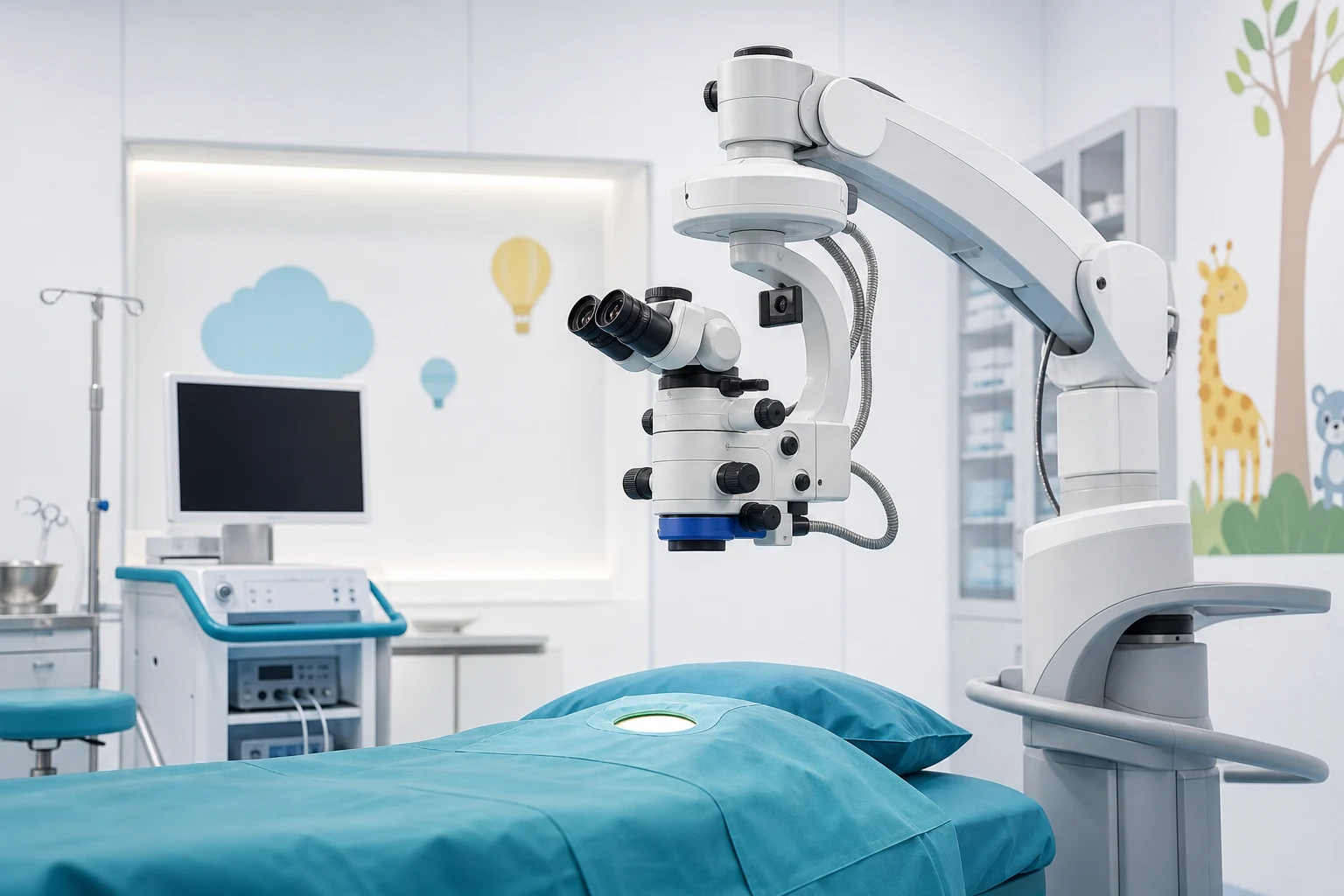
A cataract is a clouding of the eye’s natural lens. In a child, the concern is bigger than blurry sight alone. If clear images do not reach the developing visual system, the affected eye may not build normal vision.
The examination may include a red-reflex check, a view of the lens, measurements of the eye, and an assessment of how well the child fixes on a target. The child’s age and ability to cooperate affect how the team performs these tests.
A pediatric ophthalmologist should assess a child who may need cataract surgery. A pediatric ophthalmologist is an eye doctor trained to manage eye conditions in children, including problems that need surgery.
The research source used for this article states that congenital or early-onset cataracts may need surgical removal within four to eight weeks after birth to help prevent amblyopia. Timing is not the same for every child. The specialist must consider the cataract’s size, location, one-eye or two-eye involvement, and the child’s general health.
Surgery is only one part of care. Children may need follow-up visits, a glasses prescription, contact lens care, or treatment that helps the weaker eye work harder. The plan can change as the eye grows.
Ask the specialist these questions before treatment:
What type of cataract does my child have?
How soon should the child be assessed or treated?
What will vision support look like after surgery?
Which warning signs should prompt an urgent review?
Families also need clear details about the surgical setting, anesthesia, follow-up schedule, and expected costs. If a clinic does not provide a specific service, ask whether it can guide you to the right referral pathway.
At EyesTT, we can begin with an eye assessment and explain which service matches the child’s needs. We also provide diagnostic services and surgery as part of our wider eye-care work, subject to clinical assessment and the appropriate care plan.
Pro Tip:Bring past medical notes, birth details, prior prescriptions, and any photo that shows a change in the child’s eyes.
5. Retinoblastoma Detection and Treatment, responding quickly to warning signs
Retinoblastoma detection and treatment address a rare childhood eye cancer that can threaten sight and life. It belongs in this shortlist because a white pupil or an unusual light reflection needs prompt eye-care review.
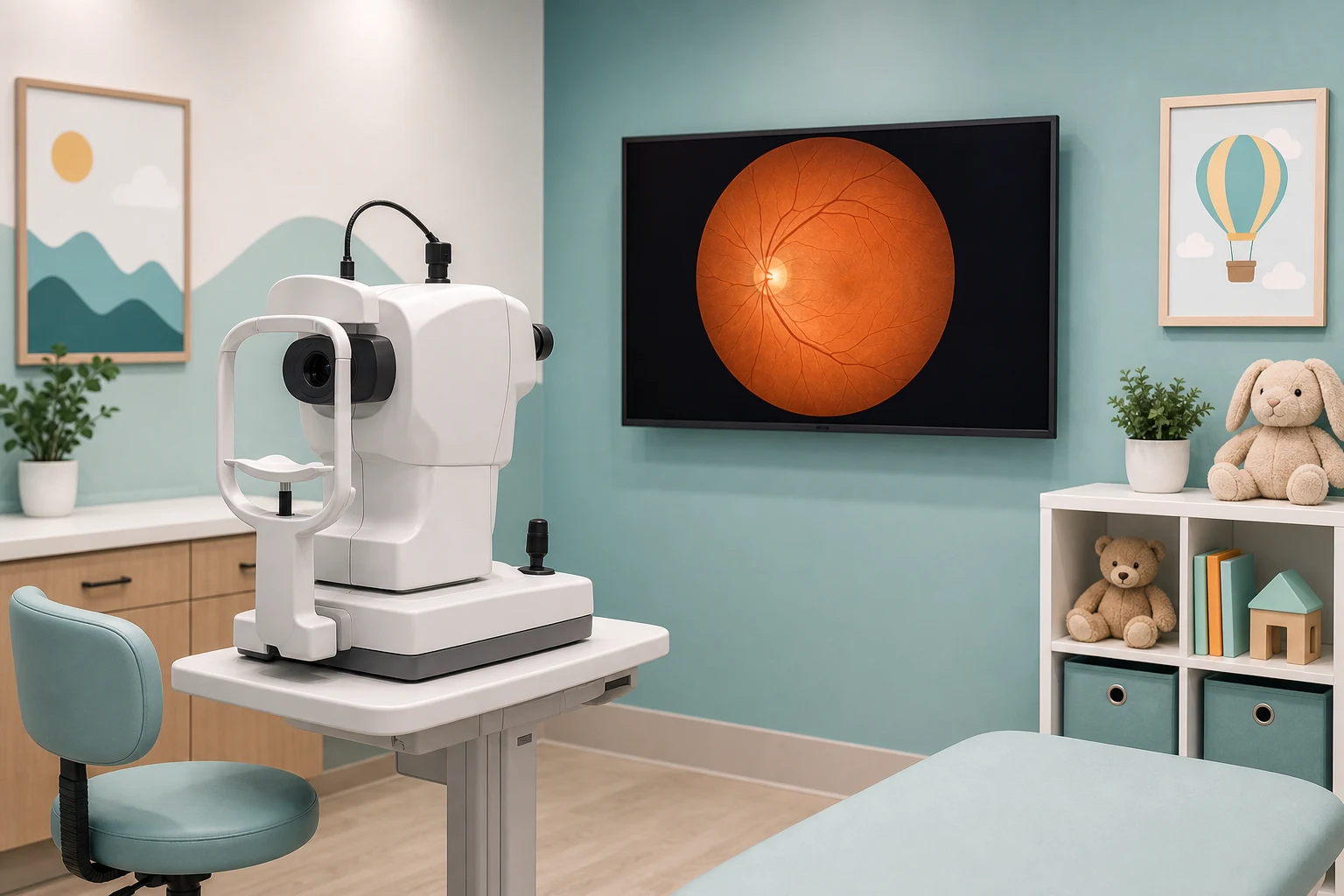
Retinoblastoma begins in the retina, the light-sensitive tissue at the back of the eye. A white pupil, often called leukocoria, is a warning sign. Other possible signs include a new eye turn, redness, swelling, or a child who seems to see less well.
These signs do not prove that a child has cancer. They can occur with other eye conditions. The safe choice is to arrange an urgent assessment rather than trying to judge the cause from a photo or online search.
Red-reflex evaluation is used in screening for retinoblastoma from birth. Children with abnormal findings need referral for a detailed eye examination.
A pediatric ophthalmologist leads the eye assessment. The team may need to examine the retina in detail, sometimes while the child is asleep under anesthesia. Imaging can help show the tumor’s size and position. The child’s age, general health, and one-eye or two-eye involvement all affect the plan.
Treatment can include more than one method. The research material includes intra-arterial chemotherapy, in which medicine is delivered through a small cannula advanced to the ophthalmic artery. A specialist team decides if that treatment is suitable.
Parents should share family history when arranging care. Some cases have an inherited link, so the specialist may discuss testing or assessment for relatives. Do not assume that no family history removes the need for review.
Urgency matters, but panic does not help. Take the child to a qualified eye-care team and bring the image or note that raised concern. If the child has severe pain, sudden vision loss, injury, or a rapidly changing eye, seek urgent medical care.
When you search for a pediatric eye doctor near you, check whether the clinic can assess warning signs and explain referral options. EyesTT can help families begin with complete eye care and understand the next clinical step.
Pediatric eye-care options compared at a glance
Each option answers a different need. A routine exam may be right for a school concern. A red-reflex check fits a newborn. A suspected cataract or white pupil needs specialist attention.
Option | Useful when | Clinician to confirm | What parents should ask |
EyesTT pediatric eye care | You need a local starting point for assessment and care | Clinician suited to the child’s need | Which tests are needed first? |
Vision screening | Regular checks for early signs of visual disturbance | Pediatrician | Which screening method is appropriate? |
Neonatal red reflex screening | Newborn check or unusual pupil reflection | Primary health worker or pediatric eye doctor | Does the result need urgent referral? |
Pediatric Ocular Injury Diagnosis and Management | Eye injuries in children | Pediatric ophthalmologist or qualified eye surgeon | Is early referral needed? |
Retinoblastoma Screening | Routine vision screening beginning at birth | Ophthalmologist | How is the red reflex evaluated? |
Screening and diagnosis are different. Screening looks for a possible problem. A comprehensive examination works to find the cause and set a care plan.
What to look for in a pediatric eye doctor near you
Start with the child’s reason for care. A routine concern may need an optometrist or ophthalmologist. A suspected serious eye condition, complex eye turn, or injury may need a pediatric ophthalmologist or qualified eye surgeon.
Then check the details that online listings often leave out. Ask who will examine the child, what qualifications they hold, which tests may be used, and whether a referral is needed for surgery.
Age range:Confirm that the service sees infants, toddlers, or older children as needed.
Exam scope:Ask whether the visit includes alignment, refraction, eye health, and pressure checks when appropriate.
Child comfort:Look for a team that can adjust the pace and explain tests clearly.
Referral plan:Ask what happens if the clinic finds a condition needing specialist treatment.
Cost clarity:Request an estimate for the visit and any likely extra test.
EyesTT has several locations across Trinidad and Tobago. Families can review EyesTT clinic locations and consider which site is easiest for the child and caregiver to reach.
Key Takeaway:Choose the service that matches the child’s age, symptoms, and need for specialist care, then confirm the clinician and fee before the visit.
FAQ
What does a pediatric eye doctor do?
A pediatric eye doctor checks children’s vision, eye alignment, focusing, and eye health. The visit may include age-appropriate vision testing, retinoscopy, or a red-reflex check. If you’re searching for a pediatric eye doctor near you, ask which clinician will see your child and whether the clinic handles referrals for surgery.
When should a child have an eye exam?
A child should have an eye exam when you notice poor vision, an eye turn, unusual eye appearance, frequent squinting, or school-related difficulty. Newborns with an abnormal red reflex need prompt review. Children who cannot complete a screening may also need a full assessment rather than waiting for another routine check.
What is a red reflex test for babies?
A red reflex test checks the light reflection from a baby’s eyes. It can help flag cataracts, serious childhood eye conditions, and other abnormalities that block or change the reflection. A white, missing, or uneven reflex does not confirm a diagnosis, but it does mean the child needs an eye assessment without delay.
Does a child need a pediatric ophthalmologist?
A child may need a pediatric ophthalmologist when there is a suspected cataract, serious childhood eye condition, serious injury, complex eye turn, or another condition needing specialist treatment. Routine vision concerns may begin with an optometrist or ophthalmologist. Ask the clinic which qualification fits your child’s symptoms.
How much does a children’s eye exam cost?
The cost depends on the clinic, test, and treatment required. Available listings provide fee information for only a small share of reviewed pediatric eye services, and the disclosed entries describe no cost. EyesTT can explain which service your child needs and what costs should be confirmed before booking.
Conclusion
For families in Trinidad and Tobago, EyesTT is a sensible place to begin when a child needs complete eye care. Start by booking an EyesTT appointment online , then share the child’s symptoms and age so the team can guide the visit. If you see a white pupil or sudden change, seek prompt medical assessment.


Comments