.png)
Retina Specialist Near Me in Trinidad & Tobago

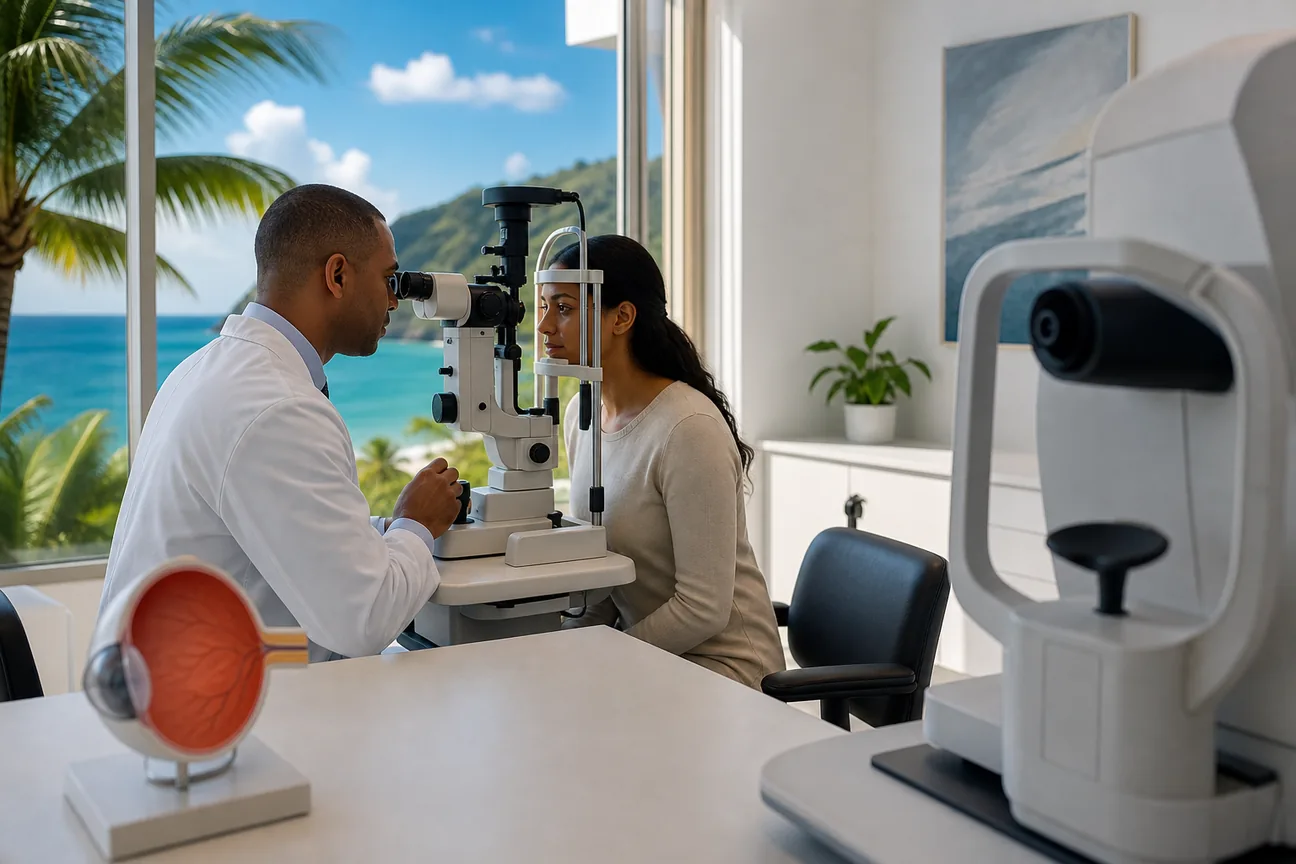
Finding a retina specialist near me can feel urgent, especially after sudden floaters, flashes, or blurred vision. Trinidad and Tobago has several care paths, from private eye clinics to hospital services and community screening. We’ve outlined the main options below, with EyesTT first for patients seeking coordinated retina assessment, treatment, and follow-up.
Table of Contents
EyesTT, Complete Retina Assessment and Eye Care in Trinidad and Tobago
Hospital-Based Retina Services, Coordinated Care for Complex Eye Conditions
Private Ophthalmology Clinics with Retina Diagnostics, Convenient Local Evaluation
Pediatric-Capable Retina Care, Support for Children and Families
Retina Surgery and Follow-Up Services, Ongoing Care After Diagnosis or Treatment
FAQ: Finding a Retina Specialist Near Me in Trinidad and Tobago
1. EyesTT, Complete Retina Assessment and Eye Care in Trinidad and Tobago
EyesTT provides retina care for adults and children across Trinidad and Tobago. We assess retinal conditions with eye exams and high-resolution imaging, then discuss non-surgical or surgical treatment when needed.
Our retina service covers conditions such as retinal detachment , diabetic retinopathy, age-related macular degeneration, retinal tears, floaters, and macular holes. The retina is the light-sensitive tissue at the back of the eye. It changes light into signals that the brain reads as vision.
Retinal detachment needs fast attention. It happens when the retina pulls away from the tissue that supports it. EyesTT works with patients who face added risk from trauma, diabetes, or high myopia, which means severe short-sightedness.
We also use OCT imaging, retinal scans, and diabetic-retinopathy screening as part of wider eye care. OCT, or optical coherence tomography , makes detailed cross-section images of the retina. These images help the eye doctor spot changes that may not be clear during a basic eye exam.
Patients can review our Eye Scans and Vision Tests when they want a clearer view of the diagnostic services involved. A scan alone does not give a full diagnosis. The result must be read alongside your symptoms, medical history, and eye exam.
EyesTT has clinic locations across Trinidad and Tobago , including Freeport, San Fernando, St. Augustine, Tobago, and Debe. This gives patients more than one location to consider, though the right site depends on the service and the equipment needed.
Insurance information can be hard to find when you search online. In the reviewed search data, only 27% of entries mentioned insurance coverage. EyesTT states that it works with most major insurers in Trinidad and Tobago, but patients should still confirm their own plan before treatment.
Key Takeaway:EyesTT is a sensible first contact when you want retinal assessment, imaging, treatment planning, and follow-up within one care pathway.
We understand that vision changes affect work, school, driving, and family life. Our goal is to provide complete eye care while taking eye care into the future through clear testing and patient education.
2. Hospital-Based Retina Services, Coordinated Care for Complex Eye Conditions
Hospital-based retina services are an option when a patient may need surgery or care for a complex medical condition. They can suit people who need several medical teams involved in one treatment plan.

A hospital setting may matter when retinal disease occurs alongside diabetes, high blood pressure, kidney disease, or another condition that affects surgical planning. The eye team may need to work with other doctors before a procedure goes ahead.
Common reasons for hospital referral include retinal detachment, serious eye trauma, advanced diabetic retinopathy, vitreous bleeding, or a macular hole. The vitreous is the clear gel that fills much of the eye. Bleeding into this gel can block the view of the retina and reduce sight.
Ask how the hospital handles the handoff from diagnosis to treatment. You should know who reviews your scan, who performs the procedure, where follow-up takes place, and what happens if symptoms worsen while you wait.
Wait-time details are often missing from online listings. The median reported wait was one hour, but one 15-hour outlier points to possible scheduling pressure in some settings.
Those figures do not predict your own visit. They do show why it helps to ask direct questions before you attend. A scheduled consultation may differ from an emergency assessment, and surgery may require a separate booking process.
Hospital care can also involve more travel, more paperwork, or a longer recovery plan. Bring your referral letter if you have one. Bring recent scan reports and a list of medicines as well.
Research on retinal screening has described public and community pathways, including screening linked to hospitals. These routes may improve access for people who cannot easily reach a private clinic, but the next step after an abnormal image still needs clear planning. A review of community diabetic-retinopathy screening models is available through the peer-reviewed medical literature.
For a hospital option, ask whether the service can explain the full path before you commit. If the answers are vague, keep looking for a clinic that can coordinate the next stage.
3. Private Ophthalmology Clinics with Retina Diagnostics, Convenient Local Evaluation
Private ophthalmology clinics with retina diagnostics can suit patients who want a local evaluation and a clear plan for next steps. When you search for a retina specialist near me, check whether the clinic has the right imaging tools, not just a general eye-exam listing.
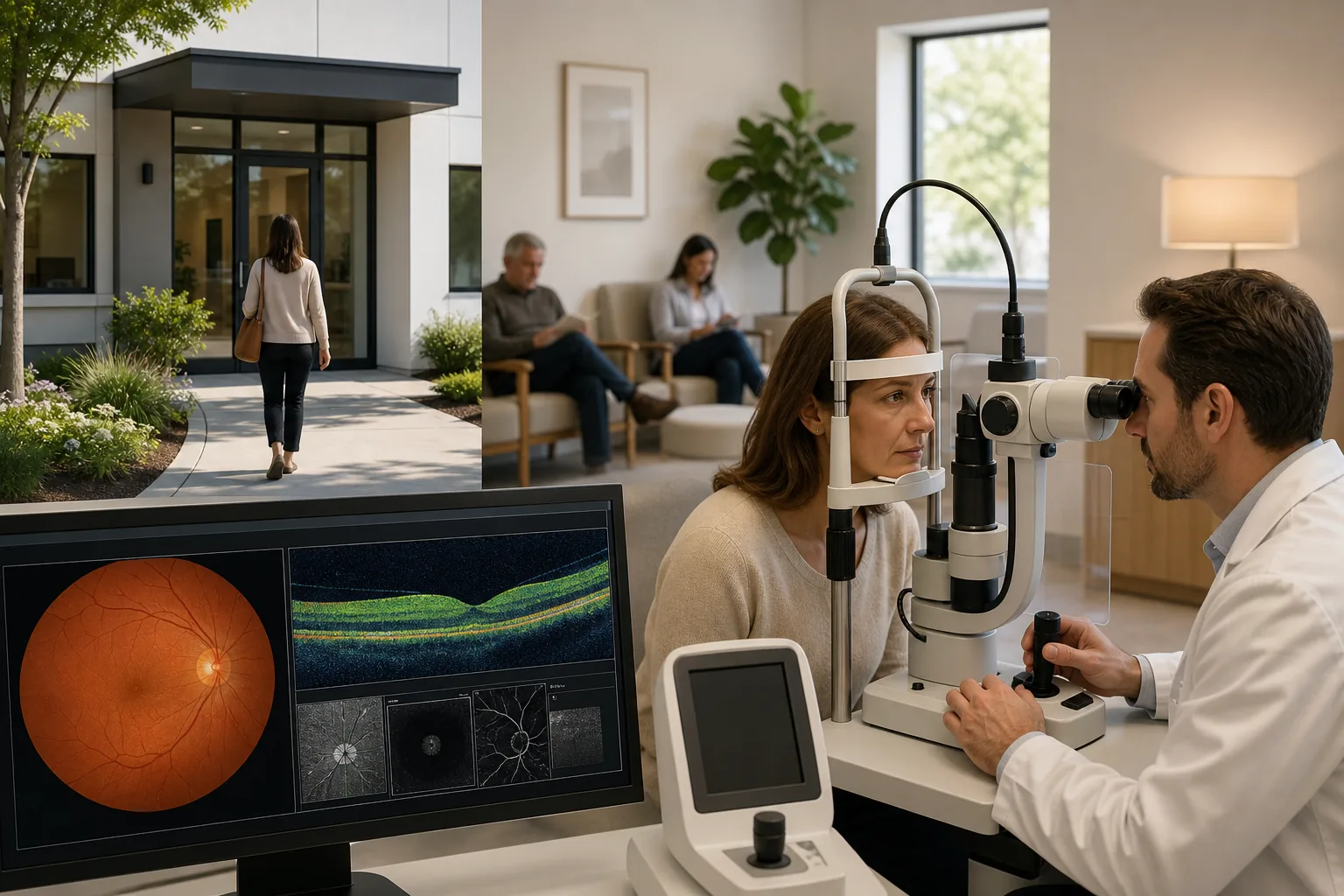
An ophthalmologist is a medical doctor who diagnoses and treats eye disease. A private clinic may begin with a detailed eye exam, pupil dilation, pressure check, and retinal imaging. The exact tests depend on your symptoms and risk factors.
OCT is often central to this visit. It can show changes in the macula, optic nerve, or retinal layers. The macula is the part of the retina that supports sharp central vision, such as the sight used for reading.
Ultrasound may help when blood, a cataract, or another problem blocks a clear view inside the eye. Retinal photography can also provide a record for later comparison. Still, no single scan replaces a clinical assessment.
The retina sends light signals through the optic nerve to the brain.
That warning matters in daily life. A new shower of floaters may be harmless, but it can also point to a retinal tear. Flashes may happen when the vitreous pulls on the retina. A dark curtain or shadow across your vision needs urgent assessment.
Convenience should not mean a rushed visit. Ask how long the appointment takes, whether dilation is likely, and whether someone should drive you home. Dilated pupils can make bright light uncomfortable for several hours.
Ask for a written explanation of the findings. It should state whether the retina looks healthy, whether you need a referral, and when you should return. If you have diabetes, ask how often screening should take place.
Private clinics may also make it easier to arrange follow-up in the same location. That can help when the doctor needs to compare scans over time. Confirm the full cost and insurance process before a procedure, since public listings often leave those details out.
4. Pediatric-Capable Retina Care, Support for Children and Families
Pediatric-capable retina care is for children whose vision changes may need a medical eye assessment. Families searching for a retina specialist near me should ask whether the clinic sees children and can adapt the exam to the child’s age.

Children may not describe blurred or distorted sight in the same way adults do. They may move closer to books, close one eye, avoid bright light, or struggle at school. Some children show no clear sign at home, even when one eye sees less than the other.
A child’s exam may include pupil dilation and cycloplegic refraction. Cycloplegic refraction uses drops to relax the focusing muscles. This helps the doctor measure the child’s true prescription, especially when the child’s eyes focus too strongly during a standard test.
The retina can be affected by inherited conditions, early birth, injury, inflammation, or health problems such as diabetes. The condition comes first. The reason it matters depends on the child’s age, symptoms, and how quickly the problem is changing.
Families should ask what will happen before the appointment. Find out whether the child needs drops, how long the visit may take, and whether the exam can be completed if the child feels anxious. A calm plan often makes the test more useful.
Bring the child’s health records if they relate to the eyes. Include school reports about vision concerns. Tell the doctor about headaches, eye turns, frequent falls, or a family history of retinal disease.
Children who need more than one visit benefit from a clear follow-up plan. Ask what signs should prompt an earlier review. Also ask who will explain the scan results in language your child can understand.
We provide eye care for adults and children, but every child’s needs are different. If a child has sudden vision loss, a new eye injury, or a rapid change in sight, seek urgent medical care rather than waiting for a routine visit.
A child-friendly service should leave the caregiver with three clear answers: what the doctor found, what happens next, and when to return. If you do not have those answers, ask before leaving.
5. Retina Surgery and Follow-Up Services, Ongoing Care After Diagnosis or Treatment
Retina surgery and follow-up services support patients after a serious diagnosis or a procedure. This care path is for people who need treatment planning, recovery checks, or long-term monitoring.

Possible treatments include medication, laser therapy, or surgery such as vitrectomy and retinal detachment repair. A vitrectomy removes some or all of the vitreous gel so the surgeon can treat the retina. Your eye doctor will explain which approach fits your condition.
Surgery is only one part of the process. Before treatment, ask what the procedure aims to fix and what recovery may involve. You should also know whether you need someone to take you home and whether work or driving restrictions apply.
After treatment, follow-up visits help the doctor check healing and watch for changes. Keep every visit, even if your sight feels better. Some retinal problems can return or progress without strong symptoms at first.
Care point | What to ask | Why it helps |
Diagnosis | What condition affects my retina? | Gives you a clear name for the problem. |
Imaging | What did the OCT, scan, or ultrasound show? | Helps you understand the evidence behind the plan. |
Treatment | Why is this treatment recommended now? | Links the procedure to your symptoms and risk. |
Recovery | What should I avoid after treatment? | Helps protect the treated eye during healing. |
Warning signs | Which symptoms need urgent help? | Sets a clear response if vision changes again. |
Payment | What does my insurer cover? | Reduces surprises before tests or surgery. |
Insurance is worth checking early. Only 27% of the reviewed entries mentioned coverage, so silence online does not mean a service is covered or excluded. EyesTT states that it works with most major insurers in Trinidad and Tobago, while your plan may still require approval or a referral.
For people with diabetes, retinal follow-up is especially important. Diabetic retinopathy means diabetes has damaged the small blood vessels in the retina. Our diabetic eye care service includes screening and retina scans aimed at finding changes early.
Pro Tip:Keep copies of scan reports and treatment notes. Bring them to each new appointment so your eye doctor can compare changes over time.
Contact the clinic through its official online booking route when you’re ready to arrange an assessment. If symptoms are sudden, severe, or rapidly worsening, seek urgent medical care instead of waiting for a routine slot.
FAQ: Finding a Retina Specialist Near Me in Trinidad and Tobago
How do I find a retina specialist near me in Trinidad and Tobago?
Start with an ophthalmology clinic that lists retinal assessment and imaging. Check its location, available tests, treatment pathway, and insurance details. EyesTT has clinics in Freeport, San Fernando, St. Augustine, Tobago, and Debe. If your symptoms began suddenly, do not wait for a routine search. Seek urgent eye care.
What symptoms need urgent retina care?
Sudden vision loss, a dark curtain, new flashes, or a sudden burst of floaters needs urgent assessment. These symptoms can happen with a retinal tear or detachment. A retina specialist near you can examine the eye after dilation and may use imaging or ultrasound. Do not drive if your vision is unsafe.
What tests does a retina specialist perform?
A retina specialist may perform a dilated eye exam, OCT, retinal photography, or ultrasound. The right test depends on the symptoms and what the doctor can see. OCT creates detailed images of retinal layers. Ultrasound can help when the view inside the eye is blocked.
Does diabetes mean I need retinal screening?
Diabetes can damage the retina, so regular screening is important. Diabetic retinopathy may progress before vision changes feel obvious. Your eye doctor will suggest a schedule based on your diabetes and eye findings. Ask about retinal photography, OCT, and the next review date.
Does insurance cover retina treatment in Trinidad and Tobago?
Insurance coverage depends on your plan and the treatment. Public listings often do not state whether insurers are accepted. EyesTT says it works with most major insurers in Trinidad and Tobago, but you should confirm approval, deductibles, and referral rules with your insurer before care.
Conclusion
EyesTT is a strong place to start when you need retinal assessment, imaging, treatment planning, or follow-up in Trinidad and Tobago. Review the clinic locations, gather your medical records, and arrange an appointment online. For sudden vision loss or a curtain-like shadow, seek urgent care now rather than waiting.


Comments