
Daily vs. Monthly Contact Lenses: What to Know

EyesTT helps patients understand contact lens options that fit their eyes and daily routines. Daily lenses are replaced after one wear, while monthly lenses are reused on a set schedule with proper cleaning and storage.
That difference affects care, cost, and convenience, but replacement frequency alone doesn’t decide which lens is right for you. Your prescription, eye health, comfort, and wearing habits matter too.
An international review found that replacement-schedule adherence varied across the reviewed study populations: 49.3–95% for daily disposable lenses and 30.9–78% for monthly reusable lenses. These are ranges across individual studies, not an estimate for Trinidad and Tobago or for every wearer.
Table of Contents
What Daily and Monthly Contact Lenses Mean
In the daily vs monthly contact lenses decision, “daily” can mean two different things. Daily wear means you take lenses out before sleep. Daily disposable means you discard the lenses after one day of use.
A monthly lens is generally a reusable lens prescribed for replacement on a monthly schedule. You remove it before sleep, clean and disinfect it as directed, and store it in fresh solution. Follow the specific schedule given for your lenses, since a replacement period isn’t permission to wear them overnight.
A lens’s wearing schedule and its replacement schedule are related, but they aren’t the same. The wearing schedule tells you when it can be worn, such as during waking hours. The replacement schedule tells you when to discard it and start with a new lens.
Contact lens replacement schedules vary by lens type, and reusable lenses still need removal and care between wears. Never stretch a replacement period because a lens looks clean or still feels comfortable.
Decision point | Daily disposable | Monthly reusable |
When you replace it | After one day of use | On the schedule set for that lens |
Between wears | Discard after use; begin with a fresh lens next time | Remove, clean, disinfect, and store as directed |
Care supplies | Usually no cleaning solution for the lens | Needs compatible solution and a clean case |
Routine to remember | Open a fresh pair for each day of wear | Keep up with nightly care and replacement timing |
Useful question | How often will you wear lenses? | Can you keep up with daily lens care? |
The chart describes common routines, not a substitute for lens instructions. Some lens types have different care directions. Check the packaging and the directions from your eye care professional before use.
If you’re weighing contacts against glasses, EyesTT’s optical products and contact lens information can help you understand the options available through the clinic. The right schedule should work with your prescription and your actual routine, not an ideal version of it.
Comfort, Materials, and Vision Depend on More Than Replacement Frequency
Daily vs monthly contact lenses can feel different, but the replacement schedule doesn’t explain comfort on its own. Lens material, surface design, fit, tear film, and the health of the eye can all affect how a lens feels during the day.
Soft contact lenses are commonly made from hydrogel or silicone hydrogel . Hydrogel is a water-loving material; silicone hydrogel is designed to let more oxygen pass through the lens. Those broad material descriptions don’t tell you which lens will feel best on your eye.
Oxygen flow is one factor a clinician may consider. The cornea, the clear front surface of the eye, needs oxygen to stay healthy. A lens’s oxygen transmission depends on more than whether it’s daily or monthly, and the number printed for one lens shouldn’t be treated as a comfort score.
Soft lens materials differ in how they transmit oxygen, and material choice can affect the wearer’s experience. A specific material still doesn’t guarantee comfort for every person.
Dryness, irritation, or a lens that feels good only for a short time are reasons to bring the fit up at an exam. Don’t try to fix ongoing discomfort by changing your wear time or switching lens schedules on your own. The cause may relate to the lens, the fit, or the surface of the eye.
Prescription needs matter as well. A lens must match your vision correction and fit the eye properly. Some prescriptions need lens designs beyond a basic spherical lens, so a daily version and a monthly version may not both be suitable for your needs.

When comparing lens options, ask what material is prescribed and why. Also ask what to do if your eyes feel dry or your vision becomes blurry before the day ends. These details are more useful than assuming one replacement schedule is always more comfortable.
Care Routines and Contact Lens Safety
Care is one of the clearest differences in the daily vs monthly contact lenses choice. A daily disposable lens is discarded after use. A reusable monthly lens needs cleaning and disinfection between wears, along with safe storage.
For reusable lenses, follow the care instructions supplied for the lens and the solution. Use fresh solution as directed, and don’t top up what remains in the case. Clean hands before handling lenses. A routine that feels quick is still a health step, not an optional extra.
Contact lens care instructions explain that reusable lenses need cleaning, disinfection, and storage, while daily disposables are discarded after use. The right solution depends on the lens and the care system prescribed for you.
Different solution systems don’t all work the same way. Some require specific steps before a lens can safely go back into the eye. Read the solution label and follow its directions closely. If you’re unsure whether a solution is compatible with your lenses, ask your eye care professional before using it.
Don’t sleep in contact lenses unless your eye care professional has prescribed a lens and schedule for overnight wear. A lens intended for daytime use should come out before bed. If you accidentally fall asleep in your lenses, remove them when you wake, then seek professional advice if you have pain, redness, light sensitivity, or blurred vision.
Wash and dry your hands before touching lenses.
Use the prescribed cleaning and storage steps for reusable lenses.
Replace lenses and cases on the schedule you were given.
Don’t use water or saliva to rinse or store lenses.
Stop wearing lenses and get advice if your eye becomes painful or red.
Daily disposables can reduce the number of care steps for a wearer, but they still need correct handling. They aren’t a reason to reuse a lens or to ignore symptoms. And a reusable lens can be a reasonable choice when the wearer follows its care routine consistently.
Choose the routine you can follow every time. If cleaning and storing lenses each night is likely to be hard, tell your clinician before settling on a reusable schedule.
Cost and Convenience Across Everyday Situations
Cost is part of the daily vs monthly contact lenses decision, but a box price doesn’t show the full picture. Daily disposables require a fresh lens for each day you wear them. Reusable lenses need care supplies and a case, so include those costs when comparing your options.
How often you wear contacts matters. Someone who wears lenses on a few days each week uses fewer daily pairs than someone who wears them every day. A monthly lens may seem like the lower-cost choice at first, but the lens price is only one part of the yearly total.
Compare your expected use over a typical month or year. Include the number of days you plan to wear contacts, the lens supply you’ll need, and the cost of solution and cases for reusable lenses. Ask about exam and fitting costs as well, since those are separate from buying lenses.
A simple comparison can help you avoid surprises:
Estimate how many days per week you’ll wear contacts.
Check how many lenses are in each package and how often you’ll need to reorder.
Add compatible care supplies for reusable lenses.
Ask how a change in prescription could affect a larger lens purchase.
Convenience has a cost too. Daily disposables may fit occasional wear or a routine where carrying solution is awkward. Monthly lenses can mean fewer lenses to buy, but you’ll need to clean and store them after each day of wear.
Imagine you wear contacts only for weekend activities and use glasses on workdays. A daily disposable schedule may avoid keeping a reusable lens in use during long gaps. If you wear contacts most days and have a steady cleaning routine, a reusable schedule may be worth discussing. Neither example is a prescription recommendation.
Budget for the schedule you can follow, not just the lowest price you see today. Ask your eye care team which options match your prescription, then compare the full cost of those options.
Lifestyle, Wear Habits, and Trinidad and Tobago Considerations
Daily vs monthly contact lenses can fit different routines, so think through where and when you wear them. Consider workdays, school, exercise, travel, and the time you have for lens care at night. Your own habits are a better guide than a general claim that one schedule suits everyone.
For occasional wear, a daily disposable may be easier to manage because you start with a fresh lens on each day you use contacts. You don’t need to keep a reusable pair in rotation between wears. That convenience still depends on having the correct prescription and enough lenses for your planned use.
Regular wear calls for a more careful look at the whole routine. If you choose a reusable lens, think about where you’ll clean and store it when you’re away from home. A late night, a change in plans, or a forgotten case can make it harder to follow the care directions.
In Trinidad and Tobago, daily life can include heat, humidity, outdoor time, and travel between settings. These conditions don’t by themselves determine which lens is safe or comfortable. They do make it useful to plan ahead: bring the supplies your clinician recommends, avoid handling lenses with unclean hands, and use glasses when your eyes need a break.
Water exposure needs care wherever you are. Don’t swim or shower in contact lenses unless your eye care professional has given you specific instructions. Water can carry germs, and lenses can trap them against the eye. Take lenses out before water activities and follow professional advice if they’re exposed.
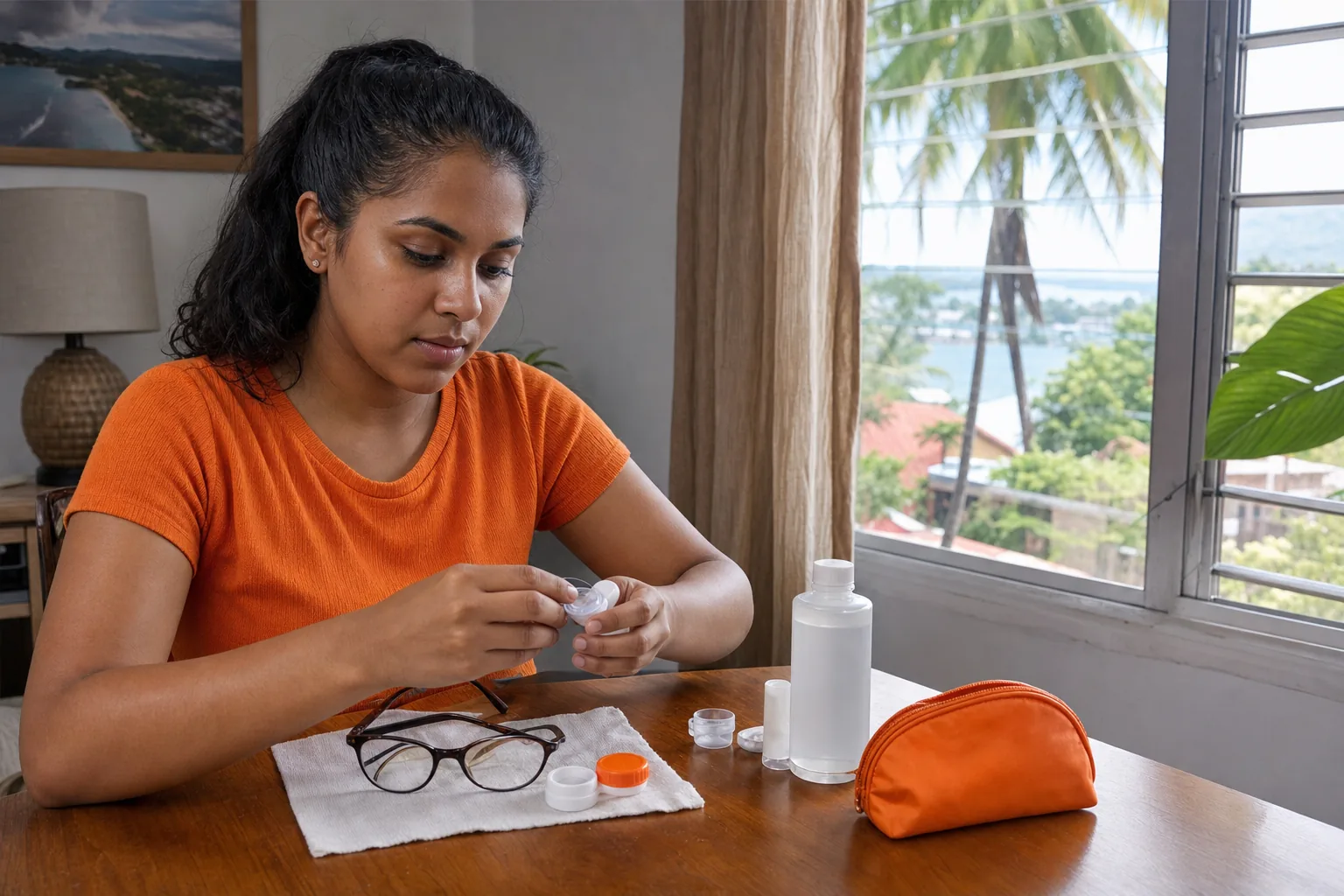
People who want colored lenses should treat them as medical devices, even when the goal is cosmetic. A colored lens still needs the right prescription and fit. EyesTT explains key safety points in its guide to choosing colored contact lenses .
Before choosing a schedule, be honest about how often you’ll wear lenses and whether you’ll stick to the care steps. If your plans change or discomfort starts, switch to glasses and ask for guidance instead of extending a lens’s use.
How an Eye Care Professional Helps Determine the Right Fit
An eye care professional can help assess whether daily or monthly lenses suit your eyes, prescription, and habits. Contact lenses need more than a glasses prescription: the lens type and fit must work for the eye as well as provide the needed vision correction.
During an eye care visit, share how often you expect to wear contacts and whether you’ve used them before. Mention any dryness, irritation, allergies, or trouble keeping up with lens care. These details help the clinician consider which schedule and lens type to assess.
Ask what replacement period applies to the lens you’re prescribed. Confirm whether you should remove it before sleep, what cleaning steps to follow, and which solution is suitable. If your clinician recommends a reusable lens, ask how to clean and store it. If a daily disposable is prescribed, ask when to discard it.
Pay attention to instructions about when to stop wearing a lens and seek help. Redness, pain, light sensitivity, or a sudden change in vision shouldn’t be brushed off as normal adjustment. Take the lens out and contact an eye care professional for advice.
EyesTT provides eye exams, diagnostic services, surgery, and optical products in Trinidad and Tobago. Our aim is complete eye care, with clear guidance that helps patients understand their options as we keep taking eye care into the future.
If you need an assessment before choosing a lens schedule, read about what to expect from an EyesTT contact lens exam . A visit gives you a chance to discuss fit and care before changing lens types.
Bring your current lens packaging or prescription details if you have them. If you don’t know the lens name or replacement schedule, say so. We can help clarify what you’re wearing and what questions to address next.
Frequently Asked Questions
Are daily contact lenses safer than monthly lenses?
Neither schedule is automatically safer for every wearer. Daily disposables reduce the need to clean and store a reusable lens, while monthly lenses need consistent care and replacement on time. Both require a proper fit and correct handling. Follow your clinician’s instructions, and seek advice if you have pain, redness, or blurred vision.
Can I wear monthly contacts only some days?
Sometimes, but the replacement clock may still follow the lens instructions once opened, even on days you don’t wear it. Don’t assume you can extend the schedule because you skipped days. Check the package directions and confirm timing with your eye care professional before using a monthly lens intermittently.
Do daily contact lenses need cleaning solution?
Daily disposable lenses are generally discarded after one day of use, so they don’t need overnight cleaning and storage. Don’t reuse them or store them in solution for another day. Some lenses called “daily wear” are reusable, so check whether yours are daily disposable or simply worn during waking hours.
Are monthly contact lenses cheaper than daily lenses?
Monthly lenses may have a lower lens cost for frequent wear, but reusable lenses also need compatible solution and a case. Daily lenses require more lenses over time, especially with everyday use. Compare the expected cost for your own wearing pattern, including care supplies and any exam or fitting costs.
Can I switch from monthly to daily contact lenses?
You may be able to switch, but ask an eye care professional first. Daily and monthly lenses can differ in material, fit, and prescription options. A familiar glasses prescription doesn’t confirm that a new contact lens will fit properly. Have the new lens assessed and follow its wear and replacement instructions.
Conclusion
Choose the lens schedule that fits your prescription and the care routine you can follow consistently. We can help you assess your options at EyesTT. Book an appointment with EyesTT to discuss contact lens fit, comfort, and care.



Comments