.png)
Prescription Contact Lenses Near Me: Local Guide

Updated: 11 hours ago
Finding prescription contact lenses near you takes more than matching a power to a box. The lens must suit your eye shape, tear film, vision needs, and daily routine. We explain what to ask during a fitting, how wear schedules affect care, what costs may include, and how EyesTT supports patients in Trinidad and Tobago.
Contact lenses are medical devices, and an improper fit or care routine can irritate or harm your eyes. A proper fitting helps confirm that the lens sits well and provides clear vision. Following the prescribed wear and replacement schedule, along with attending follow-up visits, helps identify problems early and supports safer lens wear.
Table of Contents
What Prescription Contact Lenses Are and Who Can Wear Them
Prescription contact lenses are medical devices that sit on the tear film over the cornea. They correct refractive errors by changing how light enters the eye. A prescription may address nearsightedness, farsightedness, astigmatism, or presbyopia, which is the age-related loss of close focus.
When people search for prescription contact lenses near me, they often start with the numbers on an old glasses prescription. That is not enough. A contact lens prescription has its own details, such as power, base curve, and diameter. The base curve describes the lens shape. The diameter describes its size.
Contact lenses must also sit well when you blink. A lens that moves too much may blur your view. One that fits too tightly can reduce comfort and limit the flow of tears beneath the lens. We assess those details during a contact lens fitting rather than asking you to guess from a product label.
Most people can wear contact lenses, but suitability varies. We look at the surface of the eye, corneal shape, tear film quality, and your ability to follow a care routine. Dry eye symptoms, allergies, eyelid problems, previous eye surgery, or certain eye conditions may affect the choice.
Astigmatism often calls for a toric lens. Toric lenses have different powers across different meridians, so the lens must stay in a stable position. You can read a plain-language definition of toric lenses and their design before your visit, but the fitting still needs to happen in person.
Presbyopia may call for a multifocal lens . Multifocal designs contain more than one zone of focus. They may help with distance and near tasks, though some people need time to adjust. The goal is useful vision for your routine, not a promise that every distance will feel identical to glasses.
Our review of available lens information in Trinidad and Tobago found a clear information gap. Wear schedules appeared for only 10 of 21 collected lens entries. Material details appeared even less often, and oxygen-permeability data was reported for only four entries.
Key Takeaway:A glasses prescription can guide the conversation, but it cannot replace a contact lens exam and fitting.
How an Eye Exam and Contact Lens Fitting Work Locally
When you look for prescription contact lenses near you, ask whether the appointment includes a contact lens fitting. A routine eye exam checks vision and eye health. A fitting adds measurements that help determine how a lens sits on your eye.
We begin by asking about your routine. Tell us how long you use screens, how often you play sports, and whether you need lenses every day. Mention dry or gritty eyes. Also tell us if you sleep in lenses now or have struggled with them before.
Next, we assess your vision. Refraction measures the lens power needed to focus light clearly. We may also examine the cornea, conjunctiva, and eyelids. The conjunctiva is the thin tissue over the white part of the eye.
A magnified examination provides a detailed view of the front of the eye. It helps us look for irritation, inflammation, surface changes, or signs that may affect lens wear. We may assess the tear film too. Tears keep the surface moist and help a soft lens move comfortably.
We then use lenses when appropriate. We watch how each lens moves with a blink. We check whether it stays centered when you look around. We also ask how it feels after it settles. Clear vision alone does not prove that the fit is right.
First-time wearers need usable training. We show you how to place the lens on the eye and remove it without touching the eye with a fingernail. We explain hand washing, storage, replacement, and the signs that mean you should stop wearing the lens.

Bring your current glasses, any prior contact lens details, and a list of medicines or eye drops. If you already wear lenses, ask the clinic whether you should remove them before the visit. The answer may depend on how long you have worn them and what measurements are needed.
A follow-up matters when you are new to lenses. Your eyes may feel different during the first few days. The lens may also need a change if it moves poorly, dries out, or gives you inconsistent vision. We use that comfort, fit, and safe handling.
Book an urgent eye assessment if you have persistent redness, pain, light sensitivity, unusual discharge, or a sudden change in vision. Remove the lens first. Do not keep wearing it to see if the problem settles.
You can learn more about what to expect from an EyesTT contact lens exam in Trinidad before arranging your visit. The right appointment gives you time to discuss both eye health and daily use.
Choosing the Right Lens Type for Your Vision and Routine
The right prescription contact lenses near you should fit your eyes and your habits. A lens that works for occasional wear may not suit someone who needs clear vision through long workdays.
Daily disposable lenses
Daily lenses are worn once and discarded. They can suit occasional wear, travel, sport, or people who do not want a cleaning and storage routine. Each day begins with a fresh lens, but you still need to follow the wear time and handling instructions given by your eye-care professional.
Daily lenses may also help people who struggle with deposits or solution routines. They are not automatically right for every eye. The fit, prescription range, and surface comfort still need assessment.
Biweekly and monthly lenses
Reusable lenses need a consistent care routine. A biweekly lens is replaced after its assigned period. A monthly lens is replaced on schedule even if it still feels comfortable. The replacement clock is not reset because you wore the lens only a few times.
Monthly wear was the most common schedule among the listed lenses. Silicone hydrogel also appeared often.
Toric and multifocal lenses
Toric lenses correct astigmatism. Their orientation matters, so a lens that rotates can cause shifting or blurred vision. We may need to assess the fit before the lens feels stable.
Multifocal lenses address presbyopia. They divide visual focus across more than one distance. Some wearers adapt quickly. Others notice glare or reduced sharpness in certain light. Your main tasks should guide the discussion. Reading menus, driving, screen work, and outdoor activity may place different demands on the lens.
Oxygen permeability and material
Oxygen permeability describes how well oxygen moves through the lens material. The cornea has no direct blood supply, so it receives oxygen from the air and tears. A lens that limits oxygen flow may contribute to discomfort or surface stress, especially when worn for too long.
Our collected data showed silicone hydrogel values around 100 to 180 Dk/t in some sources. Hydrogel values were reported around 9 to 25 Dk/t in other material. These figures do not tell you which lens to buy. They show why a patient should ask for the material and oxygen-permeability details rather than assume they are the same across products.
Wear schedule and material must be considered together. A lens approved for daily wear is not automatically safe for sleeping. Extended or overnight wear carries added risk and requires direct guidance. If a lens feels dry, gritty, painful, or blurry, remove it and seek advice.
Pro Tip:Ask, “What material is this lens, what is its replacement schedule, and may I sleep in it?” Write down the answer before you order.
What Prescription Contact Lenses Cost in Trinidad and Tobago
The cost of prescription contact lenses in Trinidad and Tobago depends on more than the lenses alone. A complete budget may include the eye exam, fitting, initial lens assessment, follow-up care, lens supply, solution, and replacement case.
We do not publish one universal price because the clinical work varies. A simple single-vision fit may need a different process than a toric or multifocal fit. Your wearing pattern also changes the ongoing cost. Daily lenses involve more individual lenses. Reusable lenses involve solution and regular replacement.
Ask what an advertised exam or fitting includes. A low starting price may cover only part of the visit. Before you agree, ask if it includes an initial lens assessment, insertion training, a follow-up check, or a written prescription. Also ask whether the fee changes when the first lens does not work.
Replacement schedules affect long-term spending. Daily lenses are discarded after one use. Biweekly lenses are replaced after their assigned period. Monthly lenses need replacement after the stated period, even when they still feel fine. Wearing a lens beyond its schedule can increase deposits, irritation, and infection risk.
Do not compare a box price without checking the number of lenses inside. A box may supply one eye or both eyes for a different length of time. Powers may also differ between your right and left eyes. That changes how quickly each box is used.
Care products add another line to the budget. Reusable lenses require approved solution and a clean case. Never use tap water or saliva on a lens. Water can carry organisms that may harm the cornea.
We also recommend asking about backup glasses. Contacts should not become your only way to see. Glasses can give your eyes a break when they feel dry or irritated. They are also useful if you develop symptoms and need to stop lens wear.
The safest cost question is simple: “What will I pay today, and what will I need to pay each replacement cycle?” That separates the fitting cost from the cost of continued wear.
If you have coverage or a workplace benefit, ask whether it applies to the eye exam, the fitting, the lenses, or only one part. EyesTT can explain the scope of the service available for your needs, while the final lens choice remains a clinical decision.
Where to Buy and Safely Order Prescription Contact Lenses Near You
Buying prescription contact lenses near you is safest when the order matches a current prescription and a known fit. Do not choose a lens from a photo, a social media post, or a friend’s box. Two lenses may look similar while having different curves, diameters, materials, or powers.
Use the exact lens details supplied by your eye-care professional. That may include the power for each eye, base curve, diameter, lens type, and replacement schedule. If one detail is missing, pause before ordering. A box that looks close is not a safe substitute.
Color does not make a lens harmless. Cosmetic lenses still sit on the eye. If they have prescription power, they still need a proper fit. If they have no power, they can still cause injury when the size or material is wrong.
Check the packaging when your order arrives. Look for damage, a broken seal, or an expired date. Do not use a lens from a damaged package. Contact the seller or clinic and keep the box until the issue is resolved.
Online ordering may suit an established wearer who has a current prescription and a stable lens fit. It is less suitable when you are a first-time wearer, have a new prescription, or have symptoms. A fitting cannot be completed by a checkout form.
Ask how returns work before ordering. Many opened lens packages cannot be returned for hygiene reasons. You should also know who to contact if the lens arrives with the wrong power or if your eyes react to it.
At EyesTT, our optical services for glasses and contact lenses in Trinidad and Tobago form part of our wider approach to complete eye care. We can discuss the clinical steps that should come before an order, rather than treating the box as the starting point.
Keep a record of your prescription and replacement date. Set a reminder before your supply runs out. That gives you time to arrange a review instead of stretching a lens past its schedule.
Stop wearing a lens if your eye becomes red, painful, unusually sensitive to light, or suddenly blurry. Remove the lens and seek professional advice. Do not rinse it in tap water and put it back in to test the eye.
How EyesTT Supports Contact Lens Patients
EyesTT supports contact lens patients through complete eye care. We start with your vision needs and eye health. Then we discuss whether contact lenses fit your routine and whether another form of correction may be more suitable.
Our team can assess the eye before a lens is selected. That matters when symptoms may come from dry eye, eyelid inflammation, allergies, or another condition. A lens may hide discomfort for a short time without fixing its cause.
We also help patients understand the language on a lens prescription. Power is the amount of correction. Base curve relates to lens shape. Diameter describes lens size. A replacement schedule tells you when to discard the lens. These details work together.
Children and teenagers may need extra support. We consider maturity, hand washing, supervision, and the ability to follow instructions. Parents should know how the lens is worn and what symptoms need prompt attention.
Adults may have different needs. Some want lenses for work. Others want them for sport or special occasions. A person who wears contacts twice a month may not need the same schedule as someone who wears them through every workday.
We pay close attention to comfort reports. “It feels strange” can mean many things. The lens may be dry. It may move too much. It may have the wrong power. Or the eye surface may need care before lens wear continues.
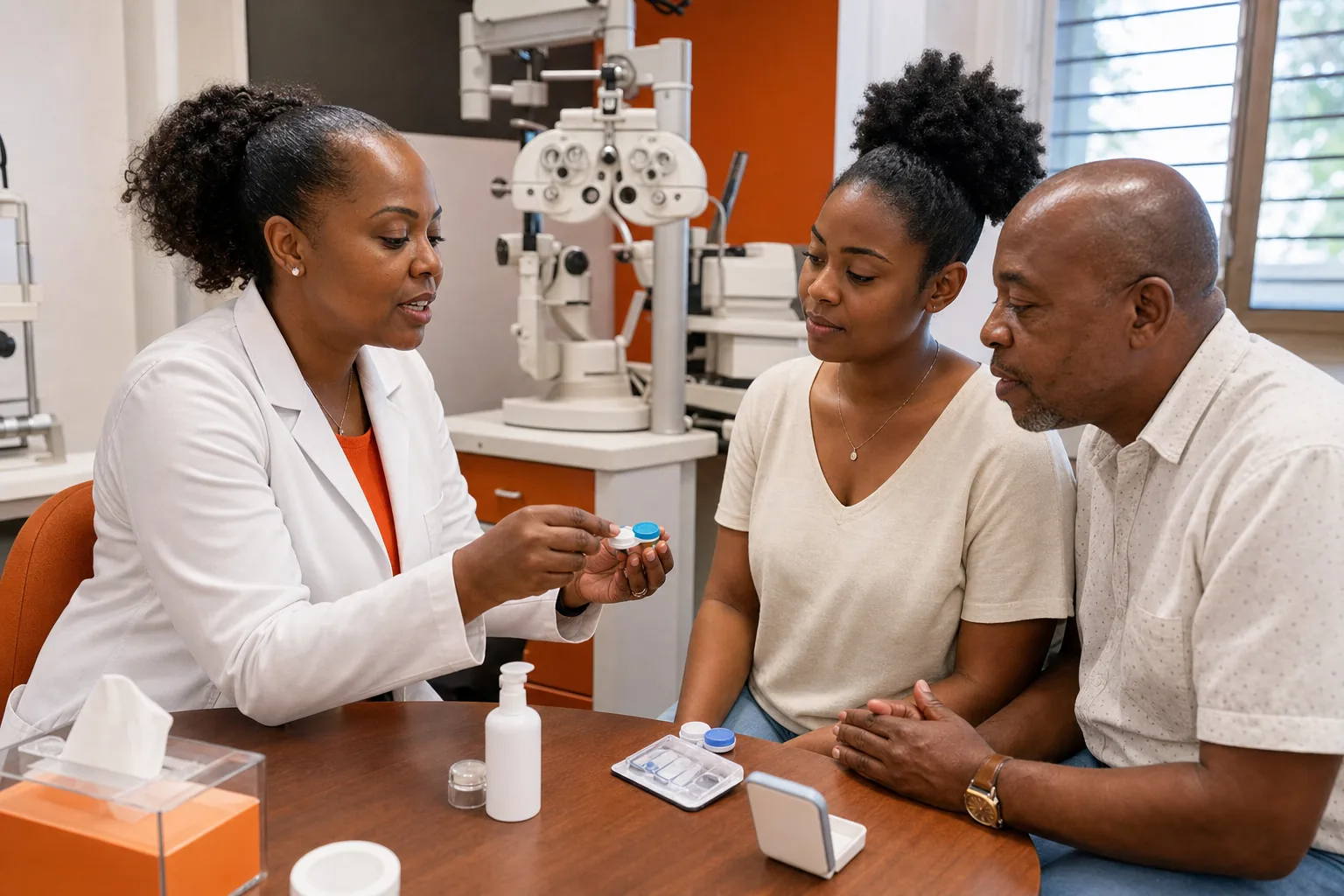
Our role does not end when a patient receives a lens. We want you to know when to replace it, how to handle it, and when to stop wearing it. That education supports safer daily decisions.
We may also discuss glasses as part of your plan. Switching to glasses during irritation gives the eye a break. It also means you do not need to keep wearing a lens simply because you have no other correction available.
Our services include eye exams, diagnostic care, surgery, and optical products. Contact lens care sits within that wider view. We are taking eye care into the future by combining clear explanations with careful clinical assessment.
When you are ready to discuss contact lenses, bring your current prescription and your questions. You can use the EyesTT online booking page to request an appointment. We will help you understand which visit matches your needs.
FAQ About Prescription Contact Lenses Near Me
Do I need an eye exam for prescription contact lenses?
Yes, you need an eye exam and a contact lens fitting before wearing prescription contacts. The exam checks eye health and vision. The fitting measures how the lens sits on your eye. It also helps select the right power, curve, diameter, material, and wear schedule for your needs.
Can I use my glasses prescription for contacts?
No, a glasses prescription does not contain every detail needed for contact lenses. Contacts need measurements for fit and may require a different power. A professional must assess your cornea, tear film, and eye surface before issuing a contact lens prescription.
Are monthly contact lenses safe?
Monthly contact lenses can be safe when they fit well and you follow the prescribed schedule. Remove them as directed, clean them with approved solution, and replace them on time. Do not sleep in them unless your eye-care professional specifically approves overnight wear.
What contact lenses are used for astigmatism?
Toric contact lenses are commonly used for astigmatism because they have different powers across the lens. They must remain stable during blinking. A fitting checks rotation and vision, so ordering a standard lens with a similar power may not work.
How do I know if contact lenses are not working?
Pain, persistent redness, unusual discharge, light sensitivity, or sudden blurry vision means you should remove the lens and seek eye-care advice. Dryness or mild awareness can also signal a fit or surface problem. Do not keep wearing the lens to see if symptoms worsen.
Conclusion
Choose prescription contact lenses through an eye exam and fitting, not by box appearance or price alone. If you are in Trinidad and Tobago, EyesTT can help you discuss your vision needs, lens care, and next steps within a complete eye-care visit. Book an appointment when you are ready to check your fit or update your prescription.


Comments