
How to Find the Best Retina Specialist Near Me in Trinidad and Tobago

We know a sudden flash or a shower of new floaters can be unsettling. If you're searching for the best retina specialist near me in Trinidad and Tobago, start by learning which symptoms need prompt attention and what to ask about training, tests, and treatment. EyesTT provides eye care services that include retina treatment and surgery.
An analysis of the National Eye Survey of Trinidad and Tobago, a clinic based examination of 2,790 adults aged 40 and over found that diabetic retinopathy caused 19.1% of blindness cases, the third leading cause behind glaucoma at 31.7% and cataract at 28.8%.
Table of Contents
What a Retina Specialist Does and When You May Need One
The retina is a thin layer of light-sensitive tissue at the back of the eye. It turns light into signals that travel to the brain, where they become the images you see. The vitreous is the clear gel inside the eye that sits in front of the retina.
A retina specialist is an ophthalmologist with extra training in diseases and surgery of the retina and vitreous. Ophthalmologists are medical doctors who diagnose and treat eye disease. Optometrists provide eye exams and assess vision, including the need for glasses or contact lenses. They can also screen for some eye conditions and refer you when you need medical or surgical eye care.
The American Society of Retina Specialists explains that retina specialists diagnose retinal disease with specialized tests and treat medical and surgical conditions. Their work can include care for retinal tears, diabetic retinopathy, macular disease, eye injuries, and other problems affecting the retina or vitreous.
A referral may be needed when an exam suggests disease at the back of the eye. You may also need specialist care if you have diabetes with changes in your retina, a suspected retinal tear, or a sudden change in vision. The right route depends on your symptoms and exam findings.
Common conditions include diabetic retinopathy, which is damage to retinal blood vessels linked to diabetes, and age-related macular degeneration, or AMD, which affects the central part of the retina. Retinal vein or artery occlusions are blockages in blood vessels that can impair vision. A tear or detachment can also threaten sight and needs urgent assessment.
Care varies by diagnosis. A specialist may use laser treatment, medicine injected into the eye, or surgery. For some detachments, surgery may include a scleral buckle, which supports the eye wall, or a vitrectomy, which removes some of the vitreous gel. The specialist chooses treatment based on the location and type of retinal problem.
EyesTT offers retina treatment and surgery, diabetic eye care, and scans and tests. Our team can help you understand which type of eye assessment fits your concern. For more local details about retinal care, see retina specialist care in Trinidad and Tobago .
Symptoms That Call for Prompt Retinal Assessment
Some changes in sight should be assessed promptly, especially when they start suddenly. A retinal tear or detachment may cause new floaters, flashes of light, or a shadow that seems to move across your vision. These signs don't confirm a detachment, but they do need quick attention.
Floaters are small spots, threads, or shapes that drift across your view. A few may be long-standing, but a sudden burst of new floaters is different. Flashes can look like brief sparks or streaks, often near the edge of vision. A dark curtain or spreading shadow is another warning sign.
Get urgent eye care if you notice rapid vision loss, a new curtain-like shadow, or a sudden rise in flashes or floaters. Don't wait to see if these symptoms fade. If your vision has changed quickly, arrange urgent assessment through an eye-care service or emergency care pathway available to you.
Sudden blurred vision can also occur with bleeding or swelling from diabetic retinopathy. A retinal vein or artery blockage may cause a sudden change in sight as well. Only an eye exam can help identify the cause, so avoid trying to diagnose the problem from symptoms alone.
Diabetes can affect the retina before a person notices a vision change. Regular eye checks matter even when your sight feels normal. If you have diabetes, ask your care team how often you need a retinal assessment and what to do if your vision changes between visits.
For less urgent concerns, an optometrist may be a suitable first point of care. They can assess vision and identify signs that need referral. If you're weighing that route, our guide to finding an optometrist in Trinidad and Tobago explains what to consider. But don't delay urgent care to book a routine vision exam.
Key Takeaway:Sudden flashes, many new floaters, a shadow, or rapid vision loss call for prompt eye assessment.
What to Expect During a Retinal Evaluation
A retinal evaluation usually starts with questions about your symptoms, health, and past eye care. Tell the clinician when the change began and whether it has spread or become worse. Mention diabetes, past eye surgery, injuries, and medicines you take.
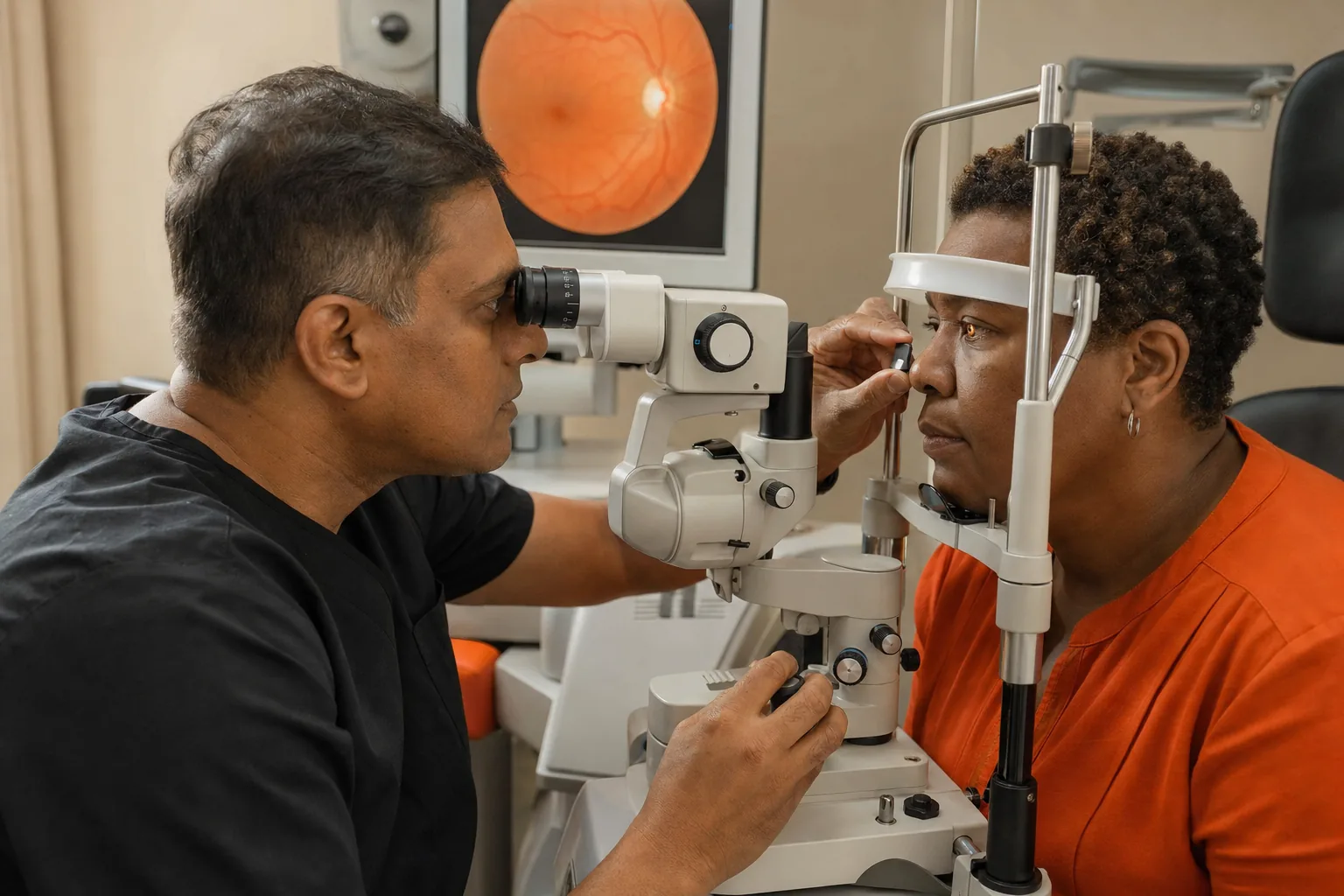
The specialist may check your vision and examine the front of your eye. They may also measure intraocular pressure, which means the pressure inside the eye. A dilated eye exam uses drops to widen the pupils so the clinician can look more closely at the retina.
Some visits include retinal imaging. Certain scans can produce detailed images of the retina. Other tests may include retinal photographs or imaging of blood flow. Ultrasound can help when the view inside the eye is blocked, though the tests needed depend on the problem being assessed.
Testing can help the specialist locate a tear, look for swelling, or track changes over time. Ask what each test is meant to check. If the clinician finds a retinal condition, ask what the result means for your vision and whether more tests or treatment are needed.
A dilated exam can leave your vision blurry and make bright light uncomfortable for a while. Plan for that possibility before you arrive. If you aren't sure how dilation may affect getting home or returning to work, ask the clinic when you book.
The American Society of Retina Specialists notes that a first visit may take longer than a routine appointment because it can include a medical history, dilation, imaging, and treatment. The time needed varies. Ask about the likely visit plan, especially if you may need an injection or another procedure during the same visit.
At EyesTT, scans and tests are part of our services. We aim to explain what an assessment involves and what the next step is, so patients and caregivers can make informed choices. Bring any prior eye records or test results you have, since they may help the clinician understand changes over time.

How to Assess a Specialist's Qualifications and Approach
Ask about the clinician's ophthalmology training and their specific experience with your condition. Retina care includes medical treatment as well as surgery, and a clinician's focus may differ. Someone who treats diabetic retinal disease often may have a different day-to-day practice from a surgeon who mainly handles retinal detachments.
Ask direct questions. Has the specialist treated this condition before? What findings led to the diagnosis? Which treatment choices fit your case, and what are their main risks? These questions can help you understand the plan without expecting one approach to suit every patient.
Credentials can be hard to compare across countries because training and registration systems vary. Ask what specialist training the clinician completed and how to confirm their registration locally. In systems that use board certification, general ophthalmology certification and extra fellowship training in retina are separate details to ask about.
Experience matters, but so does the type of experience. Ask how the specialist manages your specific condition and whether care may involve medical treatment, laser, or surgery. If a procedure is proposed, ask what it aims to do, what recovery may involve, and when the team will check your progress.
Clear communication is part of good care. The specialist should explain the diagnosis in language you can follow and make room for questions. You should leave knowing what happens next, how soon it should happen, and who to contact if symptoms change.
Reviews can offer clues about appointment flow or how patients describe communication. Treat them as personal accounts, not proof of a medical outcome. A review can't show whether a specialist's training fits your diagnosis or whether a treatment choice is right for you.
Ask how urgent cases are handled and what to do after hours if symptoms worsen. Also ask whether the clinic can arrange the tests or treatment you may need. A clear answer helps you judge whether the care pathway fits your needs without relying on broad claims about reputation.
Pro Tip:Write down your questions before the appointment. Start with your diagnosis, the reason for the proposed plan, and the next review date.
Access, Referrals, Costs, and Practical Questions
Access depends on the reason for the visit. A sudden shadow or rapid loss of vision needs urgent assessment, while a long-standing concern may follow a scheduled referral. When booking, explain the symptom and when it began. That gives the clinic useful context for deciding how soon you should be seen.
Ask whether you need a referral and what records to bring. Some patients arrive through an optometrist or another clinician, while others ask directly about an appointment. Requirements can vary by service and payment arrangement, so confirm the process before setting a date.
Cost depends on the exam, tests, diagnosis, and treatment plan. Retinal injections and surgery are different services, and the total may include more than one visit. Ask for an explanation of expected charges before planned care, including follow-up visits and any tests the clinician expects to use.
If you have insurance or another payment arrangement, check what it covers and whether approval is needed before treatment. Ask the clinic what information it can provide for that check. For an urgent retinal problem, don't delay seeking assessment while trying to settle every payment detail; ask the care team how to proceed safely.
Financing and payment options vary. Ask whether payment can be split or whether another arrangement is available, rather than assuming one exists. Get the agreed plan in writing if it affects your decision or the timing of care.
Location also matters when visits or follow-up are likely. EyesTT lists its head office at 129 Mission Road, Freeport, and also lists offices in San Fernando and St Augustine. Ask which location can provide the assessment or service you need, and allow time for travel after dilation if your vision may be blurred.
Before leaving an appointment, make sure you know the next step. Ask when to return, which symptoms need urgent attention, and how to get guidance if your vision changes. If treatment involves an injection or surgery, ask for written after-care instructions and a way to clarify them.
Finding Appropriate Retinal Care Through EyesTT
EyesTT is an ophthalmology and eye care clinic in Trinidad and Tobago. Its services include retina treatment and surgery, diabetic eye care, scans and tests, and other eye-care services. We provide complete eye care, and our goal is to help patients understand their options and the next step in care.
A retina concern may first come up during a general eye exam or a diabetes-related check. If an exam suggests a retinal problem, the clinician can explain whether specialist assessment is needed. Bring a short symptom timeline, any referral notes, and a list of current medicines to help the team review your concern.
Tell us if you have had flashes, floaters, distortion, or a sudden change in vision. Explain when it began and whether it is getting worse. That information helps the team understand the reason for your visit; it doesn't replace an examination or confirm a diagnosis.
Our team includes an ophthalmologist and an optometrist, and we offer retina treatment and surgery. The tests and treatment that fit your case depend on the clinical assessment. We can explain the steps involved and help you understand which service is relevant to your eye concern.
For diabetic eye care, regular checks can help identify retinal changes that may not affect sight at first. If you have diabetes, ask your clinician what follow-up schedule is right for you. If you already have a diagnosis, bring details of past treatments and scans when available.
We also understand that treatment decisions can feel like a lot to take in. Ask us to explain unfamiliar terms, why a test is needed, and how soon you should act. Taking eye care into the future starts with clear information and care that responds to each patient's needs.
For urgent symptoms, seek prompt assessment rather than waiting for a routine appointment. For planned care, ask about the visit, expected tests, and what to bring. That gives you and your caregiver a clearer picture of the next steps.
Frequently Asked Questions
When should I see a retina specialist?
See an eye-care professional promptly if you have sudden flashes, many new floaters, a curtain-like shadow, or rapid vision loss. These symptoms can point to a retinal problem that needs urgent assessment. Diabetes or a known retinal condition may also call for scheduled specialist care, even when your vision seems unchanged.
Can an optometrist check for retinal problems?
Yes, an optometrist can assess vision and screen for signs of eye disease. If the exam suggests a complex retinal condition, they may refer you to an ophthalmologist or retina specialist. Sudden vision changes need prompt care, so don't wait for a routine vision check when warning signs appear.
Does a retinal exam hurt?
A retinal exam is generally an examination rather than a painful procedure, but drops may sting briefly. Dilation can make vision blurry and light feel bright for a while. If the visit includes a treatment, ask the clinician what sensations to expect and what after-care applies to your case.
How much does retinal treatment cost in Trinidad and Tobago?
There isn't one cost for retinal care because an exam, imaging, injections, and surgery are different services. Ask the clinic for the expected charges linked to your proposed plan. Check with your insurer or payment provider about coverage and approval, and ask about follow-up costs before planned treatment.
Can I have a retinal problem without symptoms?
Yes, some retinal changes, including those linked to diabetes, may not cause noticeable symptoms at first. That's why people with diabetes should ask their care team about retinal checks. If you already have a retinal diagnosis, follow the review plan your clinician recommends, even if your sight feels stable.
Conclusion
Choose care based on the urgency of your symptoms, the clinician's retina training, and how clearly the team explains your plan. If you have a sudden change in sight, seek prompt assessment. Book an appointment with EyesTT to have flashes, floaters or a change in your vision checked by our retina team.



Comments