
How to Choose Daily Contact Lenses

Choosing daily contact lenses takes more than picking the lens with the most familiar name. The right choice depends on your prescription, eye surface, wearing habits, and fit. At EyesTT , we help patients weigh those details through complete eye care, so comfort and safety guide the decision.
Use these steps before you buy. They will help you ask better questions and avoid relying on vague claims such as high oxygen or all-day moisture.
Table of Contents
Step 1: Start With a Current Eye Exam and Prescription
The first step in choosing daily contact lenses is confirming what your eyes need now. A glasses prescription alone may not be enough for contact lenses.
Book a current eye exam with a qualified eye care professional. The exam should assess your vision and the health of the front and back of your eyes. Your clinician may check the cornea, tear film, pupils, retina, and intraocular pressure . Intraocular pressure is the pressure inside the eye.
Ask whether you need a full refraction. Refraction is the test that measures the lens power needed to focus light clearly. If your prescription has changed, an old box of lenses may no longer give you clear vision.
Contact lens prescriptions also include details that glasses prescriptions do not. These may include the lens brand, base curve, and diameter. The base curve describes how the lens sits over the curve of your eye. Diameter describes the width of the lens.
Those numbers affect fit. A lens can have the right power but still move too much, feel tight, or dry your eyes. That is why a contact lens fitting matters.
Children and adults need the same care at this stage. For children, we also ask about schoolwork, sports, screen time, and whether a caregiver can help with safe handling. For adults, we ask about work hours, travel, air conditioning, and outdoor exposure.
At EyesTT, our contact lens exam service in Trinidad can help connect your prescription with a suitable lens fit. We take time to hear what you want from contact lenses before discussing an option.
Tell the clinician about past problems. Mention redness, pain, blurred vision, allergies, dry eye symptoms, or trouble wearing lenses. Also mention any eye surgery or treatment. These details can change the type of lens or wearing plan that is safe for you.
Do not buy cosmetic lenses without an eye exam. Decorative lenses still sit on the cornea and need a prescription. For general information about contact lens prescriptions and fitting rights, see the guidance on contact lens prescriptions and fitting rights .
Key Takeaway:Start with a current eye exam, then confirm the full contact lens prescription and fit.
By now, you should know your prescription, your main eye health concerns, and the tasks your lenses must support.
Step 2: Match Lens Features to Your Vision Needs
The right daily contact lenses must correct your specific vision problem. They also need features that suit the way you use your eyes.
Start with the prescription type. A simple spherical prescription corrects short-sightedness or long-sightedness. Astigmatism needs a toric lens. A toric lens has a design that helps keep the correct power aligned with the eye.
Presbyopia is age-related difficulty focusing up close. It may require a multifocal lens or a different vision plan. Multifocal lenses use more than one power zone. Your clinician may need to test how well you see at distance, intermediate range, and near range.
Ask how the lens handles movement. A lens that shifts when you blink can cause changing vision. This matters when you read, drive, use a computer, or play sport. A lens that stays stable may feel more useful than one with a long feature list.
Oxygen performance is another point to discuss. Dk measures how easily oxygen passes through lens material. Dk/t also considers lens thickness. The higher number is not automatically the right answer for every person, because comfort depends on the full lens design and your eye surface.
Public product listings often leave these details out. In one review of daily lenses, only one lens reported a numeric oxygen permeability figure, 25.5 × 10⁻⁹ Dk. Four described oxygen performance only as high. That wording does not let a patient make a direct technical comparison.
Water content can also affect how a lens behaves. One daily lens in the same review listed water content at 58 percent. Water content alone does not predict comfort. Tears, heat, airflow, blinking, and lens movement all affect how the lens feels during the day.
UV protection needs careful reading. Some listings state a percentage for UVA and UVB filtering. Others state that the lens has no UV protection. Many provide no UV information at all. If a lens includes UV protection, remember that it does not replace sunglasses or a hat.
Our optical services for glasses and contact lenses give patients a place to discuss prescription needs and lens fitting together. We can help you focus on the feature that solves your problem, rather than chasing a claim that sounds impressive.
Think about your main use case. If you work at a screen, blink habits and dryness may matter most. If you have astigmatism, stability may come first. If you need near vision, the balance between distance and reading vision deserves careful testing.
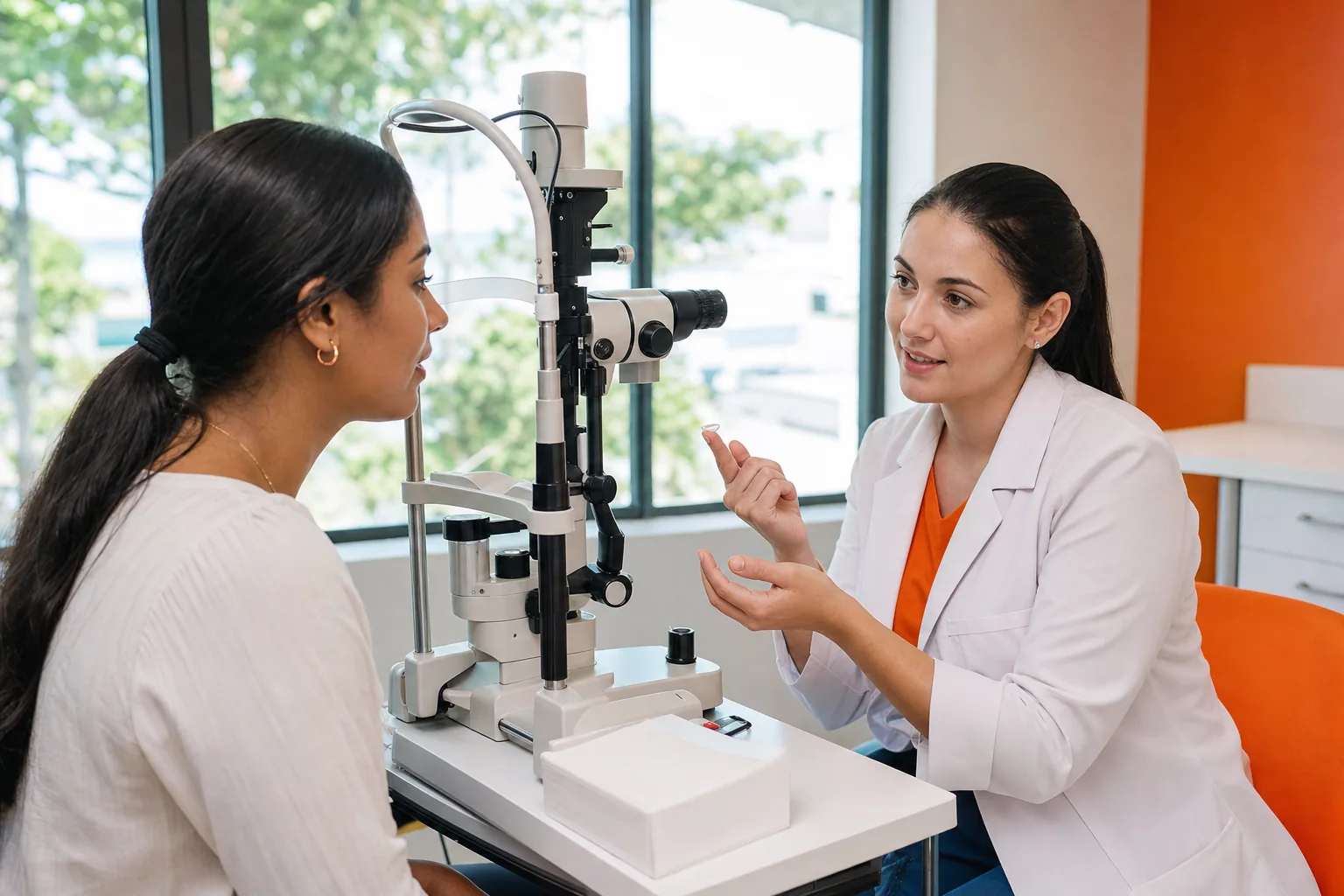
Ask this question:Which lens feature addresses my actual vision need, and what trade-off should I expect?
By now, you should have a short list of lens requirements. Keep it tied to your prescription and routine. More features do not always mean a better result.
Step 3: Consider Comfort, Dryness, and Your Daily Routine
Comfort is a key part of choosing daily contact lenses. A lens that gives sharp vision but leaves your eyes sore will not work well in daily life.
Describe a normal day to your clinician. Say how long you read from a screen. Mention air conditioning, ceiling fans, dusty work areas, outdoor heat, and time spent in a car. These conditions can change tear evaporation.
Dry eye means the tears do not keep the eye surface wet and comfortable. Symptoms may include burning, gritty feelings, fluctuating vision, or a need to blink often. Contact lenses can make these symptoms more noticeable.
If your eyes feel dry, do not assume a lens with more water will solve the issue. Research on lens comfort has not shown a simple link between water content and comfort. A high-water lens may lose water during wear in some conditions. A lower-water lens may behave differently.
Surface wettability matters too. Wettability describes how well the tear film spreads over the lens surface. Lubricity describes how easily the lens moves against the eyelid. Lower friction may support comfort, but laboratory measurements do not always predict how a patient will feel.
Daily replacement can reduce the time a lens spends collecting deposits. Each day begins with a fresh lens. That can be useful for people who dislike cleaning or who do not wear contacts every day. Still, a daily lens does not remove the need for safe handling.
Ask about rewetting drops if your eyes become dry. Use only drops recommended for contact lens wear. Do not place a household eye product into your eye without checking its label or asking a professional.
Screen work needs a plan. People often blink less while reading or looking at a screen. Try taking short breaks and blinking fully. If your vision becomes blurry late in the day, tell us. The issue may involve the tear film rather than the lens power.
Allergies can also affect lens comfort. Itchy eyes, swollen lids, or seasonal irritation may make contact lens wear harder. Treating the eye surface may help more than changing lenses again and again.
Pro Tip:Keep a short comfort log for several days. Note when dryness starts, what task you were doing, and whether vision clears after blinking.
At EyesTT, our goal is to improve your quality of life through education and early detection. If dryness is part of the problem, ask about our dry eye treatment and management options before settling on a lens.
By now, you should understand when comfort changes during your day. That pattern gives your clinician useful information during the fitting.
Step 4: Compare Cost, Supply, and Long-Term Value
Cost matters when you choose daily contact lenses, but the box price is only one part of the decision.
Start by asking how often you plan to wear lenses. Someone who wears contacts twice a week may use fewer lenses than someone who wears them every day. Do not buy a large supply until the lens has passed its fitting and comfort check.
Then ask what the quoted cost includes. Confirm the number of lenses in the box. Check whether the price covers an eye exam, fitting, follow-up visit, or only the lenses. Prices and stock can change, so ask for current information rather than relying on an old post.
Plan for both eyes. Some prescriptions differ between the right and left eye. You may need different powers or different quantities. A supply plan should account for that difference.
Daily lenses can reduce the need for multipurpose solution because you discard the lens after wear. That does not mean the total cost will always be lower. Your wearing frequency and local supply will decide the value.
Build in a replacement plan for lost or damaged lenses. Keep a few spare lenses in a clean, dry case. Do not stretch a daily lens across two days to save money.
EyesTT Optical Products includes daily disposable options, but detailed public information about material, oxygen permeability, water content, UV protection, and price may not be available for every option. Ask our team for the current details that apply to your prescription and fitting.
Use a simple cost check. First, estimate how many days you will wear lenses each month. Then add the number of lenses needed for both eyes. Once you know that amount, compare it with your budget and your actual routine.
Do not let a discount decide the lens. A cheaper lens that you stop wearing is poor value. A more costly lens is also a poor choice if it does not fit or correct your vision well.
By now, you should have a realistic supply plan. Keep it flexible until your clinician confirms the lens works for you.
Step 5: Check Fit, Handling, and Lens-Care Habits
Fit and handling can decide whether daily contact lenses feel easy or frustrating. A good prescription still needs safe habits.
During a fitting, notice how the lens moves when you blink. It should not fall out, fold often, or cause sharp pain. Your clinician may watch the lens with a slit lamp. This microscope gives a close view of the cornea and lens position.
Learn how to insert and remove the lens before you leave. Wash and dry your hands first. Use a clean surface. Check that the lens is not inside out. If it feels wrong after insertion, remove it and ask for help rather than forcing it.
Daily lenses are made for one day of wear. Remove them when your clinician tells you to, then discard them. Never rinse them with tap water. Water can carry organisms that may cause a serious corneal infection.
Do not sleep in daily lenses. During sleep, the closed eyelid reduces oxygen reaching the cornea. A lens adds another barrier. Sleeping in contacts can raise the risk of painful inflammation and infection.
Do not swim or shower while wearing contacts unless your eye care professional gives you specific advice. Keep lenses away from water. If water touches a lens, remove and discard it.
Watch for warning signs. Remove the lens and seek prompt professional advice if you have pain, marked redness, light sensitivity, unusual discharge, or vision that stays blurred. Do not place a new lens over an irritated eye.
Good contact lens care includes hand washing, safe replacement, and avoiding water exposure. Follow these habits as part of your daily routine.
Handling also matters for children and older adults. A caregiver may need to supervise insertion at first. Keep the lens supply out of reach of young children. Store unopened lenses in their original sealed packaging.
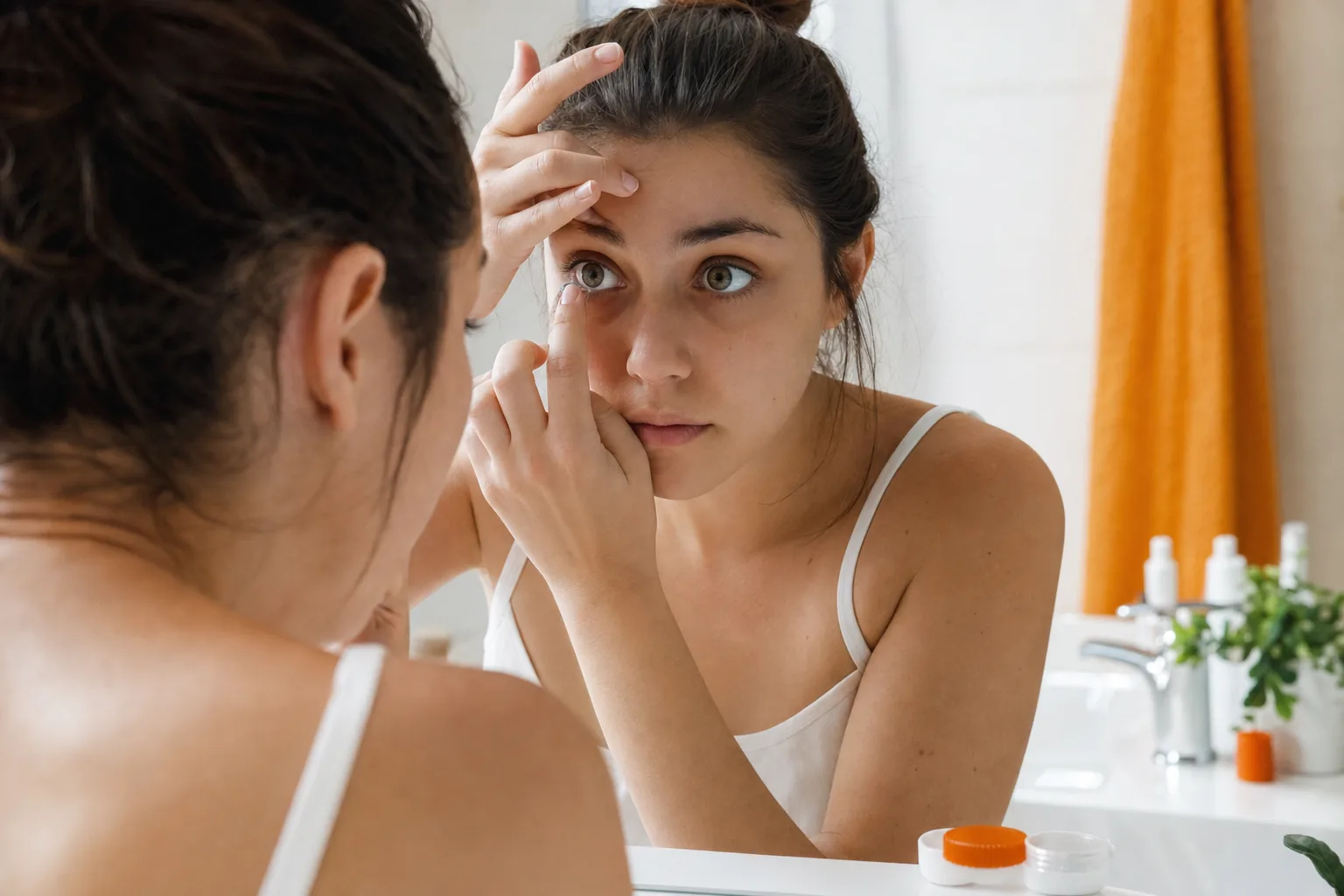
Comfort should never override safety. If the lens feels painful, remove it. A mild adjustment issue may need a fitting change. Persistent symptoms need an eye examination.
By now, you should be able to handle the lens safely and recognise when to stop wearing it.
Step 6: Confirm Your Choice With Professional Follow-Up
The final step is checking how your eyes respond after you wear the lenses. The first trial is not always the final answer.
Wear the trial lenses for the period your clinician recommends. Notice how vision changes during the day. Record comfort in the morning, after screen work, and near the end of wear. Also note redness after removal.
Bring those details to the follow-up. Your clinician may check the cornea, tear film, eyelids, and lens movement. They may also review your handling technique. Small changes can make a large difference.
Ask whether the lens is approved for your planned wear time. Daily disposable does not mean overnight wear. It describes the replacement schedule. Always follow the wear time given for your specific lens and eyes.
Ask what to do if a lens tears, falls out, or becomes uncomfortable. Know when you can insert a fresh lens and when you should stop wearing contacts for the day.
Keep your prescription details. A contact lens prescription is provided after the fitting is complete, which may require a follow-up after trial lenses. This helps you understand what was prescribed and supports safer future purchases.
Return sooner if symptoms appear. Do not wait for a routine appointment when you have significant pain, sudden vision loss, strong light sensitivity, heavy discharge, or worsening redness. These signs need prompt assessment.
At EyesTT, we see follow-up as part of complete eye care. Our team can help review comfort, fit, vision, and safe wear as your needs change. That approach supports our goal of taking eye care into the future while keeping your care personal.
By now, you should have a confirmed prescription, a tested fit, and a clear plan for safe wear. That is a stronger basis for choosing daily contact lenses than a product claim alone.
FAQ: Choosing and Wearing Daily Contact Lenses
What are the best daily contact lenses for dry eyes?
The right daily lenses for dry eyes depend on the cause of your symptoms and the fit. Water content alone does not predict comfort. Your clinician may assess the tear film, eyelids, screen habits, and lens movement before suggesting a trial. Treating dry eye may help more than switching lenses repeatedly.
Are daily contact lenses safer than reusable lenses?
Daily contact lenses can reduce buildup because you use a fresh lens each day. They still require a prescription, clean hands, and safe wear. Do not sleep in them or expose them to water. Your eye health and habits matter as much as the replacement schedule.
Can I sleep in daily disposable contact lenses?
No, you should not sleep in daily disposable contact lenses unless an eye care professional gives specific instructions for your exact lens and condition. Sleeping reduces oxygen reaching the cornea and raises the risk of irritation or infection. Remove the lens before sleep and discard it after the day’s wear.
Do daily contact lenses protect against UV rays?
Some daily contact lenses list UV filtering, while others state no UV protection or provide no data. Check the product information and ask your clinician. Even a lens with UV filtering does not protect the whole eye. Use sunglasses and other sun protection outdoors.
How much do daily contact lenses cost?
The cost of daily contact lenses varies with prescription, wear frequency, supply size, and local stock. Ask whether fitting and follow-up are included. Estimate how many lenses both eyes need each month before comparing prices. Do not buy a large supply until the fit and comfort are confirmed.
Conclusion
Choose daily contact lenses through a current exam, a proper fitting, and a short follow-up trial. At EyesTT, we can help you connect your prescription with your comfort needs and daily routine. When you are ready, book an eye care appointment so we can guide your next step with complete eye care.



Comments