.png)
Eye Pressure Test Near Me: What to Expect

Searching for an eye pressure test near me can raise a simple question: what happens when you arrive at EyesTT ? We explain what tonometry measures, who may need it, how EyesTT performs the test, what results can mean, and when symptoms need prompt care.
In Trinidad and Tobago, eye pressure may be measured with a Goldmann applanation tonometer or a tonometry method that measures eye pressure without touching the eye. At EyesTT, the appropriate testing schedule depends on your age, eye health, medicines, and glaucoma risk.
Table of Contents
What an Eye Pressure Test Measures
An eye pressure test measures intraocular pressure, often shortened to IOP. IOP is the pressure of the fluid inside your eye.
Your eye makes a clear fluid called aqueous humour. That fluid must drain at a steady rate. If it does not drain well, pressure may rise. High pressure can place stress on the optic nerve, which carries visual signals from the eye to the brain.
Tonometry measures pressure. It does not, by itself, confirm glaucoma. Glaucoma is a group of eye diseases that can damage the optic nerve and reduce sight over time. Some people have glaucoma without high pressure, while others have raised pressure without clear nerve damage.
That is why an eye pressure test usually forms part of a wider eye exam. We may also assess the optic nerve, check your visual field, inspect the front of the eye, and review your family history. The exact tests depend on your age and symptoms.
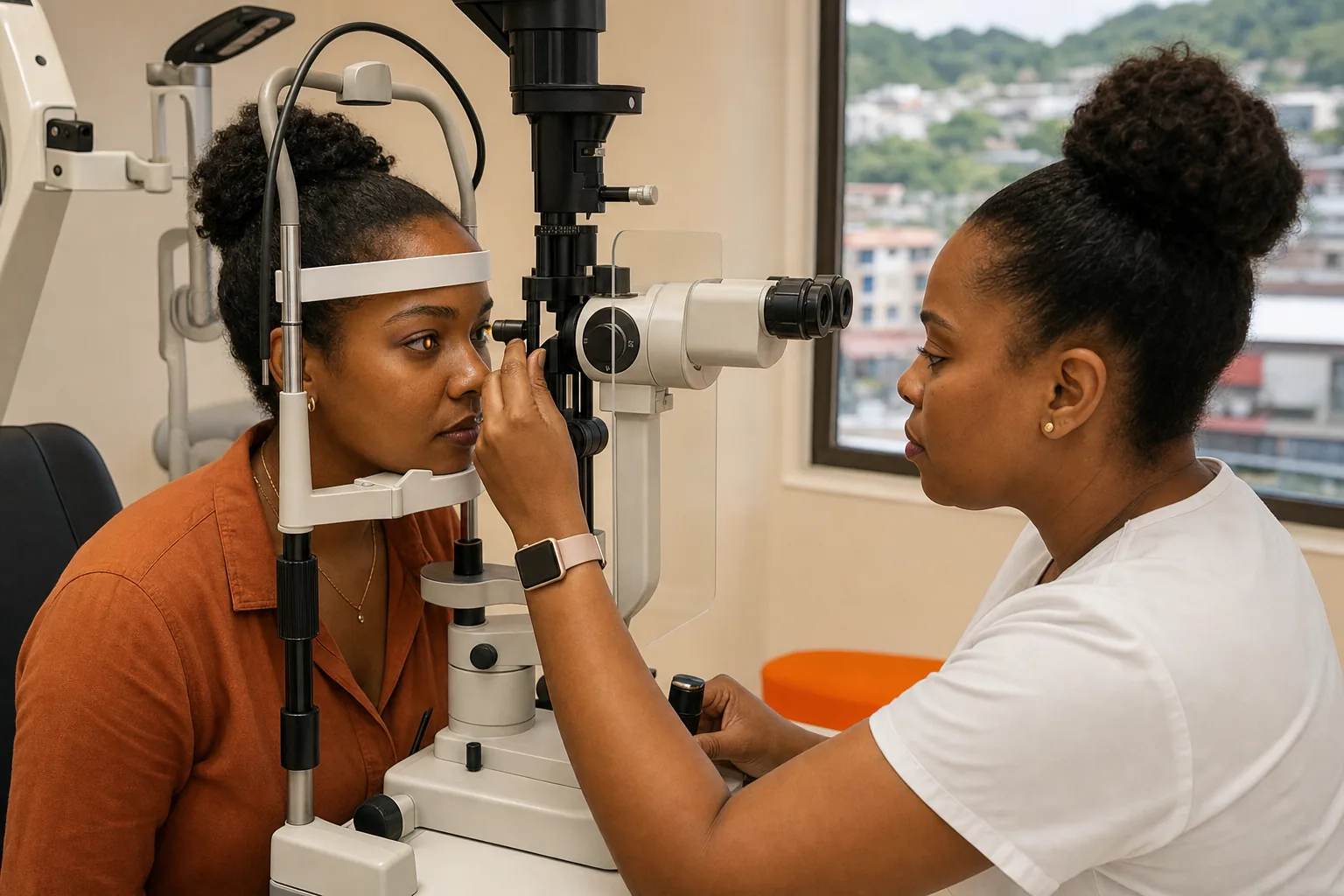
Goldmann applanation tonometry is often treated as the clinical reference method. It uses a small instrument to gently touch the front surface of the eye after numbing drops. The device measures the force needed to flatten a tiny area of the cornea, which is the clear front layer of the eye.
Non-contact tonometry uses a short puff of air. It does not touch the eye and usually needs no anaesthetic drop. You may feel a quick burst of air. The test takes only a moment for each eye.
Corneal thickness can affect a pressure reading. A thicker cornea may produce a higher reading, while a thinner cornea may produce a lower one. Pachymetry measures corneal thickness, so your eye doctor may use it when the pressure result needs more context.
Tonometry is one part of glaucoma assessment rather than a stand-alone diagnosis. Further information about glaucoma assessment explains why pressure readings must be read alongside the optic nerve and other findings.
At EyesTT, our Eye Pressure Test, also called tonometry, may be performed by an ophthalmologist or trained optometrist. We can use applanation or other tonometry methods, based on the clinical setting and the information your eye-care professional needs.
If your concern is ongoing glaucoma monitoring, our glaucoma management service can help place the pressure reading within a wider care plan.
Bring your glasses and a list of eye drops or medicines. Tell us if you wear contact lenses, since you may need to remove them before parts of the exam.
Key Takeaway:A pressure reading is useful, but it needs the rest of the eye exam for proper meaning.
Who Should Have Their Eye Pressure Checked
If you're looking for an eye pressure test near me, start by asking whether you need a routine screen or closer follow-up. At EyesTT, we recognise that people have different risk levels, so one schedule cannot fit everyone.
Adults often include pressure testing in a routine eye exam. The timing may become more important as you get older because glaucoma risk can rise with age. At EyesTT, our clinical team may also suggest testing sooner if you have a family history of glaucoma.
Family history does not mean you will develop glaucoma. It does mean your eye-care team may want to watch you more closely. Tell us which relative had glaucoma, if you know, and whether that person needed drops or surgery.
People with diabetes may need regular eye care because diabetes can affect blood vessels and the retina. The retina is the light-sensitive layer at the back of the eye. Diabetes does not make every pressure reading high, but it can add to the need for a full eye assessment at EyesTT.
Short-sightedness, past eye injury, steroid use, and some other medical conditions may also affect glaucoma risk. Steroids can include tablets, inhalers, skin creams, or eye drops. Never stop a prescribed medicine without speaking with the clinician who gave it to you.
Children may need pressure testing when an eye-care professional sees a reason to check. This can include certain eye conditions, a family history, an unusual eye exam, or a need to monitor pressure after treatment. Testing a child may require a calm approach and age-appropriate instructions.
At EyesTT, we also recommend asking about pressure testing after eye surgery or when you begin treatment for an eye condition. A new pressure reading gives the care team a point of comparison. Later readings can show whether pressure has changed.
Information reviewed for this topic showed mixed advice about testing frequency. Some guidance suggested an annual check for people at lower risk. Other guidance suggested several checks each year for people at higher risk.
Those figures are not a personal prescription. A person with known glaucoma may need a different schedule from someone with no risk factors. The plan may change after a new reading, a visual field result, or a change in treatment.
Ask these questions during your visit:
What was my pressure in each eye?
Does my result need to be repeated?
Do I have any glaucoma risk factors?
When should I return?
Do I need a wider exam?
Regular checks matter most when you attend them on the schedule set for you. A missed appointment can leave a pressure change unnoticed.
What Happens During an Eye Pressure Test at EyesTT
When you book an eye pressure test at EyesTT, we first ask about your vision and eye history. Tell us about pain, redness, headaches, past injuries, surgery, contact lenses, and any eye medicines.
We may check your vision before measuring pressure. This helps us understand the wider picture. A pressure test itself does not measure how clearly you see.
With a non-contact air-puff test, you'll place your chin and forehead against the support on the instrument. Keep both eyes open and look at the target. The machine sends a brief puff of air toward the cornea.
Some patients blink when they feel the puff. That's normal. We may repeat the reading so we can check that the result is consistent.
With Goldmann applanation tonometry, we use numbing drops first. The instrument then rests lightly against the cornea while you look at a fixed light. You should not feel sharp pain, though the drops or bright light may feel unfamiliar.
Both eyes are usually checked. The result is recorded for each eye because the readings may differ. A single number does not tell the full story.
Our team may recommend more tests when the reading or eye exam suggests a need. These can include a visual field test, optic nerve assessment, retinal imaging, or pachymetry. A visual field test checks the area you can see while looking straight ahead.
EyesTT uses specialist diagnostic tools for eye care. For pressure measurement, our handheld eye pressure measurement service page explains the role of a handheld tonometer in quick IOP testing.
During the visit, we explain what each test does before we begin. You can ask us to pause if you feel uneasy. Children may need extra time to get used to the room and equipment.
After the test, we discuss whether the result looks within the expected range for you. We may also explain why a repeat reading is useful. For example, a result can be affected by corneal thickness, eye shape, or the way you looked during the test.
Plan for a normal visit rather than a long procedure. The pressure measurement is brief, but a full eye exam may take longer when more checks are needed.
Pro Tip:Avoid rubbing your eyes after drops. Tell us at once if you have lasting pain or a marked change in vision.
Understanding Eye Pressure Results
An eye pressure result is reported in millimetres of mercury, written as mmHg. A broad reference range is often near 10 to 21 mmHg, but at EyesTT, we interpret your result alongside the rest of your eye examination.
A reading above that range does not prove you have glaucoma. It may lead to repeat testing or a closer look at the optic nerve. Some people have ocular hypertension, which means higher pressure without confirmed optic nerve damage.
A reading within the usual range does not rule out glaucoma. This is called normal-tension glaucoma when optic nerve damage occurs despite pressure readings that often sit within the usual range. That is one reason visual field checks and optic nerve reviews matter.
Pressure can vary during the day. It may also vary between visits. The test method can affect the result, and corneal thickness can change how the number is interpreted.
At EyesTT, we look for patterns rather than reacting to one isolated number. Suppose your right eye measures higher than your left eye. We may repeat both readings and compare them with earlier results before suggesting a next step.
Your result may lead to one of several plans:
Routine review when the full exam shows low concern.
Repeat pressure testing after a set period.
More tests to assess the optic nerve or visual field.
Glaucoma treatment or referral when the findings support it.
Glaucoma treatment may include prescription drops. In some cases, an ophthalmologist may discuss appropriate laser treatment or surgery. The choice depends on the type of glaucoma, pressure level, nerve health, and response to care.
EyesTT provides glaucoma diagnosis and care planning as part of our focus on complete eye care. If treatment is needed, we explain the reason for it and the follow-up plan in plain language.
Do not compare your number with a friend or family member. Their cornea, eye shape, medical history, and risk level may differ. A pressure result only makes sense in its own clinical context.
Pressure is one part of a broader assessment. That approach helps prevent both false reassurance and needless alarm.
Ask for a written result if you want to track changes. Keep it with your other health records. Our team at EyesTT can use it alongside your examination findings when assessing a new reading.
Finding an Eye Pressure Test Near You in Trinidad and Tobago
Finding an eye pressure test near me starts with the right question: who will perform it, and what happens if the result needs more checking?
An ophthalmologist is a medical doctor who diagnoses and treats eye disease. An optometrist is trained to assess vision and eye health. A trained technician or ophthalmic staff member may perform parts of a test under clinical direction, depending on the service.
When contacting EyesTT, ask these questions before you book:
Is tonometry included in the visit?
Who will perform or review the test?
Which tonometer will be used?
Will both eyes be checked?
Can EyesTT arrange a wider glaucoma assessment?
What happens if the reading is high?
These questions can save time. A quick pressure screen may not answer every concern if you have symptoms, a family history, or known glaucoma.
Price information and appointment details can change, so ask what the visit includes before you arrive. This helps you understand whether the appointment covers only an eye pressure reading or a broader assessment of your eye health.
At EyesTT, our service information describes an Eye Pressure Test as part of our eye-care work. Our wider approach is built around complete eye care, so we can discuss whether you need more than a pressure reading.
Our goal is to improve your quality of life through education and early detection. We also support families who need eye care for children, adults managing long-term conditions, or patients who need follow-up after a diagnosis.
Location matters, too. Choose EyesTT when you want an accessible clinic for repeat visits if monitoring becomes part of your care. Glaucoma checks often work best when the same records can be reviewed over time.
Ask whether you should bring old reports. Prior pressure readings can help the clinician spot change. Bring your medicine list as well, including drops prescribed by another doctor.
A clinic should explain the test before performing it. You should know whether drops are needed, whether contact lenses must come out, and when you'll receive the result.
We invite residents of Trinidad and Tobago to contact EyesTT through our website to ask about the current appointment process. We are taking eye care into the future while keeping the conversation clear and patient-focused.
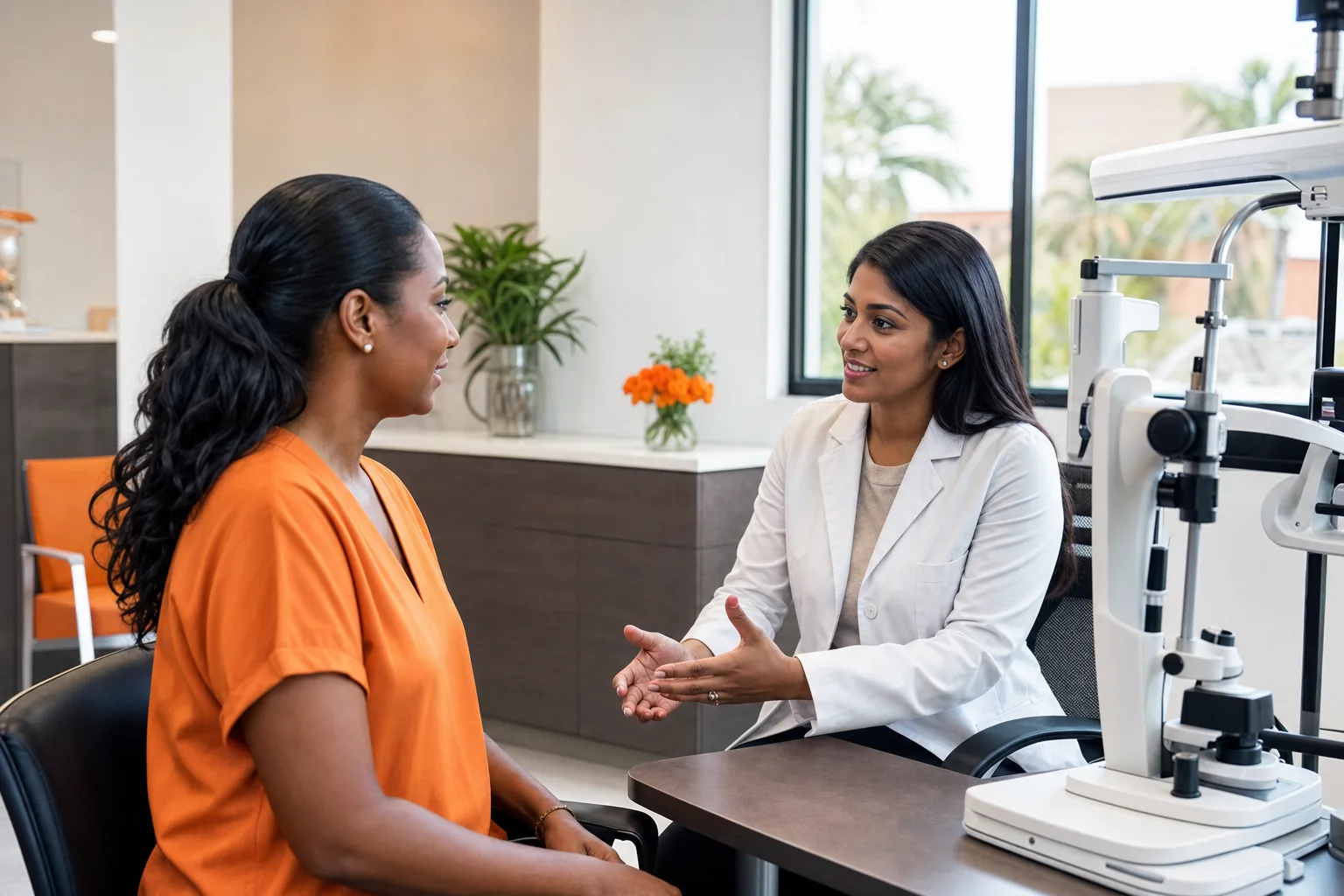
Choose EyesTT for clear guidance about the next step, rather than receiving a number without an understandable plan.
Key Takeaway:When arranging an appointment with EyesTT, ask about the test method, clinical review, included exam, and follow-up plan.
When Eye Pressure Requires Prompt Medical Attention
Sudden eye pain with blurred vision needs prompt medical attention. Do not wait for a routine eye pressure test near me if symptoms start quickly or feel severe.
Seek urgent care if you have intense eye pain, a red eye, sudden loss of sight, severe headache, nausea, or vomiting. These symptoms can occur with acute angle-closure glaucoma, a rapid rise in pressure caused by blockage of the eye's drainage angle.
Halos around lights can also be a warning sign when they occur with pain, redness, or blurred vision. A headache alone has many possible causes, so it does not confirm an eye problem. The combination of symptoms matters.
A sudden change after an eye injury also needs quick review. Tell the clinician what happened, even if the injury seemed minor at first.
Urgent symptoms differ from the slow changes seen in many cases of glaucoma. Open-angle glaucoma can develop quietly. People may not notice early loss because it often affects side vision first.
Do not drive yourself if your vision is badly blurred. Ask someone to help you reach urgent medical care. If symptoms are severe, go to the nearest emergency service.
Call an eye-care clinic promptly when you notice a new change that is not an emergency. Examples include repeated blurred vision, new halos, eye discomfort, or a noticeable change between the two eyes.
At EyesTT, we can help assess eye pressure and explain what further testing may be needed. If the symptoms suggest an emergency, we will direct you toward prompt medical care rather than asking you to wait for a routine slot.
Early review gives the clinician more information. It also gives you a clear plan, which can reduce worry while protecting your vision.
Frequently Asked Questions
How much does an eye pressure test cost in Trinidad and Tobago?
The cost depends on the clinic and what the visit includes. Public pricing is limited, so ask EyesTT whether the test forms part of a comprehensive eye exam and what follow-up diagnostic testing may cost before booking.
How often should I get an eye pressure test?
Many lower-risk adults may have their eye pressure checked during an annual eye exam, while people at higher risk may need checks several times each year. Your schedule depends on age, family history, past results, medicines, and whether glaucoma has been diagnosed.
Does an eye pressure test hurt?
An eye pressure test is usually quick and should not cause sharp pain. Air-puff tonometry uses a brief burst of air. Goldmann applanation uses numbing drops before the instrument touches the cornea. Tell us if you feel anxious so we can explain each part first.
Can normal eye pressure still mean glaucoma?
Yes, glaucoma can occur when readings fall within a usual pressure range. The optic nerve and visual field also need assessment. If you have a family history or notice vision changes, arrange a full eye exam rather than relying on one pressure number.
Where can I get an eye pressure test near me?
You can arrange tonometry through EyesTT, where our ophthalmology and eye-care team provides eye exams and diagnostic services in Trinidad and Tobago. Ask whether both eyes will be checked and what happens if the result needs further review.
Conclusion
Choose an eye pressure test that includes clear clinical review, not a number without context. If you live in Trinidad and Tobago, contact EyesTT through our website to ask about an appointment and whether a complete eye exam fits your needs. Early checks support informed care and help us keep taking eye care into the future.


Comments