.png)
Dilated Eye Exam Near Me: What to Expect

We know a dilated eye exam can feel like a small appointment with a long list of unknowns. Most visits take about 30 to 45 minutes, and the drops may affect your sight for several hours. We’ll explain what the exam checks, who may need one, how to prepare, what it may cost, and how EyesTT supports patients across Trinidad and Tobago.
Table of Contents
What a Dilated Eye Exam Checks
If you’re searching for a dilated eye exam near me, start with the purpose of the test. Dilation lets us see more of the retina, optic nerve, and other structures at the back of your eye.
Your pupil is the dark opening in the center of your eye. Special drops make it wider. A larger pupil lets more light enter, which gives the eye doctor a wider view during the exam.
The retina is the thin layer that senses light. It sends visual signals to the brain. The optic nerve carries those signals from the eye to the brain. A careful view of both areas can reveal changes that may not cause symptoms yet.
A dilated exam may help us screen for or monitor:
Diabetic retinopathy:damage to small blood vessels in the retina caused by diabetes.
Glaucoma:damage to the optic nerve that can lead to permanent sight loss.
Age-related macular degeneration:changes in the macula, the part of the retina used for central vision.
Retinal tears or detachment:breaks or separation in the retina that may threaten vision.
Cataracts:clouding of the eye’s natural lens.
Other retinal or optic nerve changes:findings that may need closer review.
Diabetic retinopathy appears often in screening guidance because diabetes can affect the blood vessels inside the eye. That’s why a routine vision check may not be enough for someone living with diabetes. Our diabetic eye care services help connect eye checks with the wider need to monitor diabetic eye health.
A dilated exam may also show signs linked with other health concerns. It doesn’t replace care from your family doctor or specialist. It can, however, give your eye doctor information that deserves follow-up.
The retina is neural tissue that supports vision, which is why examining the back of the eye matters during a full eye assessment.
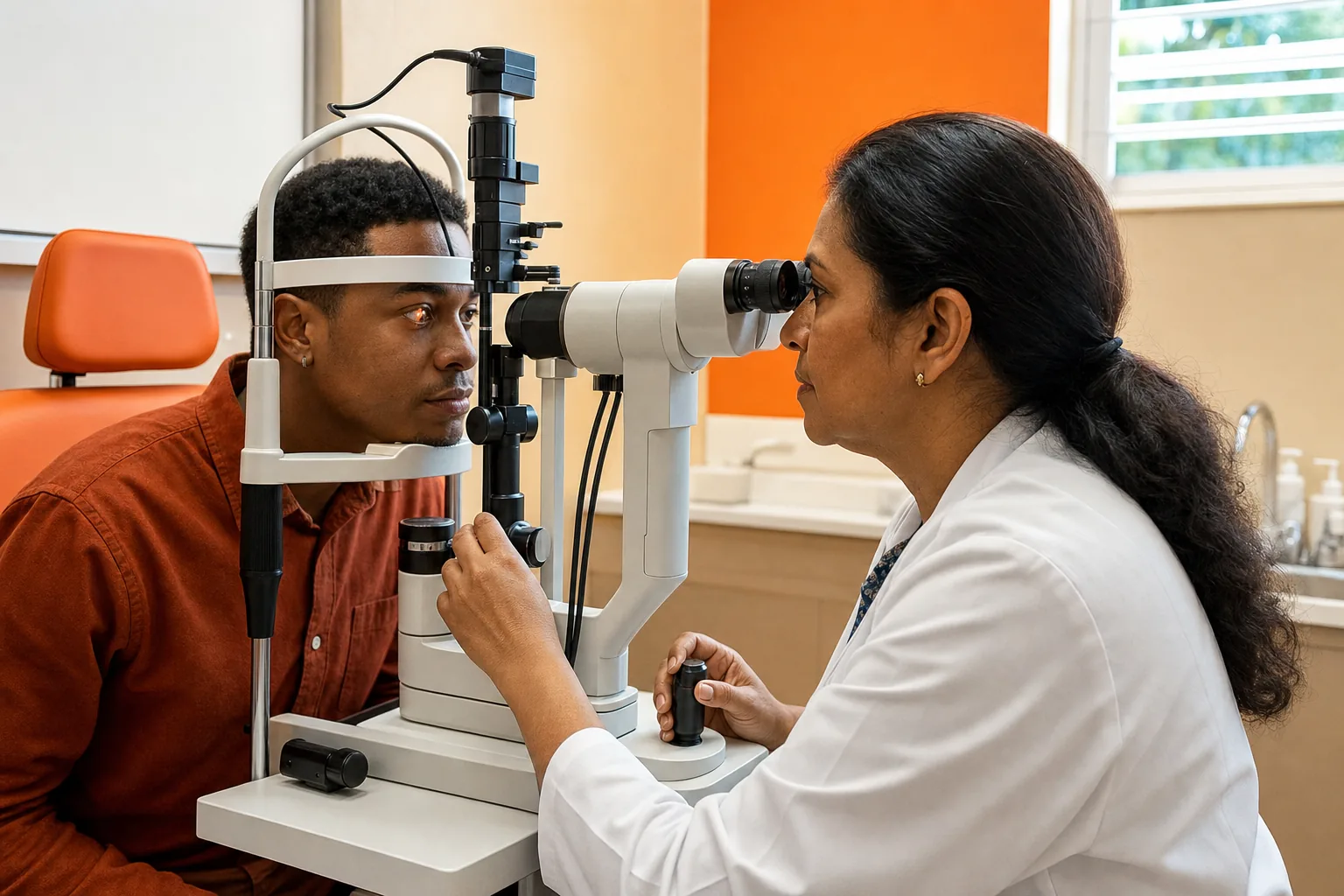
Key Takeaway:Dilation gives the eye doctor a wider view of the retina and optic nerve, where early disease may appear before vision changes.
Who Should Have a Dilated Eye Exam and How Often
When you look for a dilated eye exam near me, the right timing depends on your age, symptoms, health history, and risk of eye disease. There isn’t one schedule that fits every patient.
People with diabetes may need regular retinal checks because diabetic retinopathy can progress without early warning signs. The timing depends on your eye findings and diabetes care. We’ll explain the interval after reviewing your results.
Adults with glaucoma, a family history of glaucoma, or past retinal problems may also need closer monitoring. A family history doesn’t mean you will develop the same condition. It does mean your eye doctor may watch certain changes more closely.
Age can affect the need for dilation too. As people get older, the chance of conditions such as cataracts, glaucoma, retinal disease, and macular changes rises. A dilated exam can help us look beyond a glasses prescription.
Children may need dilation in special situations. A prescription assessment using drops may help us measure a child’s prescription more accurately, especially when focusing problems or an unusual prescription is suspected.
You may need an exam sooner if you notice:
A sudden increase in floaters.
Flashes of light.
A dark curtain or shadow.
New or sudden blurry vision.
Distortion in straight lines.
Loss of side vision.
For routine monitoring, EyesTT may recommend a return visit within 6 to 12 months. That range can change after the exam. A patient with stable findings may follow a different plan from someone with diabetes, glaucoma risk, or a new retinal change.
Bring any past eye records if you have them. A list of medicines can help us understand your health history. Tell us about previous eye surgery, eye injury, diabetes, high blood pressure, and family eye disease.
Preparation details are often missing from online pages. That gap can make a short appointment harder to plan. We prefer to explain the visit before you arrive, so you know what may happen next.
What Happens During the Exam
A dilated eye exam near me usually begins before the drops go in. We first need to understand what brought you in and whether any health factors may change the exam.
1. Health and vision history
We’ll ask about changes in sight, headaches, eye pain, flashes, floaters, and trouble reading. We’ll also ask about diabetes, medicines, past eye problems, and family history.
This conversation helps set the right path for the visit. A patient with sudden flashes may need a different assessment from someone who wants a routine prescription check.
2. Vision and eye pressure checks
We may measure visual acuity, which is how clearly you see at set distances. We may also check the pupils before dilation. This shows how each pupil responds to light.
Intraocular pressure is the pressure inside the eye. It is one part of glaucoma screening. A pressure result alone cannot confirm or rule out glaucoma, so it must be read with the rest of the exam.
3. Front-of-eye examination
A slit lamp is a special microscope. It lets us inspect the eyelids, cornea, iris, and lens. The cornea is the clear front window of the eye. The iris is the colored part. The lens helps focus light.
Some patients also need tests that assess the drainage angle or side vision. Those tests may be done before dilation, depending on the reason for the visit.
4. Dilation and retinal review
We place mydriatic drops in the eyes. Mydriatic means a medicine that widens the pupil. It can take about 15 to 30 minutes for the pupils to open fully.
Once the drops work, we examine the retina and optic nerve. We may use a viewing device or imaging equipment. Extra scans can be useful when we need a closer look at a retinal layer or optic nerve.
EyesTT provides eye scans and vision tests as part of its diagnostic services. The exact tests depend on your symptoms and findings. Not every patient needs every scan.
Dilation can cause blurry vision and light sensitivity for a few hours. The need for dilation can depend on factors such as age, health, and eye disease risk.
5. Results and next steps
We’ll explain what we found in plain language. If the exam shows a concern, we’ll discuss monitoring, more tests, treatment, or referral based on the finding.
Ask us to repeat anything that feels unclear. You should leave knowing what was checked, what the results mean, and when we want to see you again.
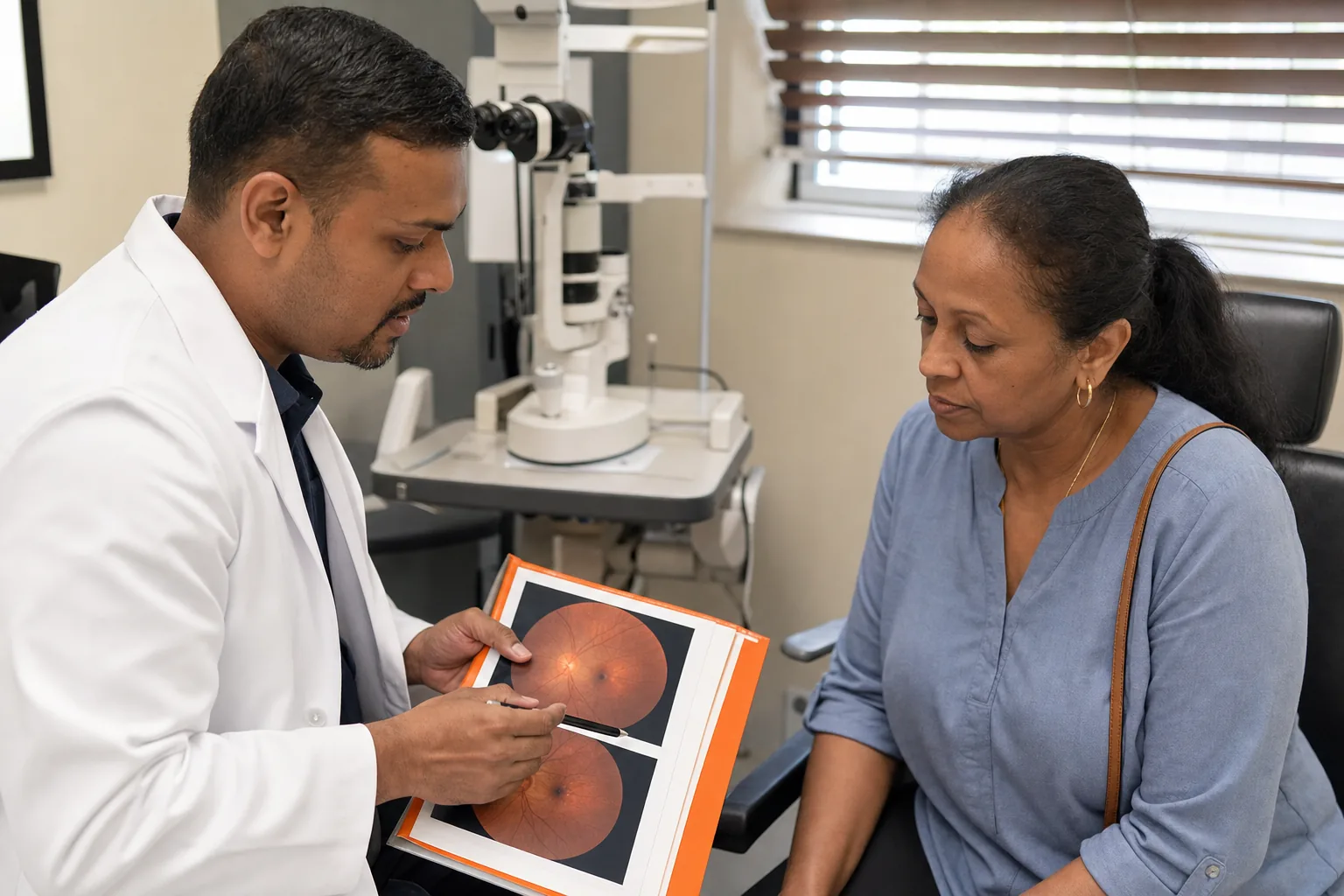
How to Prepare and Manage Blurry Vision Afterward
Good preparation makes a dilated eye exam near me easier to manage. The main issue is usually temporary blur and light sensitivity after the drops.
Before your appointment:
Remove contact lenses if the clinic asks you to do so.
Bring sunglasses for the trip home.
Arrange a ride if you may not see well enough to drive.
Bring your current glasses and any eye records you have.
Write down your medicines and major health conditions.
Plan extra time instead of booking a task right after the visit.
Contact lenses can affect some parts of an eye exam. If you wear them, ask whether you should arrive without them. The answer can depend on the tests planned.
Sunglasses can make the trip home more comfortable. They don’t make the drops wear off faster. They simply reduce the amount of light reaching your eyes.
Many people can return to normal activities after dilation. But you shouldn’t drive if your vision is too blurry or light feels painful. If your job needs sharp near vision, such as reading small print, leave space after the appointment.
The pupils often return toward normal within 4 to 6 hours. Some people remain dilated longer. Children can have more trouble with near focus after drops, so plan for patience with reading and schoolwork.
Do not rub your eyes if they feel strange. Rest in a dim room if that helps. Follow the instructions we give you, especially if you have a known eye condition.
Pro Tip:Put sunglasses beside your keys the night before. Then arrange transport before you leave home, not after the drops are given.
Call the clinic for advice if symptoms feel far stronger than expected. Severe pain, marked redness, nausea, or a sudden drop in vision needs prompt medical attention.
Finding a Dilated Eye Exam Near You in Trinidad and Tobago
Finding a dilated eye exam near me is about more than distance. You also need to know whether the visit includes a proper history, retinal review, clear results, and a follow-up plan.
Start by checking whether the clinic provides ophthalmology and eye care services. EyesTT offers eye exams, diagnostic services, surgery, and optical products for adults and children in Trinidad and Tobago.
Ask what the appointment includes before you book. A useful question is, “Will the doctor decide whether dilation is needed during my visit?” Another is, “What should I bring if I have diabetes or a past retinal problem?”
Ask how long the appointment may take. EyesTT describes its dilated eye exam as a 30 to 45 minute visit. That estimate helps you plan transport, work, school pickup, or care for a child.
Ask whether retinal imaging or other diagnostic tests may be recommended. Tests such as fundus photography, OCT, or OCT-A may be used in some clinical settings. They are not automatically needed for every person.
Ask how results will be explained. You should know if the plan is routine monitoring, a new glasses prescription, more testing, or treatment. You should also know when to return.
Location matters, but access matters too. A clinic that gives clear instructions can reduce stress for a first visit. That includes explaining drops, transport, sunglasses, and what to do if symptoms change after you leave.
EyesTT’s approach is built around complete eye care. We aim to educate patients while we assess their sight. Our goal is to improve quality of life through early detection and clear next steps, while taking eye care into the future.
If you have diabetes, don’t wait for blurry vision before asking about screening. If you have flashes, a curtain-like shadow, or sudden sight loss, ask for urgent guidance rather than booking a routine visit.
Key Takeaway:Choose an appointment that gives you a clear scope, realistic time estimate, preparation advice, and follow-up plan.
Costs, Questions to Ask, and When to Seek Urgent Care
The cost of a dilated eye exam near me depends on what the visit includes. A basic eye assessment may differ from a visit with retinal imaging, pressure testing, or other diagnostic work.
Ask for the expected fee before the appointment. Also ask whether extra scans or tests are billed separately. Pricing can change based on the clinical work needed, so a clear question is better than assuming every visit costs the same.
EyesTT has a payment options page that explains available arrangements and notes that promotional packages may appear at certain times. Review the EyesTT payment options before booking if you need to plan the financial side of care.
Questions to ask before the visit
Will my pupils be dilated?
How long should I plan to stay?
Should I stop wearing contact lenses first?
Should someone drive me home?
Will my prescription be checked during the same visit?
Could I need retinal imaging or another test?
When should I schedule the next exam?
Who should I contact if my vision changes afterward?
When to seek urgent care
Some symptoms should not wait for a routine appointment. Seek urgent eye care if you have sudden vision loss, a dark curtain, many new floaters, repeated flashes, severe eye pain, or intense redness with nausea.
A retinal tear or detachment can threaten sight. So can certain sudden pressure problems. Do not drive yourself if your vision is impaired. Ask someone to help with transport or follow the urgent instructions given by your care team.
After ordinary dilation, mild blur and light sensitivity can be expected. Severe or worsening symptoms are different. If you are unsure, contact an eye care team and describe exactly what changed.
We want patients to feel able to ask questions. Clear information is part of complete eye care, not an extra. It helps you make a sound choice about timing, transport, and follow-up.
Pro Tip:Save your post-exam instructions before leaving. If your sight changes later, you’ll have the clinic’s guidance ready.
FAQ
How long does a dilated eye exam take?
A dilated eye exam usually takes about 15 to 45 minutes, depending on the tests needed. The drops may need 15 to 30 minutes to work. EyesTT describes a typical dilated visit as 30 to 45 minutes. Plan extra time if you need imaging, a detailed discussion, or help arranging transport.
Can I drive after a dilated eye exam?
You may not be able to drive safely after a dilated eye exam. Blurry vision and light sensitivity can last for several hours. Bring sunglasses and arrange a ride if you have never had dilation before, or if your vision feels too impaired for driving.
How often should I have a dilated eye exam?
The right schedule depends on your age, health, symptoms, and eye findings. EyesTT may recommend follow-up within 6 to 12 months, but diabetes, glaucoma risk, or retinal changes may require a different plan. Your eye doctor should give you a date or time range after reviewing your results.
Can I wear contact lenses to a dilated eye exam?
You may need to remove contact lenses before a dilated eye exam. The instruction depends on the tests planned and your eye history. Ask the clinic before arriving. Bring your glasses if you have them, since your eyes may feel dry or sensitive after the drops.
What conditions can a dilated eye exam find?
A dilated eye exam can help detect or monitor diabetic retinopathy, glaucoma, macular changes, cataracts, retinal tears, and other eye problems. It gives the doctor a better view of the retina and optic nerve. Early disease may cause few or no symptoms, so regular checks can matter.
Conclusion
A dilated eye exam is a planned check of the retina, optic nerve, and wider eye health. If you’re in Trinidad and Tobago, contact EyesTT to ask about the right exam for your symptoms and risk factors. Bring sunglasses, arrange transport, and leave enough time for the visit. We’re here to support clear answers, careful follow-up, and complete eye care.


Comments